
Thyroid Function, Energy, and Aging: What You Need to Know
Discover what thyroid function energy aging means for your health. Learn how thyroid hormones regulate energy, metabolism, and aging effects.
Thyroid Function, Energy, and Aging: What You Need to Know
Thyroid hormones are central regulators of cellular energy and significantly influence how your body ages. T3 and T4 govern resting metabolic rate, mitochondrial respiration, and the activity of ATP-consuming ion pumps that keep every cell running. When thyroid signaling shifts, as it does predictably with age, the downstream effects touch cardiovascular health, bone density, cognition, muscle mass, and even how long you live. Understanding what thyroid function energy aging means recognizing that this small gland is not just a metabolism dial. It is one of the master switches in your biological aging program.
Three things you can do right now:
- Get a baseline thyroid panel. Request TSH, free T4, and free T3 from your clinician. If you are over 50, ask specifically about age-adjusted interpretation.
- Prioritize sleep and protein. Both directly support hypothalamic-pituitary-thyroid (HPT) axis signaling and peripheral T4-to-T3 conversion.
- Review your medications. Several common drugs, including glucocorticoids, amiodarone, and high-dose biotin, interfere with thyroid labs and hormone action.
Table of Contents
- How thyroid hormones regulate metabolism, mitochondria, and cellular energy
- How thyroid function typically shifts as you get older
- What age-related thyroid changes actually do to your health
- Which thyroid tests to order and how to read them in middle-aged and older adults
- When to treat older adults and the real risks of overtreatment
- Evidence-based steps to support thyroid-related energy and healthy aging
- Symptoms that signal clinically important thyroid dysfunction
- How thyroid function fits inside the TIMELESS four-layer aging protocol
- Key Takeaways
- The lab-first trap in thyroid and aging care
- Thyroid health, biological age, and the TIMELESS program
- Useful sources
- FAQ
How thyroid hormones regulate metabolism, mitochondria, and cellular energy
The thyroid does not work alone. The hypothalamic-pituitary-thyroid axis runs a continuous feedback loop: the hypothalamus releases thyrotropin-releasing hormone (TRH), which signals the pituitary to secrete thyroid-stimulating hormone (TSH), which then drives the thyroid gland to produce T4 and T3. The thyroid outputs roughly 90% T4 and 10% T3. T4 is largely inactive until peripheral tissues convert it to T3 via deiodinase enzymes (DIO1, DIO2, DIO3).
T3 is the active hormone. It binds nuclear thyroid hormone receptors and directly switches on genes governing mitochondrial biogenesis, oxidative phosphorylation, and thermogenesis. This is where thyroid function and vitality connect at the cellular level: T3 upregulates the sodium-potassium ATPase pump, which alone accounts for a substantial share of basal ATP consumption. It also increases uncoupling protein expression in brown adipose tissue, driving adaptive heat production.
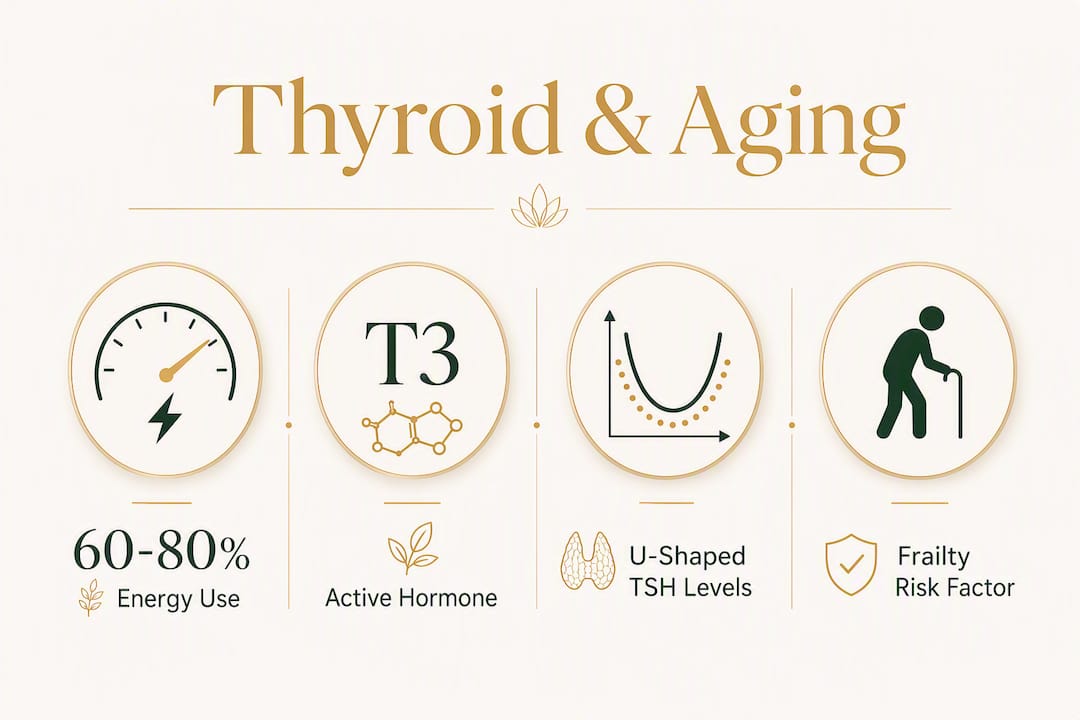
Resting energy expenditure (REE) comprises 60–80% of total energy expenditure in sedentary adults, and thyroid hormones regulate the metabolic cycles and ion-pump activity that drive most of that ATP use. Even modest shifts in thyroid signaling can meaningfully alter REE and, over months and years, body weight and body composition.
Beyond energy expenditure, thyroid hormones modulate mitochondrial respiration, autophagy, and longevity-associated pathways including mTOR, AMPK, and sirtuins. AMPK is the cell’s low-fuel sensor; sirtuins are NAD-dependent deacetylases linked to DNA repair and metabolic flexibility. Thyroid hormones interact with both, which means their influence on aging extends well past the metabolic rate you see on a lab report.
Key mechanisms to understand:
- Mitochondrial biogenesis: T3 activates PGC-1α, the master regulator of new mitochondria production.
- Oxidative phosphorylation: Thyroid hormones increase the efficiency and rate of the electron transport chain.
- Autophagy: Both low and high thyroid signaling alter autophagic flux, affecting how cells clear damaged proteins and organelles.
- Tissue-specific control: Deiodinase activity varies by tissue, so circulating TSH and T4 numbers can underrepresent or overrepresent what is actually happening inside muscle, brain, or liver cells.
That last point matters enormously for anyone trying to interpret labs in the context of aging.
How thyroid function typically shifts as you get older
Thyroid physiology does not stay static across a lifetime. Population data reveal a U-shaped TSH distribution across the lifespan, with TSH trending higher in adults over 80 compared with younger cohorts, while free T3 declines with age and free T4 remains relatively stable. That pattern has direct implications for how you read a lab result in a 70-year-old versus a 35-year-old.
Subclinical hypothyroidism, defined as elevated TSH with normal free T4, affects a variable portion of adults over 65 in iodine-sufficient populations like the United States. A significant portion of those elevated TSH readings may simply reflect the normal upward shift in the population distribution for older adults rather than true thyroid failure.
Several mechanisms drive these age-related changes:
- Central setpoint shift: The hypothalamus and pituitary recalibrate their sensitivity to thyroid hormone feedback over decades.
- Deiodinase changes: Peripheral conversion of T4 to active T3 becomes less efficient with age, partly explaining the falling FT3 trend.
- Selective survival: Older cohorts are enriched with individuals whose biology tolerates or even benefits from slightly lower thyroid hormone levels, which can make population averages misleading.
- Autoimmunity: The prevalence of thyroid peroxidase (TPO) antibodies rises with age, increasing the risk of autoimmune-driven hypothyroidism.
The practical takeaway: a TSH of 4.5 mIU/L in a 75-year-old may sit comfortably within an age-appropriate reference range, while the same value in a 38-year-old warrants closer attention. Standard laboratory reference ranges are often derived from mixed-age populations and can misclassify older adults as abnormal when they are not.
What age-related thyroid changes actually do to your health
The clinical consequences of shifting thyroid function with age are real, but they are not simple. The relationship between thyroid hormones and aging outcomes follows a pattern that surprises most people: both too much and too little thyroid activity carry risks, and the optimal zone shifts as you get older.
Cardiovascular health

High-normal thyroid function, particularly free T4 at the upper end of the reference range, associates with adverse cardiovascular outcomes in some older cohorts, including atrial fibrillation and increased cardiac workload. Overt hyperthyroidism raises heart rate, lowers systemic vascular resistance, and increases the risk of arrhythmia. On the other end, overt hypothyroidism raises LDL cholesterol, impairs cardiac contractility, and elevates cardiovascular risk through different pathways.
Bone health
Higher thyroid hormone levels accelerate bone turnover. In postmenopausal women especially, elevated free T4 or suppressed TSH from overtreatment with levothyroxine is linked to increased osteoporosis risk and fracture rates. This is one of the clearest arguments against aggressive thyroid hormone supplementation in older adults without a confirmed clinical need.
Cognition and mood
Both hypothyroid and hyperthyroid states affect the brain. Hypothyroidism in older adults correlates with depressive symptoms, slowed processing speed, and memory complaints. Subclinical hyperthyroidism has been associated with anxiety and, in some studies, accelerated cognitive decline. The brain is highly sensitive to thyroid hormone levels, and the window of optimal function narrows with age.

Muscle, sarcopenia, and frailty
Systematic reviews and meta-analyses report associations between altered thyroid signaling and frailty domains, with some studies showing J-shaped patterns between thyroid measures and frailty risk in older adults. Thyroid hormones regulate protein synthesis and mitochondrial function in skeletal muscle. Both low T3 and excessive T3 can accelerate muscle protein breakdown, which is why the frailty relationship is non-linear rather than a simple “more is better” or “less is better” story.
Skin and appearance
Hypothyroidism slows epidermal cell turnover, producing dry, rough skin that can contribute to an older appearance. This is one of the more visible signs of thyroid dysfunction and often the first thing patients notice before a formal diagnosis.
The longevity paradox
Epidemiologic and centenarian studies have found that higher TSH and lower circulating thyroid hormones within the reference range associate with exceptional longevity in selected older cohorts. The interpretation is still debated, but one plausible mechanism is that lower thyroid-driven energy expenditure reduces oxidative stress and slows the rate of cellular damage accumulation. This does not mean low thyroid function is desirable. It means the relationship between thyroid hormones and longevity is context-dependent and age-specific.
Pro Tip: Never interpret a thyroid lab result in isolation. Age, functional status, comorbidities, and symptoms together determine whether a number requires action. A mildly elevated TSH in a fit, asymptomatic 72-year-old is a very different clinical situation than the same number in a fatigued, cold-intolerant 45-year-old.
Which thyroid tests to order and how to read them in middle-aged and older adults
Getting the right panel is the first step. Ordering only TSH misses important information, particularly in older adults where the TSH-to-tissue-action relationship becomes less reliable.
Recommended panel:
- TSH: First-line screening; reflects pituitary feedback over the prior 4–6 weeks.
- Free T4: Measures unbound, bioavailable T4; stable with age and useful for distinguishing primary from central hypothyroidism.
- Free T3: Declines with age and with calorie restriction; more directly reflects active hormone availability at the tissue level.
- TPO antibodies: Identifies autoimmune thyroiditis (Hashimoto’s), the most common cause of hypothyroidism in the United States.
- Reverse T3 (rT3): Consider when acute illness, severe calorie restriction, or high physiologic stress is present; elevated rT3 competes with T3 at receptor sites.
- Thyroid ultrasound: Indicated when a nodule is palpated or when TSH is suppressed without an obvious cause.
Age-adjusted interpretation is not optional. Population data support age-specific reference intervals for TSH, and applying a standard adult range to an 80-year-old will over-diagnose subclinical hypothyroidism. Ask your clinician whether the lab’s reference range accounts for your age group.
Common confounders to know:
- Amiodarone: Blocks T4-to-T3 conversion and raises TSH; can cause both hypo- and hyperthyroidism.
- Glucocorticoids: Suppress TSH and reduce T4-to-T3 conversion.
- High-dose biotin (>5 mg/day): Interferes with immunoassay-based thyroid tests, falsely lowering TSH and raising free T4 and T3 readings. Stop biotin supplementation at least 48 hours before testing.
- Calorie restriction and weight loss: Sustained weight loss reduces total T3 and peripheral T4-to-T3 conversion, lowering REE. Labs drawn during active dieting may underestimate baseline thyroid function.
- Non-thyroidal illness syndrome: Acute illness suppresses T3 and can alter TSH unpredictably; avoid thyroid testing during hospitalization or acute infection.
| Lab | What It Measures | Age-Related Pattern | Energy/Aging Relevance |
|---|---|---|---|
| TSH | Pituitary feedback signal | Rises with age, especially after 70 | High TSH may reflect age-appropriate adaptation or early failure |
| Free T4 | Unbound prohormone | Relatively stable across age | Useful baseline; does not reflect tissue activation |
| Free T3 | Active hormone, unbound | Declines with age | Most directly tied to REE and mitochondrial activity |
| TPO antibodies | Autoimmune thyroid activity | Prevalence increases with age | Predicts progression to overt hypothyroidism |
| Reverse T3 | Inactive T3 competitor | Rises with illness, stress, restriction | Elevated rT3 can blunt tissue thyroid action despite normal labs |
When to treat older adults and the real risks of overtreatment
Treatment decisions for thyroid dysfunction in older adults require more nuance than in younger patients. The stakes of both undertreatment and overtreatment are higher.
Overt hypothyroidism (elevated TSH plus low free T4) warrants treatment at any age. Symptoms are typically present, cardiovascular and metabolic risks are real, and levothyroxine is well-established as effective.
Subclinical hypothyroidism (elevated TSH, normal free T4) is where the evidence gets complicated. Randomized trials found no clear clinical benefit of levothyroxine for mild subclinical hypothyroidism in older adults on quality-of-life endpoints, including energy, mood, and functional capacity. The implication for practice is that a mildly elevated TSH in an asymptomatic older adult does not automatically require medication.
Common guideline thresholds used in clinical practice:
- TSH persistently above 10 mIU/L: most guidelines recommend treatment regardless of symptoms.
- TSH between 4.5 and 10 mIU/L in adults over 65: individualized decision based on symptoms, antibody status, cardiovascular risk, and functional status.
- TSH between 4.5 and 10 mIU/L in adults under 65 with symptoms: treatment is generally reasonable.
Risks of overtreatment are not theoretical. Suppressed TSH from excessive levothyroxine dosing in older adults increases the risk of atrial fibrillation, accelerates bone loss, and can reduce functional reserve in a population that has less physiologic margin to absorb those insults. Monitoring TSH every 6–12 months after dose stabilization is standard practice.
Shared decision-making in thyroid care for older adults should center on three questions: Are symptoms present and attributable to thyroid dysfunction? Does the person’s functional status and frailty level change the benefit-harm calculation? And does the biological aging goal, including DNA-verified endpoints, support a more or less aggressive approach? Lab numbers alone cannot answer any of those questions.
Evidence-based steps to support thyroid-related energy and healthy aging
You do not need a thyroid diagnosis to take meaningful action. The lifestyle factors that support thyroid function also support mitochondrial health, lean mass preservation, and biological age reversal across all four layers of aging.
Testing and monitoring rhythm
- Baseline thyroid panel at age 35, then every 3–5 years if normal, or annually if you have TPO antibodies, a family history of thyroid disease, or symptoms.
- Track free T3 longitudinally, not just TSH. A declining free T3 trend over years, even within range, can precede symptomatic energy decline.
- Pair thyroid labs with a DNA methylation test to get an objective biological age endpoint that captures more than any single hormone panel.
Nutrition and targeted nutrients
- Iodine: Deficiency impairs T4 synthesis. In the United States, most adults get adequate iodine through iodized salt and dairy. Supplementation is only warranted when testing confirms deficiency.
- Selenium: Required for deiodinase enzyme function. Selenium deficiency impairs T4-to-T3 conversion. Brazil nuts (1–2 per day) or a low-dose selenium supplement (55–200 mcg) can address deficiency without toxicity risk.
- Adequate protein: Thyroid hormone synthesis requires tyrosine. Protein also preserves lean mass and supports the peripheral conversion enzymes. Aim for at least 1.2 g per kg of body weight daily if you are physically active.
- Goitrogens: Raw cruciferous vegetables in very large quantities can mildly inhibit thyroid hormone synthesis in iodine-deficient individuals. For most Americans with adequate iodine intake, normal dietary amounts of broccoli, kale, and cauliflower pose no meaningful thyroid risk. Cooking reduces goitrogenic compounds substantially. Learn more about how nutrient deficiencies accelerate aging and which gaps matter most.
Exercise prescription
- Resistance training: Two to three sessions per week preserves skeletal muscle mass, maintains insulin sensitivity, and supports mitochondrial density. Muscle is the primary site of thyroid-hormone-driven thermogenesis and glucose disposal.
- High-intensity interval training (HIIT): One to two sessions per week stimulates mitochondrial biogenesis through AMPK and PGC-1α pathways that overlap directly with thyroid hormone signaling.
- Avoid chronic excessive cardio without adequate caloric support. Sustained energy deficit suppresses T3 and REE, accelerating the metabolic adaptation that makes energy recovery harder.
Sleep, stress, and circadian support
HPT axis signaling follows a circadian rhythm. TSH peaks in the early morning hours and is suppressed by sleep deprivation. Chronic stress elevates cortisol, which suppresses TSH and reduces T4-to-T3 conversion. Sleep architecture directly affects hormonal recovery, and protecting 7–9 hours of quality sleep is one of the highest-leverage thyroid interventions available without a prescription.
Weight and energy-status management
Calorie restriction and significant weight loss reliably lower T3 and REE. This is a biological adaptation, not a malfunction. The practical implication: if you are pursuing fat loss, preserve lean mass aggressively through resistance training and adequate protein, and do not interpret a lower T3 during active dieting as a new thyroid disorder requiring medication.
Pro Tip: Pair selenium repletion, a resistance-training block of at least 8 weeks, and a clinician-reviewed medication audit before concluding that your fatigue is thyroid-driven. All three address different parts of the same energy-production chain, and fixing only one rarely resolves the problem.
Symptoms that signal clinically important thyroid dysfunction
Symptoms matter. Labs confirm what symptoms suggest. Knowing which signals to watch for, and which require urgent attention, keeps you ahead of the problem.
Hypothyroid signals relevant to aging:
- Persistent fatigue that does not improve with adequate sleep
- Cold intolerance, particularly new or worsening
- Unexplained weight gain despite stable diet and activity
- Dry, rough skin and brittle hair or nails
- Slowed thinking, memory complaints, or brain fog
- Slow gait, worsening grip strength, or new muscle weakness
- Constipation, hoarse voice, or facial puffiness
Hyperthyroid red flags:
- Palpitations or a racing heart at rest
- New-onset atrial fibrillation, especially in adults over 60
- Unexplained weight loss with preserved or increased appetite
- Insomnia, anxiety, or irritability that is out of character
- Fine tremor of the hands
- Heat intolerance and excessive sweating
When to seek urgent care:
- Chest pain, shortness of breath, or irregular heartbeat alongside thyroid symptoms
- Rapid-onset confusion, extreme lethargy, or hypothermia (possible myxedema coma)
- Fever, extreme agitation, rapid heart rate, and vomiting in a known hyperthyroid patient (possible thyroid storm)
Both myxedema coma and thyroid storm are medical emergencies. If you suspect either, go to an emergency room immediately.
How thyroid function fits inside the TIMELESS four-layer aging protocol
Thyroid health does not exist in isolation. Every mechanism covered in this article maps to one or more of the four layers that the TIMELESS protocol addresses simultaneously, which is exactly why single-layer approaches, whether a prescription alone or a supplement alone, so often fall short.
The four layers and where thyroid work lands:
- Physical layer (cellular, epigenetic, mitochondrial): T3 drives mitochondrial biogenesis, PGC-1α activation, and interaction with AMPK and sirtuin pathways. Optimizing thyroid function at the physical layer means supporting conversion enzymes, preserving lean mass, and using DNA methylation testing to verify that interventions are actually shifting biological age.
- Emotional layer (stored trauma, nervous system dysregulation): Chronic stress and unresolved emotional load elevate cortisol, which directly suppresses TSH and impairs T4-to-T3 conversion. Nervous system dysregulation is not a soft variable. It is a measurable driver of HPT axis suppression.
- Spiritual layer (identity and subconscious beliefs about aging): Beliefs like “I’m just getting older” or “low energy is normal at my age” delay testing, discourage treatment, and reduce adherence to lifestyle protocols. Rewriting those identity-level programs is part of the work.
- Energetic layer (bioelectric field, meridians): Thyroid hormone receptors are present in virtually every tissue. The bioelectric environment of cells, influenced by sleep quality, electromagnetic exposure, and recovery practices, modulates receptor sensitivity and downstream signaling.
A combined intervention block that addresses all four layers simultaneously, lab review and targeted nutrient support (Physical), nervous system regulation through breathwork or somatic practice (Emotional), identity work around aging beliefs (Spiritual), and sleep and recovery optimization (Energetic), produces outcomes that no single-layer fix can replicate. This is the core logic behind the TIMELESS four-layer longevity protocol.
Aging is a four-layer problem. Most protocols address one. When you fix the thyroid without addressing the stress axis that is suppressing it, or the identity that is normalizing the fatigue, you get partial results. The TIMELESS protocol is built on the premise that all four layers must be addressed at the same time to produce durable, measurable biological age reversal.
The objective measurement standard used in the TIMELESS program is TruAge DNA methylation testing, which captures biological age across multiple tissue systems rather than relying on any single biomarker. It is the same test that confirmed a biological age of 23 for E. Christian Trejo at chronological age 41.
Key Takeaways
Thyroid hormones regulate resting energy expenditure, mitochondrial function, and multiple aging pathways, making thyroid status one of the most clinically significant variables in biological aging.
| Point | Details |
|---|---|
| Thyroid drives cellular energy | T3 regulates mitochondrial biogenesis, ion-pump ATP use, and REE, which comprises 60–80% of total energy expenditure in sedentary adults. |
| TSH rises with age | Population data show TSH trends higher after age 70 while free T3 declines; age-specific reference ranges prevent over-diagnosis. |
| Subclinical hypothyroidism in older adults | Subclinical hypothyroidism affects approximately 5–20% of adults over 65; randomized trials found no clear benefit of levothyroxine in mild cases. |
| Overtreatment carries real risks | Suppressed TSH from excess levothyroxine increases atrial fibrillation risk and accelerates bone loss in older adults. |
| Timeless - Reverse Your Age | The TIMELESS four-layer protocol addresses thyroid-related energy decline at the physical, emotional, spiritual, and energetic levels simultaneously, verified by TruAge DNA methylation testing. |
The lab-first trap in thyroid and aging care
Most thyroid conversations start and end with a number. TSH is in range, so the conversation stops. TSH is slightly elevated, so a prescription is written. Neither response is wrong exactly, but both miss the larger picture.
What I have seen across 15 years of research and working with practitioners in 40 countries is this: the people who struggle most with energy and accelerated aging are rarely the ones with dramatically abnormal labs. They are the ones with labs that look “fine” while every tissue in their body is running on reduced thyroid signaling, suppressed by chronic stress, poor sleep, inadequate protein, and a nervous system locked in low-grade survival mode.
The evidence backs this up. Local deiodinase activity controls tissue-level thyroid hormone action, and circulating numbers can genuinely misrepresent what is happening inside muscle, brain, and liver. A TSH of 2.5 with a free T3 at the bottom of the reference range, in a person eating 1,400 calories a day and sleeping six hours, is not a healthy thyroid picture. It is a system under load.
The other trap is the opposite: treating a mildly elevated TSH in a 70-year-old with levothyroxine because the number looks like a problem. Randomized trial data are clear that this approach does not improve quality of life or energy in older adults with mild subclinical disease, and it does carry real risks of atrial fibrillation and bone loss.
The path I recommend is measured and layered. Test thoroughly, interpret age-appropriately, optimize the lifestyle variables that support conversion and mitochondrial function, and use objective biological age measurement, not just a hormone panel, to track whether your interventions are actually working. That is the standard I hold myself to, and it is the standard built into the TIMELESS program.
Thyroid health, biological age, and the TIMELESS program
If you have read this far, you already understand that thyroid function is not a standalone issue. It is woven into every layer of how your body ages, from mitochondrial output to cortisol-driven HPT suppression to the identity-level beliefs that keep people from acting on what their labs are telling them.
The TIMELESS book, Reverse Your Age ($29.99), gives you the complete 370-page blueprint for addressing all four layers, including the physical protocols for thyroid and mitochondrial support, the emotional work for nervous system regulation, and the measurement framework built around TruAge DNA methylation testing.
For those who want a personalized, guided path, the TIMELESS Vitality Intensive is an 8-week private coaching program with a guarantee no other longevity program offers: reverse your biological age by at least 10 years in 6 months, verified by TruAge testing, or every dollar is refunded. The investment is $7,000, and the accountability is built into the science.
You can also start with the free guide at reverseyourage.org/14-upgrades or book a free Vitality Diagnosis call to find out where your biology stands today.
This article is general educational information, not medical advice. Thyroid conditions require individualized clinical evaluation. Consult a qualified clinician before starting, stopping, or changing any thyroid medication or supplement.
Useful sources
The following peer-reviewed and clinical resources were used throughout this article. Each is linked for readers who want to go deeper into the primary literature.
- Thyroid Hormones and Aging: Modulators of Mitochondrial Health, Metabolic Flexibility, and Longevity Pathways — mechanistic review of T3/T4 interactions with AMPK, sirtuins, mTOR, and mitochondrial biogenesis; supports the physiology and TIMELESS integration sections.
- Thyroid Hormone Action and Energy Expenditure (PMC) — covers REE as 60–80% of total energy expenditure and the effects of calorie restriction on T3 and metabolic adaptation; supports physiology and practical steps.
- The ageing thyroid: implications for longevity and patient care (Nature Reviews Endocrinology) — comprehensive review of age-related TSH shifts, subclinical hypothyroidism prevalence, levothyroxine trial findings, and tissue-level deiodinase control; core citation for age-related changes, diagnosis, and treatment sections.
- Age-related variation in thyroid function: a narrative review (PMC) — population data on U-shaped TSH distribution and declining FT3 with age; supports age-adjusted interpretation guidance.
- Thyroid hormones and frailty in older adults: systematic review and dose-response meta-analysis (BMC Geriatrics) — J-shaped associations between thyroid measures and frailty domains; supports the sarcopenia and frailty section.
- Physiology, Thyroid Function (StatPearls/NCBI) — foundational reference on T4/T3 production ratios and peripheral conversion.
- Physiology, Thyroid Hormone (StatPearls/NCBI) — HPT axis physiology and hormone receptor mechanisms.
- Could your fatigue be a thyroid problem? (UAB Heersink School of Medicine) — clinical overview of thyroid-related fatigue and testing guidance.
FAQ
What emotions are linked to thyroid dysfunction?
Hypothyroidism commonly associates with depression, low motivation, and emotional blunting, while hyperthyroidism tends to produce anxiety, irritability, and emotional volatility. Both patterns reflect thyroid hormone’s direct effects on neurotransmitter systems and brain energy metabolism.
Can thyroid dysfunction make you look older?
Yes. Hypothyroidism slows epidermal cell turnover, producing dry, rough skin, thinning hair, and facial puffiness that can contribute to an older appearance. Restoring normal thyroid function typically improves these signs over several months.
What foods should you limit if you have thyroid concerns?
The five most relevant dietary considerations are: very high intake of raw cruciferous vegetables when iodine intake is low, excessive soy isoflavones close to medication timing, high-dose biotin supplements before lab testing, ultra-processed foods that displace iodine and selenium-rich whole foods, and alcohol in excess, which impairs thyroid hormone synthesis and liver-based T4-to-T3 conversion.
What are “hypothyroid legs” and should you be concerned?
“Hypothyroid legs” is an informal term for the lower-extremity symptoms of hypothyroidism, including muscle weakness, slow reflexes, cramping, and in severe cases, myxedematous swelling. These signs reflect impaired muscle metabolism and fluid regulation driven by low T3. If you notice progressive leg weakness or swelling alongside fatigue and cold intolerance, request a full thyroid panel from your clinician.
Does thyroid function predict biological aging?
Thyroid status is one meaningful variable in biological aging, but not the only one. Epidemiologic studies show that higher TSH and lower circulating thyroid hormones within the reference range associate with longer survival in some older cohorts, suggesting the relationship is non-linear and age-dependent. DNA methylation testing, the standard used in the TIMELESS program, captures biological age across multiple systems and provides a more complete picture than any single hormone marker.