
Age-Related Energy Decline Causes: An 8-Week Protocol
Uncover the age-related energy decline causes and a proven 8-week protocol to boost your vitality through targeted actions and recovery strategies.
Age-Related Energy Decline Causes: An 8-Week Protocol
Age-related energy decline is driven primarily by mitochondrial dysfunction and chronic low-grade inflammation, compounded by a brain-mediated energy conservation response that actively suppresses vitality. Most fatigue in aging adults also has at least one treatable medical cause. Your immediate action checklist: (1) order baseline labs (CBC with ferritin, TSH, sex hormones, HbA1c, B12), (2) review all current medications with your physician, and (3) begin low-intensity daily movement to prime mitochondrial recovery. Addressing the physical layer alone, however, rarely produces lasting results. The age-related energy decline causes run four layers deep: physical, emotional, spiritual, and energetic. A single-layer fix leaves three causes untouched.
Table of Contents
- What actually causes age-related energy decline at the cellular level?
- How your brain enforces low energy states as you age
- Which medical conditions are mistaken for normal aging?
- What diagnostic tests should you order first?
- Evidence-based interventions that restore mitochondrial function
- Your week-by-week 8-week starter protocol
- What timeline should you expect for real energy recovery?
- How do you measure progress objectively?
- How the TIMELESS four-layer protocol maps onto every cause
- Key Takeaways
- The single biggest mistake in longevity medicine
- What Timeless - Reverse Your Age offers you right now
- FAQ
- Selected references and clinical resources
What actually causes age-related energy decline at the cellular level?
Mitochondria are your cells’ ATP factories, and their number and efficiency fall measurably with age. Harvard Health confirms that reduced mitochondrial output is a primary driver of declining energy, and that structured movement and nutrition can restore metabolic flexibility. Less ATP means slower muscle contraction, longer recovery windows, and the cognitive fog that many people mistake for inevitable aging.
Running parallel to mitochondrial decline is inflammaging: a chronic, low-grade inflammatory state driven by senescent cells that release cytokines continuously. A large life-course analysis published in Science found that total energy expenditure begins declining around age 60, tied to changes in organ-level metabolic rate and fat-free mass. Senescent cell accumulation accelerates that decline by raising baseline metabolic stress while simultaneously reducing productive ATP output. The result is a body burning more fuel to manage inflammation and producing less usable energy for movement, cognition, and repair.
How your brain enforces low energy states as you age
The brain does not passively observe cellular decline. According to Nature Aging, it actively deploys a brain-body energy conservation (BEC) response: when cytokine signals from senescent cells reach the brain, it downshifts nonessential functions, suppresses motivation, and reduces physical activity to protect core organ function. This is not laziness. It is a survival program.
The BEC cascade works like this:
- Senescent cells accumulate and release inflammatory cytokines
- Cytokines signal the brain that systemic damage is high
- The brain reduces energy allocation to muscles, cognition, and mood regulation
- Physical activity drops, which accelerates further mitochondrial loss
The critical clinical implication: increasing exercise alone often fails until the brain perceives that systemic damage has genuinely fallen. A person with elevated hs-CRP and low ferritin may push through a training program and see minimal gains, not because their muscles cannot respond, but because the brain’s conservation setpoint has not shifted. Resolving the upstream signals, including inflammation, hormonal deficits, and sleep debt, is what resets that setpoint.
Which medical conditions are mistaken for normal aging?

Cleveland Clinic is direct on this: persistent fatigue in older adults is frequently caused by treatable conditions, not inevitable aging. Clinicians and patients alike routinely miss them.
| Condition | Key symptom clue | Recommended test |
|---|---|---|
| Iron deficiency / anemia | Postural dizziness, pallor, breathlessness on exertion | CBC with ferritin |
| Hypothyroidism | Weight gain, cold intolerance, dry skin, constipation | TSH + free T4 |
| Sex hormone deficiency | Low libido, muscle loss, mood changes | Total/free testosterone, estradiol |
| Sleep apnea | Waking unrefreshed, partner-reported snoring | Home sleep apnea test or polysomnography |
| Depression / anxiety | Anhedonia, persistent worry, social withdrawal | PHQ-9, GAD-7 screening |
| B12 deficiency | Tingling extremities, memory lapses | Serum B12, methylmalonic acid |
| Uncontrolled diabetes | Excessive thirst, blurred vision, slow wound healing | HbA1c, fasting glucose |
| Medication side effects | Fatigue onset correlates with new prescription | Medication reconciliation |
Red flags that demand same-week clinical evaluation: fatigue with unexplained weight loss, night sweats, or new chest pain. These are not aging. They are signals requiring immediate workup.
What diagnostic tests should you order first?
A thorough workup before attributing fatigue to aging takes one appointment and a standard lab order. Here is the sequence:
- CBC with ferritin — rules out anemia and occult iron deficiency; ferritin below 30 ng/mL is clinically significant even when hemoglobin is normal
- TSH + free T4 — subclinical hypothyroidism is common and frequently missed; TSH above 4.5 mIU/L warrants treatment discussion
- Sex hormones — total and free testosterone (men), estradiol and FSH (women); draw testosterone in the morning when levels peak
- HbA1c + fasting glucose — metabolic dysfunction is a major contributor to fatigue and accelerates mitochondrial aging
- Serum B12 — Johns Hopkins highlights B12 and vitamin D deficiencies as common, correctable energy drains in older adults
- Morning cortisol / ACTH stimulation — when adrenal insufficiency is suspected based on clinical picture
- hs-CRP — quantifies systemic inflammaging; levels above 3 mg/L indicate elevated cardiovascular and metabolic risk
- Comprehensive metabolic panel (CMP) — screens kidney, liver, and electrolyte status
Add a home sleep apnea test when snoring, morning headaches, or unrefreshing sleep are present. Add PHQ-9 and GAD-7 depression and anxiety screening at the same visit. Refer to an endocrinologist for abnormal thyroid or hormone results, sleep medicine for confirmed apnea, and cardiology when fatigue accompanies exertional chest tightness or dyspnea.
Evidence-based interventions that restore mitochondrial function
Structured resistance training, aerobic conditioning, sleep optimization, whole-food nutrition, and stress-resilience practices are the interventions with the strongest evidence for reversing mitochondrial decline and lowering inflammaging. Supplements are secondary. The program is primary.
- Resistance training 2–3x per week: progressive overload rebuilds mitochondrial density in skeletal muscle and counters sarcopenia; body recomposition strategies that pair resistance work with protein timing produce measurable strength gains within 8 weeks
- Aerobic intervals: zone 2 cardio (conversational pace, 30–45 minutes) drives mitochondrial biogenesis; a PMC review confirms that restoring mitochondrial capacity before increasing load reduces injury and produces lasting stamina gains
- Sleep architecture: adults need 7–8 hours nightly; slow-wave sleep is when growth hormone peaks and muscle repair occurs; track deep sleep minutes, not just total hours
- Protein timing: 1.2–1.6 g per kg of body weight daily, distributed across meals, preserves muscle mass and supports mitochondrial enzyme synthesis
- B12 and iron repletion: correct deficiencies before adding training load; depleted stores blunt every other intervention
- Stress regulation: chronic cortisol elevation drives inflammaging; breathwork, HRV biofeedback, and nervous system regulation practices lower the cytokine burden that feeds the BEC response
When hormone deficiency is confirmed, hormone replacement therapy under specialist supervision can meaningfully restore energy, muscle mass, and cognitive clarity. The evidence for testosterone replacement in hypogonadal men and estrogen therapy in symptomatic postmenopausal women is well-established, though benefits and risks must be individualized. CPAP therapy for sleep apnea typically produces rapid energy improvements within weeks of consistent use.
Pro Tip: If you have been inactive for more than six months, spend the first two to three weeks on sleep and nutrition correction only. Adding training load before the substrate is available accelerates fatigue rather than reversing it.
Your week-by-week 8-week starter protocol
- Weeks 0–1: Order the full diagnostic panel above. Establish baseline sleep metrics with a wearable. Begin a food log to identify processed food load and protein gaps.
- Weeks 1–2: Correct sleep hygiene (consistent bedtime, dark and cool room, no screens 60 minutes before sleep). Start 20-minute daily walks. Begin B12 and iron supplementation if labs confirm deficiency.
- Weeks 3–4: Add two resistance training sessions per week (bodyweight or light loads). Introduce zone 2 cardio twice weekly. Shift to a whole-food, protein-adequate diet.
- Weeks 5–6: Progress resistance loads. Add breathwork or HRV biofeedback 10 minutes daily to begin shifting the nervous system’s stress setpoint. Begin mobility and movement longevity work to protect joints under increasing load.
- Weeks 7–8: Introduce emotional and energetic layer practices: guided meditation, identity reframing around aging, and bioelectric field work. Reassess sleep quality, mood, and perceived energy. Repeat key labs (ferritin, TSH, hs-CRP) at week 8.
Statistic callout: Up to 74% of older adults living with chronic disease report fatigue, which means the majority of people attributing low energy to “getting older” have at least one addressable medical contributor.
Pause the protocol and seek immediate care if you experience chest pain, severe breathlessness, or syncope during exercise. Anyone with cardiovascular disease, diabetes, or polypharmacy should review this plan with their physician before week 3.
What timeline should you expect for real energy recovery?
Progress follows a predictable sequence when the protocol is consistent:
- Weeks 2–6: Improved sleep quality, better morning mood, and reduced afternoon energy crashes are typically the first changes people notice
- Weeks 8–12: Measurable functional gains: increased grip strength, improved 6-minute walk distance, and better lab markers (ferritin, TSH normalization)
- Months 3–6: DNA methylation clocks, including TruAge, require this window to show reliable shifts; epigenetic remodeling is slower than symptomatic improvement
- Beyond 6 months: Sustained biological-age reversal depends on ongoing habits, not a finite course
Chronic disease, polypharmacy, and untreated sleep apnea each slow the timeline. Expect 30–50% longer to reach functional milestones if any of these are present and unmanaged.
How do you measure progress objectively?
Tracking energy recovery requires more than asking “do I feel better?” Use objective markers:
- Repeat labs at weeks 8 and 24: CBC/ferritin, hs-CRP, sex hormones, TSH, HbA1c
- Functional tests: 6-minute walk distance, grip strength (dynamometer), and chair-stand test
- Sleep architecture: track deep sleep and REM minutes nightly via wearable; prioritize 4-week trends over single-night values
- HRV trend: rising resting HRV over 4–6 weeks indicates nervous system recovery and reduced inflammatory load
- TruAge DNA methylation testing: run at baseline, 3 months, and 6 months to detect meaningful biological-age shifts; DNA methylation testing is the only objective tool that verifies epigenetic age change, not just symptom improvement
Wearable data is most useful as a trend signal. A single poor HRV night means nothing. A four-week downward trend means the protocol needs adjustment.
How the TIMELESS four-layer protocol maps onto every cause
Most longevity programs address one layer: the physical. TIMELESS addresses all four simultaneously, which is the only way to shift the brain’s energy-conservation setpoint and produce verified biological-age reversal.
| Cause | Physical layer | Emotional layer | Spiritual layer | Energetic layer |
|---|---|---|---|---|
| Mitochondrial dysfunction | Resistance training, nutrition, sleep | Stress reduction, trauma processing | Identity reframing around capacity | Bioelectric field optimization |
| Inflammaging | Anti-inflammatory nutrition, movement | Nervous system regulation | Releasing fear-based aging beliefs | Meridian and energy flow practices |
| Brain energy conservation (BEC) | Lab correction, CPAP, hormone therapy | Breathwork, HRV training | Subconscious belief reprogramming | Energetic coherence practices |
| Treatable medical causes | Clinical diagnosis and treatment | Emotional support for chronic illness | Purpose and meaning restoration | Energetic resilience building |
The four-layer protocol is documented in full in TIMELESS: Reverse Your Age, a 370-page blueprint built on 15 years of research and tested across thousands of practitioners in 40 countries. The TIMELESS Vitality Intensive applies this protocol in an 8-week private coaching program with a DNA-verified guarantee: 10 years of biological-age reversal in 6 months, or a full refund. No other longevity program offers that standard of accountability.
Key Takeaways
Age-related energy decline is primarily caused by mitochondrial dysfunction and inflammaging, amplified by a brain-mediated conservation response, and frequently worsened by treatable medical conditions that most people never test for.
| Point | Details |
|---|---|
| Mitochondria and inflammation are the root causes | ATP production falls and cytokine load rises with age, reducing energy at the cellular level. |
| The brain enforces low energy states | Until inflammatory and damage signals fall, the brain’s conservation setpoint resists recovery regardless of effort. |
| Many have a treatable contributor | A large portion of older adults with chronic disease report fatigue; baseline labs frequently reveal correctable causes. |
| DNA methylation tracks real reversal | TruAge testing at baseline, 3 months, and 6 months is the only objective tool to verify biological-age change. |
| Timeless - Reverse Your Age addresses all four layers | The TIMELESS Vitality Intensive maps physical, emotional, spiritual, and energetic interventions to each cause, with a DNA-verified guarantee. |
The single biggest mistake in longevity medicine
Most practitioners I speak with have tried one thing at a time: a new supplement, a new workout, a better sleep routine. Each produces a modest lift, then plateaus. The reason is not willpower or genetics. It is architecture. The brain’s energy-conservation program does not respond to a single input. It responds to a coordinated reduction in systemic damage signals across all four layers simultaneously.
My own TruAge result, a biological age of 23 at 41, was not produced by any single intervention. It came from 15 years of systematically addressing the physical, emotional, spiritual, and energetic layers in parallel. The emotional layer alone, specifically stored trauma and nervous system dysregulation, can keep inflammatory cytokines elevated even when diet and exercise are perfect. The spiritual layer, meaning the subconscious identity beliefs about what aging feels like, shapes behavior in ways no lab test captures. Dismissing these layers as “soft” is why most protocols stall.
Persistent fatigue is not a character flaw and it is not inevitable. It is a signal. The right response is a diagnostic workup, a structured protocol, and an honest accounting of all four layers.
What Timeless - Reverse Your Age offers you right now
The science is clear: reversing age-related energy decline requires a verified, multi-layer protocol, not a supplement stack or a single lifestyle tweak.
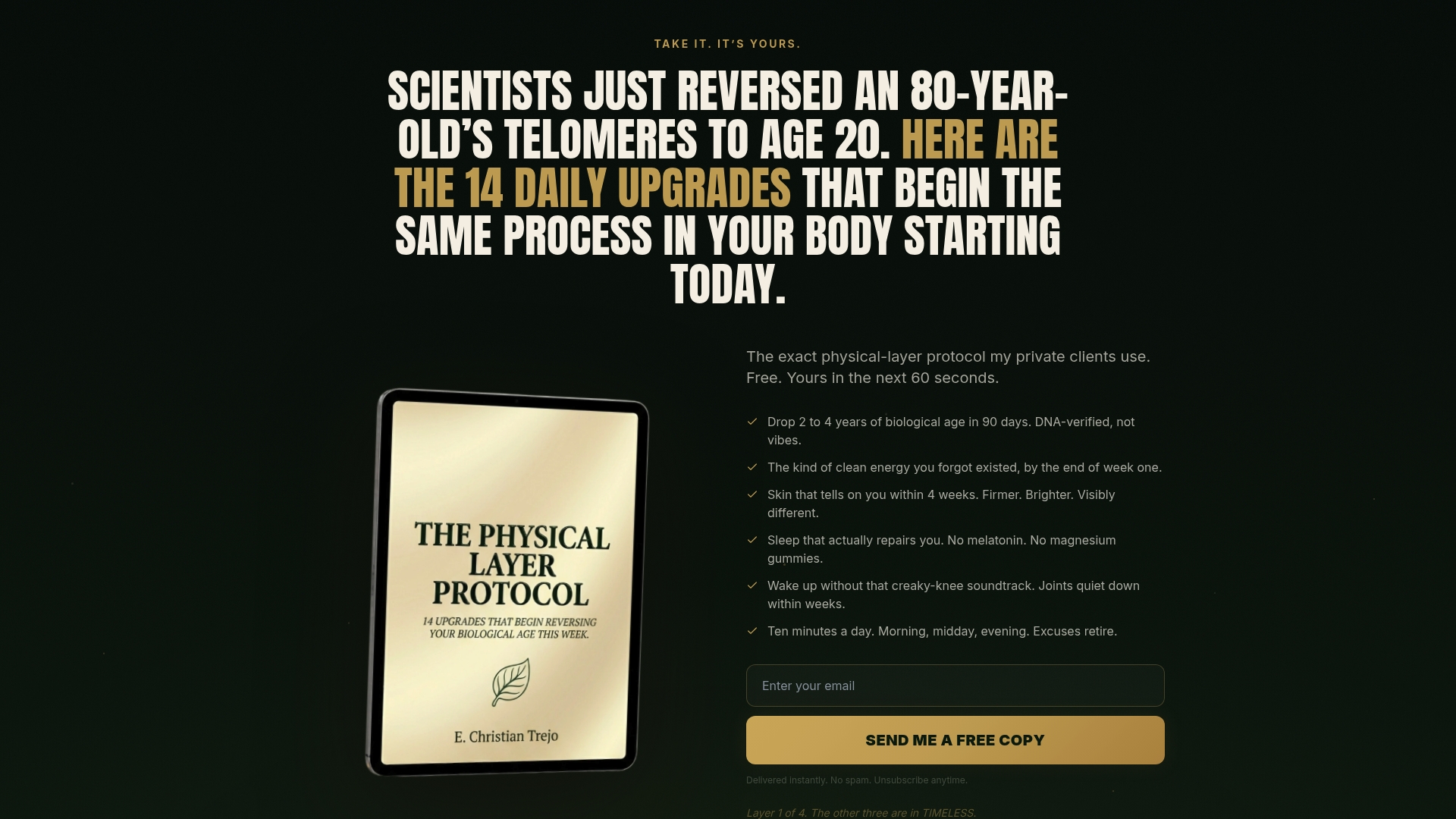
The TIMELESS book ($29.99) gives you the complete 370-page blueprint to run the four-layer protocol yourself. For readers who want a personalized, clinician-guided path, the TIMELESS Vitality Intensive is an 8-week private coaching program backed by a DNA-verified guarantee: reverse your biological age by at least 10 years in 6 months, or receive a full refund. Not ready to commit? Start with the free 14 Upgrades guide at reverseyourage.org/14-upgrades and run the first steps of the protocol tonight. Your next step is a free Vitality Diagnosis call to identify your highest-leverage entry point.
FAQ
What are the primary causes of age-related energy decline?
Mitochondrial dysfunction and chronic low-grade inflammation (inflammaging) are the two primary biological drivers, compounded by a brain-mediated energy conservation response that actively suppresses vitality when it detects systemic damage signals.
Can fatigue with age always be reversed?
Not always, but Cleveland Clinic notes that persistent fatigue in older adults frequently has treatable medical causes, including anemia, thyroid disease, and sleep apnea, that are fully reversible with the right diagnosis and treatment.
How long does it take to restore energy levels?
Most people notice improved sleep and mood within 2–6 weeks of consistent intervention; measurable functional and lab improvements typically appear at 8–12 weeks, while DNA methylation shifts require 3–6 months of sustained multi-modal work.
What labs should I order to investigate age-related fatigue?
Start with CBC with ferritin, TSH plus free T4, sex hormones, HbA1c, serum B12, morning cortisol, hs-CRP, and a comprehensive metabolic panel; add a home sleep apnea test if you wake unrefreshed.
What makes the TIMELESS protocol different from standard longevity programs?
TIMELESS addresses physical, emotional, spiritual, and energetic causes simultaneously, which is necessary to shift the brain’s energy-conservation setpoint, and backs results with a DNA-verified guarantee: 10 years of biological-age reversal in 6 months or a full refund.
Selected references and clinical resources
- The brain-body energy conservation model of aging | Nature Aging — primary evidence for the BEC model linking senescent cells, cytokines, and brain-mediated fatigue
- Why Older Adults Should Pay Attention to Fatigue | Cleveland Clinic — clinical guidance on treatable causes and the 74% prevalence statistic
- Ways to maximize your energy | Harvard Health — mitochondrial loss and structured intervention evidence
- Daily energy expenditure through the human life course | Science — population-level data on age-related metabolic decline
- Mitochondrial and metabolic review | PMC — staged conditioning and metabolic flexibility evidence
- Age-Defying Energy Levels | Johns Hopkins Medicine — B12, vitamin D, and whole-food nutrition guidance
- Fatigue in Older Adults | National Institute on Aging — comprehensive overview of medical and lifestyle contributors
- TIMELESS program and DNA-verified guarantee | Timeless - Reverse Your Age — program evidence, TruAge testing protocol, and Vitality Intensive details
This article is general information, not medical advice. Confirm current clinical guidelines and your individual test results with a qualified healthcare provider before making changes to medications, supplements, or exercise programs.