
Four Daily Actions to Cut Chronic Stress — See Results in 4–12 Weeks
Four evidence-backed daily actions: 7–9 hours sleep, 20–45 minutes movement, brief breathing twice daily, and weekly social connection. See measurable...
Four Daily Actions to Cut Chronic Stress — See Results in 4–12 Weeks
Chronic stress reduction comes down to four daily actions with real evidence behind them: consistent sleep (7 to 9 hours on a fixed schedule), 20 to 45 minutes of moderate movement most days, structured breathing practice for 3 to 10 minutes twice daily, and weekly social connection. Measurable improvement in cortisol patterns and subjective stress typically shows up within 4 to 12 weeks of doing these consistently, not perfectly.
TL;DR:
- Consistency is key, with measurable cortisol improvement typically appearing within four to twelve weeks of sticking to sleep, movement, breathing, and social connection routines.
- Tracking and categorizing stressors helps prioritize changeable triggers over internal or fixed ones, enabling targeted, sustainable stress reduction efforts.
- Prioritizing sleep first for two weeks simplifies other lifestyle modifications by stabilizing nervous system regulation and reducing overall stress load.
- Structured breathing techniques like diaphragmatic and 4-7-8 breathing effectively downshift the fight-or-flight response without requiring long meditation sessions.
- Combining movement with social connection significantly enhances psychological and physiological benefits, with risks of severe stress escalating to health crises when warning signs appear.
Table of Contents
- What Is Driving Your Krónikus Stressz Csökkentése Effort in the First Place?
- Daily Foundations That Lower Your Baseline Stress Load
- How Do Breathing and Mindfulness Actually Lower Stress?
- Why People, Purpose, and Place Matter More Than You Think
- When Is Chronic Stress Serious Enough to Need Professional Help?
- The Four-Layer View: How Chronic Stress Ages Your Body
- What Twelve Weeks of Real Change Actually Looks Like
- How Timeless Turns This Toolkit Into a Measurable Protocol
- Sources
- FAQ
What Is Driving Your Krónikus Stressz Csökkentése Effort in the First Place?
Krónikus stressz csökkentése, or chronic stress reduction, only works once you know what you are actually reducing. Most people treat stress as one undifferentiated fog instead of a set of specific triggers with different fixes.
Start with a validated tool. The PSS-10 (Perceived Stress Scale) takes five minutes and gives you a baseline number you can retest later. Pair it with a simple 1 to 2 week stress log: note the trigger, time, physical sensation, and intensity (1 to 10) each time stress spikes.
Once you have a week or two of data, sort your stressors into three buckets:
- Changeable stressors — workload, a specific relationship conflict, financial disorganization. These respond to direct action.
- Adapt-or-cope stressors — commute time, a difficult but fixed schedule, noise. These respond to buffering strategies, not elimination.
- Internal stressors — rumination, perfectionism, catastrophic thinking. These respond to cognitive and nervous-system work, not logistics.
Pick one high-impact item from the changeable bucket and commit to a single trial change for six weeks. Trying to fix everything at once is why most stress-reduction attempts fail by week two.
Daily Foundations That Lower Your Baseline Stress Load
Before any technique or mindset shift works, your body needs the physiological basics in place. Sleep, movement, and nutrition set the baseline cortisol curve everything else operates on. Skip these and breathing exercises become a band-aid on a structural problem.
Clinical guidance from the Mayo Clinic consistently points to sleep, exercise, and nutrition as the core levers for managing chronic stress, ahead of any supplement or app.
- Fix your sleep window. Set a bedtime and wake time within a 30 minute range, seven nights a week, targeting 7 to 9 hours. Add a screen curfew 60 minutes before bed and keep the bedroom below 68°F and dark.
- Move most days, not perfectly. Aim for 20 to 45 minutes of moderate aerobic activity, 3 to 5 times a week. On sedentary workdays, insert two 5 minute movement breaks, standing, stretching, or walking a hallway.
- Stabilize your eating pattern. Eat at consistent times to avoid blood sugar swings that mimic and worsen stress reactivity. Favor magnesium-rich foods (spinach, pumpkin seeds, dark chocolate) and omega-3 sources (fatty fish, walnuts). Cut caffeine after 2 PM and limit alcohol in the evening, since both fragment deep sleep.
Track one metric per category weekly. Sleep hours, workout days, and a simple yes/no on the caffeine curfew are enough to see if the trend line moves.
Pro Tip: Don’t try to overhaul all three foundations simultaneously. Fix sleep first for two weeks. A well-rested nervous system makes every other change easier to sustain.

How Do Breathing and Mindfulness Actually Lower Stress?
Breathing and short mindfulness practices work by directly downshifting the sympathetic nervous system, the “fight or flight” branch that stays overactive during chronic stress. You don’t need 45 minutes of silent meditation for this to work.
Diaphragmatic breathing is the foundation: breathe into your belly, not your chest, for a slow 4 to 6 second inhale and a longer 6 to 8 second exhale. Use it any time you feel your shoulders creep toward your ears.
The 4-7-8 protocol (inhale 4 seconds, hold 7, exhale 8) works especially well before sleep or in acute spike moments, like right before a difficult conversation.
For daily practice, structure matters more than duration:
- Morning: 5 minutes of diaphragmatic breathing before checking your phone.
- Midday: a 3 minute reset at your desk when tension builds.
- Evening: 4-7-8 breathing as part of your wind-down routine.
Randomized trials on structured mindfulness programs, including Mindfulness-Based Stress Reduction, show measurable reductions in anxiety and physiologic stress markers when practiced consistently, and shorter home-adapted versions retain most of that benefit. Log adherence with a simple checkmark system and reassess your PSS score after two weeks.
Why People, Purpose, and Place Matter More Than You Think
Stress reduction that only targets your body and breath misses half the equation. Chronic stress rarely resolves in isolation, and the research on social prescriptions, structured referrals to community activity rather than medication, backs this up directly.

Programs like Beat the Street, which gamify local walking and group activity, showed sustained activity and wellbeing gains up to two years later, far outlasting typical solo exercise habits. Group accountability changes the adherence math entirely.
Build this into your plan with three concrete steps:
- Schedule one outdoor walk per week with another person, not solo.
- Join a single low-cost group activity, a running club, a community garden, a hobby class.
- Take on one small volunteer role tied to something you care about.
Combining movement with a social container amplifies both the physiologic and psychological payoff compared to exercising alone, largely because you show up even on days motivation is low.
— E. Christian Trejo
When Is Chronic Stress Serious Enough to Need Professional Help?
Self-directed stress reduction has limits, and recognizing them early prevents a manageable problem from becoming a health crisis. Explore professional care pathways with postpartum support resources that guide you through specialized options. Certain signs mean you should stop trying to self-manage and get an assessment.
The clear red flags: suicidal ideation, severe insomnia lasting weeks, daily functioning breaking down at work or home, and escalating substance use to cope. Clinical guidance is unambiguous that these warrant immediate professional assessment, not another week of trying harder alone.
- Cognitive Behavioral Therapy (CBT) targets the thought patterns driving rumination and catastrophic thinking, typically over 8 to 16 sessions.
- Guided MBSR programs run 8 weeks with structured group sessions and daily home practice.
- Pharmacotherapy, when clinically indicated, addresses acute symptom severity while other work happens in parallel.
Before a first appointment, write down your specific goals, how you want to measure progress, and your expected timeline. That framing turns a vague “I’m stressed” into a workable clinical plan.
The Four-Layer View: How Chronic Stress Ages Your Body
Chronic cortisol elevation does more than make you feel wired and tired. Sustained cortisol drives inflammation, immune dysregulation, and measurable changes in brain regions tied to memory, the same mechanisms tracked in biological aging research.
This is exactly why most stress protocols underdeliver. They hit one layer and leave the other three untouched. The TIMELESS four-layer protocol maps every technique in this guide to a specific layer: Physical (sleep, movement, and nutrition lowering cortisol and inflammatory load), Emotional (breathing and mindfulness interrupting stored trauma responses and nervous system dysregulation), Spiritual (shifting subconscious beliefs about aging and stress as inevitable decline), and Energetic (practices that restore bioelectric and meridian balance beneath conscious awareness).
Aging is a four-layer problem. Address only the physical layer, as most programs do, and the other three keep driving the clock forward regardless of how well you sleep.
My own TruAge DNA methylation test measured a biological age of 23 at a chronological age of 41, built on 15 years of research tested across thousands of practitioners in 40 countries.
What Twelve Weeks of Real Change Actually Looks Like
Consistency beats intensity here. A perfect single week of meditation does less than eight mediocre weeks of showing up. Give any protocol 4 to 12 weeks before judging it.
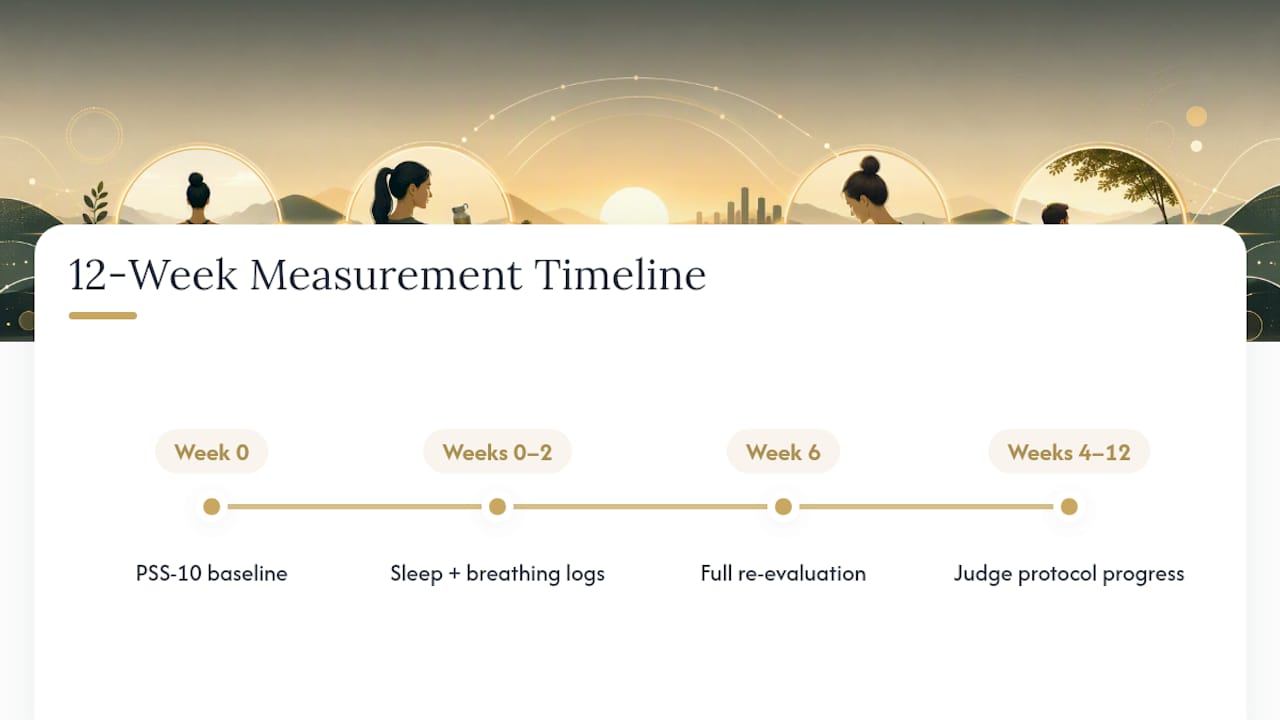
My simple measurement plan: baseline PSS-10 score, a two-week sleep log, two weeks tracking breathing practice adherence, then a full re-evaluation at six weeks. Pair the physiological steps with at least one social commitment. That combination is what sustains results past month one.
How Timeless Turns This Toolkit Into a Measurable Protocol
Everything in this guide works. What most readers lack is a way to know whether it’s actually reversing their biological age or just making them feel a little calmer. That’s the gap the TIMELESS Vitality Intensive closes.
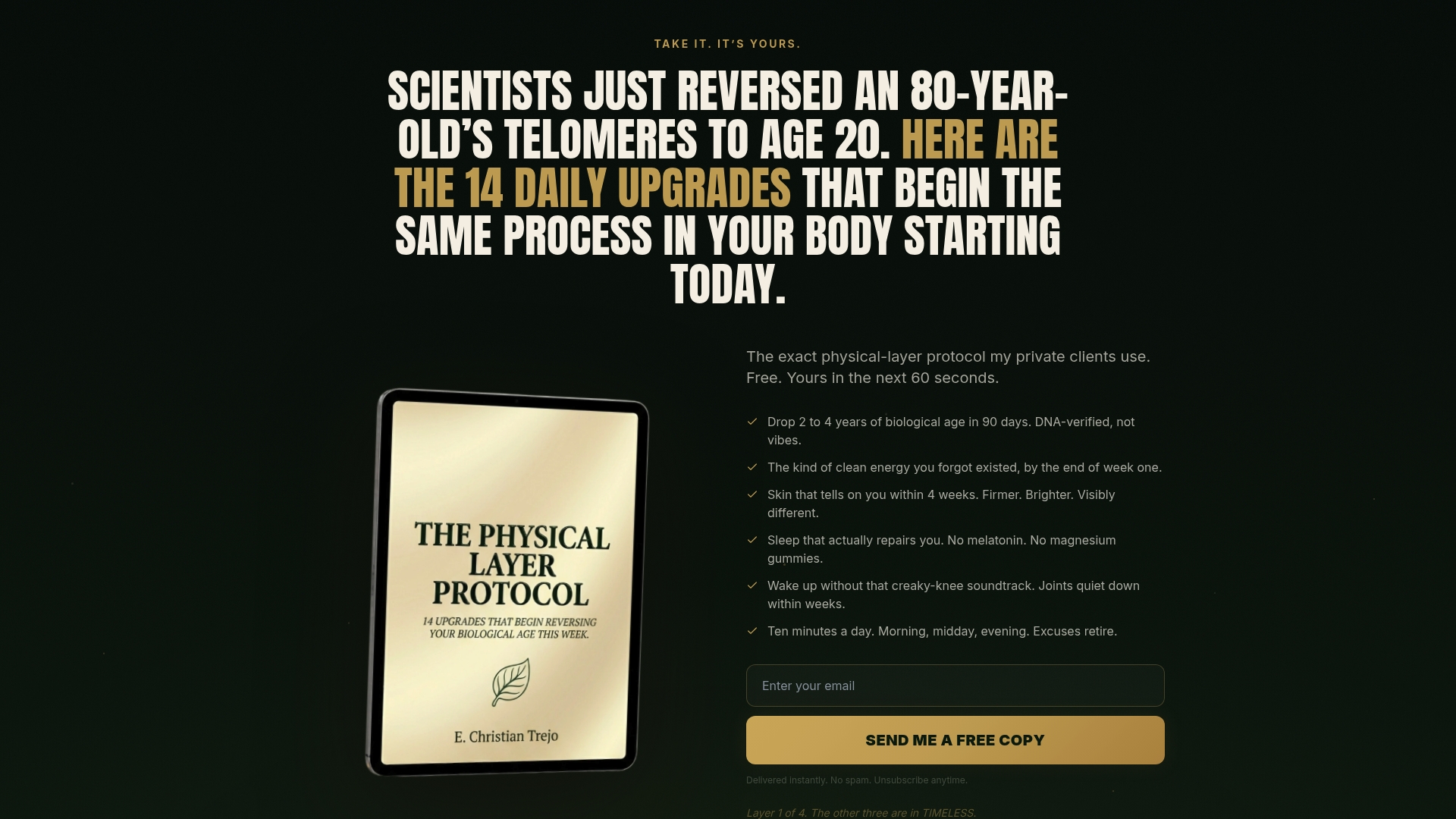
The 8-week Vitality Intensive is one-on-one coaching structured around the same four layers covered above, physical, emotional, spiritual, and energetic, but personalized and measured with pre and post TruAge testing. It fits readers who have tried sleep hygiene and breathing apps, seen partial results, and want a structured program with an actual biological outcome attached to it, not just a subjective “I feel better.” The guarantee offers a significant age-reversal promise backed by testing, or you get a full refund. The program supports its claims with a high level of accountability.
If you want the complete framework first, the TIMELESS book lays out the full 370-page protocol for $29.99. If you’re ready for personalized, DNA-verified results, book your free Vitality Diagnosis call and see if the 8-week program, $7,000 with the guarantee attached, is the right fit for where you are right now.
Sources
- Reducing chronic stress to promote health in adults: the role of social prescriptions and social movements
- Mindfulness-Based interventions evidence summary (NCBI Bookshelf)
- Stress management - Mayo Clinic
This article is general information, not a substitute for advice from a qualified doctor. Consult a qualified healthcare professional about your own circumstances before acting on anything here.
FAQ
What Does Chronic Stress Actually Mean?
Chronic stress is a prolonged activation of your body’s stress response, unlike a short-term stressor that resolves in hours, leading to sustained cortisol elevation, inflammation, and measurable wear on cardiovascular and immune systems.
How Can You Reduce Stress Day to Day?
The highest-impact daily actions are consistent sleep timing, 20 to 45 minutes of moderate movement most days, structured breathing practice, and at least weekly social connection, all backed by clinical stress management guidance.
How Is Chronic Stress Treated Clinically?
Evidence-based routes include Cognitive Behavioral Therapy, guided MBSR programs, and pharmacotherapy when clinically indicated, chosen based on symptom severity and how much daily functioning has been affected.
What Are the Warning Signs of Severe Stress?
Red flags include suicidal thoughts, severe insomnia lasting weeks, an inability to function at work or home, and escalating substance use, all of which warrant immediate professional assessment rather than continued self-management.
Can a Structured Program Actually Reverse Stress-Related Aging?
The TIMELESS Vitality Intensive is built specifically around this question, addressing all four layers of stress-driven aging with DNA-verified before-and-after testing, something most stress management approaches never measure at all.