
How Childhood Stress Shapes Epigenetic Aging
Discover how childhood stress shapes epigenetic aging, affecting your DNA and health. Learn about interventions that can shift these effects.
How Childhood Stress Shapes Epigenetic Aging
Early-life stress doesn’t just leave emotional scars. It rewrites the biological program running your cells. Specifically, childhood adversity modifies DNA methylation and chromatin structure at stress-response genes like NR3C1 and FKBP5, and those modifications can accelerate biological age as measured by tools like TruAge DNA methylation testing and pace-of-aging clocks like DunedinPACE. The critical insight: many of these marks are plastic. They can be shifted. Measurement and integrated intervention are where that shift begins.
- Early-life stress alters methylation at genes governing stress recovery, neuroplasticity, and immune function
- Longitudinal data show individuals with the highest adversity exposure experienced over 2 additional years of methylation aging compared to those with no adversity exposure.
- DunedinPACE detects subtle stress-related aging signals that first-generation clocks often miss
- Epigenetic marks are partially reversible, making measurement and multi-layer intervention the practical path forward
Table of Contents
- How does childhood stress change the epigenome?
- What human studies show about ACEs and biological age
- Which biological pathways connect early stress to aging?
- Are stress-related epigenetic changes permanent?
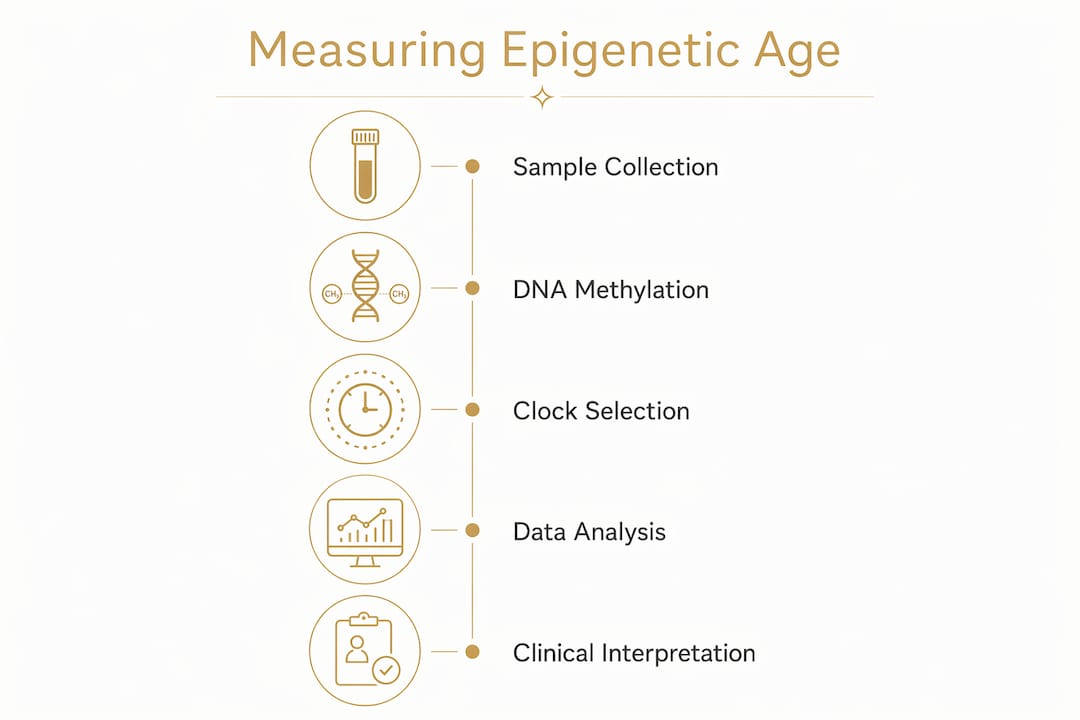
- How should you measure epigenetic age and track change?
- What interventions actually move stress-related epigenetic marks?
- Why a four-layer approach is required for durable epigenetic reversal
- Realistic timelines, risks, and when to see a clinician
- Key Takeaways
- What the evidence actually demands
- The TIMELESS program: DNA-verified biological age reversal
- FAQ
How does childhood stress change the epigenome?
Stress becomes biology through glucocorticoid signaling, catecholamine release, and chromatin remodeling. When a child experiences chronic adversity, cortisol floods the system repeatedly. That sustained signal drives methyl groups onto cytosine bases at CpG sites near gene promoters, a process called DNA methylation, which silences or dampens gene expression without changing the underlying genetic code. Simultaneously, histone modifications alter how tightly DNA is wound, making certain genes more or less accessible to transcription machinery.
Research consistently identifies four loci where these changes concentrate: NR3C1 (glucocorticoid receptor), FKBP5 (stress-response modulator), BDNF (neuroplasticity), and KITLG (cell signaling). Hypermethylation at NR3C1’s promoter, for example, reduces glucocorticoid receptor expression and impairs the feedback loop that shuts off the stress response. The result is a system that stays switched on long after the threat is gone.
Timing matters enormously. Exposures during sensitive developmental windows produce deeper biological embedding than equivalent stress later in life. Brain tissue and immune cells are especially vulnerable, which is why the downstream consequences span mood, immunity, and cellular aging simultaneously.
Pro Tip: When evaluating epigenetic test results for a client with childhood trauma history, prioritize blood-derived samples over saliva for immune-cell loci like NR3C1, and request locus-specific methylation data alongside whole-clock scores for a more complete picture.
What human studies show about ACEs and biological age
The headline finding from a meta-analysis of 27 studies is this: adverse childhood experiences associate with epigenetic-age acceleration, but results are heterogeneous across clocks and study designs. Second and third-generation clocks are more likely to detect stress-related acceleration than first-generation tools like Horvath’s original clock.
The longitudinal evidence is sharper. One 10-year within-subject study found that cumulative adversity predicted accelerated methylation aging from adolescence into young adulthood, with each additional adversity domain adding to the effect. Cross-sectional snapshots in childhood showed no significant association, which means the damage accumulates over time rather than appearing immediately.
Adverse childhood experiences are common in the U.S. adult population, affecting a substantial portion according to large-scale surveys, underscoring that this is not a rare clinical edge case. It is a population-level driver of biological aging.
Key methodological caveats the literature itself flags:
- ACE definitions vary widely across studies, making pooled effects difficult to interpret
- Smoking, socioeconomic status, and health behaviors confound methylation signals and must be controlled
- Reverse causality is possible: poor health may increase adversity exposure rather than the reverse
- Standardized ACE measurement and consistent clock selection are needed before causal claims can be made confidently
The correlation is real and replicated. Causation requires more rigorous longitudinal designs than most existing studies provide.
Which biological pathways connect early stress to aging?
Childhood stress embeds via HPA-axis dysregulation and chronic low-grade inflammation. Altered NR3C1 methylation reduces glucocorticoid receptor sensitivity, leaving the HPA axis poorly regulated and cortisol chronically elevated. That sustained cortisol exposure drives systemic inflammation, suppresses immune surveillance, and accelerates cellular aging through multiple routes.
- HPA axis: NR3C1 and FKBP5 methylation changes impair cortisol feedback, sustaining inflammatory signaling
- Immune aging: methylation shifts at immune-regulatory loci alter cytokine profiles and accelerate immune senescence
- Telomere erosion: prospective studies show children exposed to violence exhibit greater telomere shortening than non-exposed peers
- Mitochondrial dysfunction: chronic stress increases oxidative load, impairing mitochondrial efficiency and ATP production
- Brain structure: BDNF hypermethylation reduces neuroplasticity in the hippocampus and amygdala, affecting stress resilience and mood regulation
These pathways don’t operate in isolation. Dysregulated cortisol feeds inflammation, which accelerates immune aging, which compounds mitochondrial stress. That cascade is why single-target interventions rarely produce durable results.
Are stress-related epigenetic changes permanent?

No. Many methylation marks are plastic, meaning the environment and targeted interventions can shift them. Translational research confirms that methylation responds to environmental change and pharmacologic modifiers in animal models. Small human studies show similar signals, though effect sizes and durability vary.
One nuance worth holding: not every methylation change is damage. Some marks function as compensatory buffers, adaptive responses that protected the child during adversity. Interpreting a methylation pattern requires context about timing, phenotype, and functional outcome, not just the direction of the change.
What plasticity means practically:
- Methylation at stress-response genes can shift with sustained nervous-system regulation
- Lifestyle interventions (sleep, diet, exercise) modify methylation at inflammation-related loci
- Pharmacologic tools like HDAC inhibitors show reversal effects in preclinical models, though human clinical data remain limited
- Timing of intervention matters: earlier and more sustained work produces larger shifts
Pro Tip: A meaningful clock change is typically a reduction of 1–3 years in biological age over 3–6 months of consistent intervention. Smaller shifts may reflect noise or behavioral confounders. Pair clock scores with functional markers like inflammatory panels before drawing conclusions.
How should you measure epigenetic age and track change?
Use a validated provider and select a clock matched to your goal. For tracking the impact of early-life stress, DunedinPACE outperforms first-generation clocks because it measures the current rate of aging rather than a static age estimate, making it more sensitive to subtle physiological signals from early environmental stress.
| Clock | What it measures | Best use case |
|---|---|---|
| Horvath / Hannum | Chronological age prediction | Baseline biological age snapshot |
| PhenoAge / GrimAge | Morbidity and mortality risk | Disease-risk stratification |
| DunedinPACE | Current pace of aging | Monitoring intervention response, trauma-related aging |
Practical testing guidance:
- Use blood-derived samples when targeting immune-cell loci; saliva is acceptable for whole-clock estimates
- Establish a baseline, then retest at 3–6 months after a structured intervention period
- Control for behavioral confounders (alcohol, sleep disruption, acute illness) in the 2–4 weeks before sampling
Pro Tip: Pair methylation testing with PTSD or depression screening tools and objective sleep metrics. A clock score that improves while sleep and mood worsen is a signal to reassess the intervention sequence, not just celebrate the number.
What interventions actually move stress-related epigenetic marks?
Interventions that combine nervous-system regulation with cellular and mitochondrial support produce the largest, most measurable improvements. Stabilizing the nervous system first is not optional; it is the prerequisite. Attempting intensive cellular protocols on a dysregulated stress system is like trying to repair a house during an active storm.
Priority interventions, sequenced:
- Trauma-informed psychotherapy: EMDR and somatic therapies directly address stored trauma and reduce HPA-axis hyperreactivity, which is the upstream driver of most stress-related methylation changes
- Nervous-system regulation: heart rate variability training and polyvagal-informed practices reduce sympathetic dominance and support parasympathetic recovery
- Sleep architecture optimization: deep sleep stages drive cellular repair and methylation maintenance; disrupted sleep accelerates epigenetic aging
- Anti-inflammatory diet and exercise: both modify methylation at inflammation-related loci and support mitochondrial function
- Mitochondrial supports: targeted nutritional protocols address oxidative stress downstream of chronic HPA activation
- Clinical adjuncts: HDAC inhibitors show preclinical promise but require medical supervision; not yet established for routine clinical use
Pro Tip: Sequence matters. Stabilize nervous-system regulation for at least 4–6 weeks before adding intensive cellular or mitochondrial protocols. Adherence and outcomes both improve when the emotional layer is addressed first.
Why a four-layer approach is required for durable epigenetic reversal
A durable improvement in epigenetic age requires simultaneous work on physical, emotional, spiritual, and energetic layers. Most longevity programs address one. That is why most longevity programs produce modest, short-lived results.
The TIMELESS four-layer protocol maps directly to the mechanisms reviewed above:
- Physical layer: targets epigenetic, mitochondrial, and cellular markers through nutrition, movement, and sleep protocols
- Emotional layer: addresses stored trauma and nervous-system dysregulation, the upstream drivers of HPA-axis dysfunction and stress-related methylation changes
- Spiritual layer: works on identity and subconscious beliefs about aging, which shape behavior and stress biology in ways that purely cellular interventions cannot reach
- Energetic layer: bioelectric field and meridian practices that support systemic regulation across all other layers
E. Christian Trejo’s most recent TruAge test confirmed a biological age of 23 at chronological age 41, a result verified by DNA methylation testing, not self-report. The TIMELESS Vitality Intensive is the 8-week private implementation of this protocol, with TruAge testing built into the measurement framework.
Realistic timelines, risks, and when to see a clinician
Measurable methylation changes can appear within months, but durable reversal requires integrated work sustained over 3–12+ months. Expect:
- Psychotherapy (EMDR, somatic): nervous-system changes within weeks; methylation signals may shift within 3–6 months of consistent work
- Lifestyle interventions (sleep, diet, exercise): inflammatory and mitochondrial markers often respond within 6–12 weeks
- Whole-clock biological age: meaningful shifts typically require 6+ months of multi-layer intervention
Risks and contraindications to know:
- Trauma-focused therapy can temporarily intensify symptoms; psychiatric supervision is essential for anyone with active PTSD or suicidal ideation
- Unsupervised use of pharmacologic epigenetic-targeting agents carries serious risks; these are not consumer supplements
- Confounders like alcohol, smoking, and sleep disruption can mask real gains or create false positives in testing
The correlation between childhood adversity and epigenetic aging is well-documented. Causation is not fully established, and individual responses to intervention vary. Consult a clinician before beginning any medically supervised protocol, particularly if you have a history of psychiatric illness or are considering pharmacologic adjuncts.
Key Takeaways
Childhood adversity accelerates epigenetic aging in proportion to cumulative exposure, and those marks are partially reversible through integrated, multi-layer intervention verified by tools like TruAge and DunedinPACE.
| Point | Details |
|---|---|
| Cumulative adversity accelerates aging | Individuals with the highest adversity exposure experienced over 2 additional years of methylation aging compared to those with no adversity exposure. |
| Clock selection matters | DunedinPACE detects stress-related aging signals more sensitively than first-generation clocks like Horvath’s. |
| Plasticity is real but conditional | Many methylation marks shift with sustained intervention; nervous-system stabilization must come before cellular protocols. |
| Four layers, not one | Physical, emotional, spiritual, and energetic work are all required for durable epigenetic reversal. |
| Timeless - Reverse Your Age | The TIMELESS Vitality Intensive delivers a DNA-verified, four-layer protocol with a 10-year biological age reversal guarantee or full refund. |
What the evidence actually demands
Most longevity conversations focus on what you eat, how you sleep, and which supplements you take. Those matter. But the research reviewed here points to something the supplement industry cannot sell you: the emotional and nervous-system layers are not peripheral. They are mechanistically central to epigenetic aging. NR3C1 methylation doesn’t normalize because you took a mitochondrial support stack. It normalizes when the stress system that drove the methylation change in the first place is genuinely regulated.
The field’s own meta-analysts acknowledge that heterogeneous results across studies reflect, in part, the failure to account for trauma history as a biological variable. That is not a soft psychological observation. It is a measurement problem with a molecular explanation.
Fifteen years of working with this evidence, and my own TruAge-verified result, point to the same conclusion: aging is a four-layer problem. Treating one layer while ignoring the others produces partial results at best.
The TIMELESS program: DNA-verified biological age reversal
If you’ve read this far, you already know that a single-layer protocol won’t produce the results you’re after. The TIMELESS program was built specifically for adults who want measurable, verified reversal, not a wellness routine.

The TIMELESS Vitality Intensive is an 8-week, one-on-one coaching program that addresses all four layers simultaneously, with TruAge DNA methylation testing built into the process. The guarantee is simple: 10 years of biological age reversal in 6 months, verified by DNA testing, or every dollar is refunded. No other longevity program offers that level of accountability.
Your options to get started:
- Free guide: 14 evidence-based upgrades at reverseyourage.org/14-upgrades
- The book: TIMELESS: Reverse Your Age, a 370-page protocol blueprint for $29.99
- Vitality Intensive: $7,000 with the DNA-verified guarantee; book a free Vitality Diagnosis Call to see if you qualify
- TIMELESS Challenge: reverseyourage.org/challenge, with a $50,000 prize for documented results
For any medically supervised epigenetic interventions, consult a licensed clinician. The TIMELESS program is a coaching and lifestyle protocol, not a substitute for medical care.
FAQ
Can childhood stress permanently age your DNA?
Not permanently. Research confirms that DNA methylation is plastic and can shift with sustained environmental change and targeted intervention, though some marks are more stable than others.
Which epigenetic clock best tracks stress-related aging?
DunedinPACE is the most sensitive option for detecting early-life stress effects, as comparative analyses show it captures subtle pace-of-aging signals that first-generation clocks like Horvath’s miss.
How many years of biological aging can childhood adversity add?
Longitudinal data show that individuals with the highest cumulative adversity exposure experienced 2+ additional years of methylation aging compared to those with no adversity exposure.
What is the first intervention step for stress-related epigenetic aging?
Stabilize nervous-system regulation first. Trauma-informed therapies like EMDR and somatic practices address the upstream HPA-axis dysfunction driving most stress-related methylation changes before cellular protocols can work effectively.
How does the TIMELESS program address epigenetic aging from childhood stress?
The TIMELESS Vitality Intensive targets all four layers simultaneously: physical (cellular and mitochondrial), emotional (stored trauma and nervous-system regulation), spiritual (belief systems), and energetic (bioelectric regulation), with TruAge-verified outcomes and a full-refund guarantee.