Practitioner Tested Resonance Breathing to Raise HRV in 3–6 Weeks
Ten minutes of nasal resonance breathing daily, plus box breathing or sighs for spikes. Feel calmer now; HRV trends rise in 3–6 weeks.
Practitioner Tested Resonance Breathing to Raise HRV in 3–6 Weeks
The fastest way to raise HRV today is slow, nasal diaphragmatic breathing at or near your resonance frequency, roughly five to six breaths per minute. For acute stress spikes, layer in a physiological sigh or a round of box breathing. Start with ten minutes and expect calmer nerves within the session, with measurable HRV trends building over three to six weeks of daily practice.
TL;DR:
- Breathing at or near 5.5 breaths per minute maximizes HRV improvements by syncing breathing rhythm with the baroreflex and amplifying respiratory sinus arrhythmia.
- Consistent daily practice of ten minutes of resonance breathing over three to six weeks is necessary to see lasting baseline HRV gains.
- Layering in physiological sighs or box breathing during acute stress provides immediate calming effects without shifting baseline HRV.
- Mouth breathing at rest can negate the benefits of resonance training, so nasal breathing is crucial for sustaining HRV improvements.
- Personalized resonance frequency testing and biomarker verification through programs like the TIMELESS Vitality Intensive offer measurable, verified anti-aging results.
Table of Contents
- What Is Resonance Breathing and Why Does It Raise HRV?
- How Do You Practice Each HRV Breathing Technique?
- How Should You Build a Starter HRV Breathing Practice?
- What Is HRV Biofeedback and How Does Breathing Fit In?
- What Should You Do If Breathing Practice Makes You Dizzy?
- Why This Matters Inside a Longevity Protocol
- What Clients Notice First When They Start Breathing Work
- How Timeless Turns Breathing Into a Measured, Verified Program
- Sources
- FAQ
What Is Resonance Breathing and Why Does It Raise HRV?
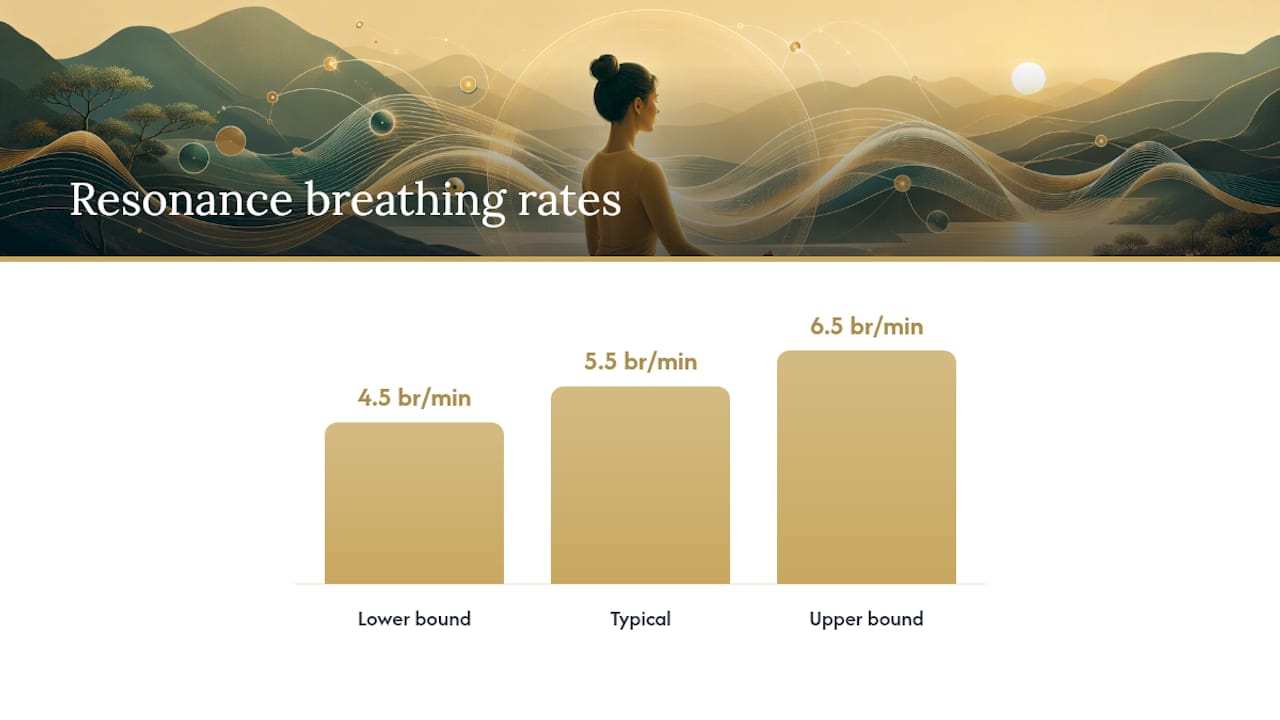
Resonance breathing works because it synchronizes two systems that usually run out of sync: your breathing rhythm and your baroreflex, the loop that adjusts heart rate based on blood pressure changes. Most adults hit peak effect somewhere in a range of 4.5 to 6.5 breaths per minute, with many landing near 5.5. Breathe at that pace and you amplify respiratory sinus arrhythmia (RSA), the natural rise and fall of heart rate tied to inhaling and exhaling, according to a Frontiers in Psychology review on HRV biofeedback.
Here’s what’s actually happening physiologically:
- Slowing your breath rate stretches the RSA wave, giving your vagus nerve more room to modulate heart rate on each cycle.
- Baroreflex gain increases when breathing and blood pressure oscillations line up, which is the core mechanism biofeedback trainers chase.
- Cardiac and respiratory rhythms start entraining, meaning your heartbeat pattern begins to mirror your breath pattern instead of fighting it.
One detail surprises most people: the exact ratio of inhale to exhale matters less than you’d think. Research comparing longer exhales against balanced breathing found no consistent HRV advantage for either pattern once you’re inside the resonance range, according to a 2024 slow-paced breathing study published in Applied Psychophysiology and Biofeedback. Staying in that 4.5 to 6.5 breath-per-minute window, consistently, beats obsessing over a perfect count.
Resonance frequency isn’t fixed for life, either. It shifts with fatigue and stress load, which is why practitioners recommend retesting it periodically, especially after a hard training block or a stretch of poor sleep.
How Do You Practice Each HRV Breathing Technique?
Different situations call for different tools. Resonance breathing is your daily driver; the others are for moments when you need relief now.
- Resonance (slow diaphragmatic) breathing. Sit upright, breathe only through your nose, and let your belly expand on the inhale rather than your chest. Inhale for about 5 seconds, exhale for about 5 seconds, no holds. Ten minutes at this pace, done daily, is the technique most likely to move your baseline HRV over weeks.
- Box breathing (4-4-4-4). Inhale for 4 seconds, hold for 4, exhale for 4, hold for 4, and repeat for two to five minutes. This pattern produces an acute RMSSD increase of roughly 8 to 15% during the practice itself, which is why special forces and surgeons use it before high-pressure moments. It won’t shift your baseline overnight, but it works fast when you need composure right now.
- Cyclic (physiological) sigh. Take two inhales through the nose back to back, the second one topping off your lungs, then exhale slowly and fully through the mouth. One to three rounds calms acute physiological arousal almost immediately, making it the best tool for a spike of anxiety or a stressful email.
- 4-7-8 breathing. Inhale for 4 seconds, hold for 7, exhale for 8. Use it before sleep or during a wind-down window, not as your everyday resonance practice, since the extended hold sits outside the standard resonance range.
- Alternate nostril breathing (Nadi Shodhana). Close your right nostril, inhale through the left, close the left, exhale through the right, then reverse. Five minutes works well as a mental reset between tasks.
Pro Tip: Keep your throat open and completely relaxed during any breath hold. Straining or clenching during a hold triggers a sympathetic threat response that cancels out the calming effect you’re trying to create.
How Should You Build a Starter HRV Breathing Practice?
Consistency beats intensity here. A short daily habit outperforms one long weekly session, and the research backing resonance breathing was built on repeated practice, not occasional marathons, per the same Frontiers review.
- Start with 5 to 10 minutes of resonance breathing, twice a day, ideally morning and before bed.
- Add 1 to 3 physiological sighs whenever acute stress hits during the day, on top of your scheduled sessions.
- If you use a wearable or chest strap, track RMSSD trends across two to three weeks rather than reacting to single-day swings, since night-to-night noise from sleep, alcohol, or illness will mislead you.
- Retest your resonance frequency every few months, or after a major stressor, since it can drift up or down.
- Pair the practice with an existing habit, like your morning coffee or your nightly wind-down, so it survives busy weeks.
Nasal breathing outside of practice sessions matters more than people assume. Mouth breathing at rest can quietly erode the gains you build during your sessions, so treat nose breathing as the floor you build everything else on top of.
What Is HRV Biofeedback and How Does Breathing Fit In?
HRV biofeedback is a training loop: you breathe at your resonance frequency while watching a real-time HRV waveform, and you adjust your pace until the wave forms a smooth, even curve. The visual feedback teaches your nervous system to reproduce that pattern without the screen eventually. One detail trainers emphasize: chasing a clean, sine-wave shape on the display often produces better physiological adaptation than chasing a subjective feeling of calm, according to guidance from CRKL’s biofeedback protocol writeup.
Formal HRV biofeedback (HRVB) programs commonly run around ten sessions of 30 minutes each, and studies link them to reduced blood pressure and improved mood alongside HRV gains, per Frontiers in Public Health research on resonance frequency breathing.
- You don’t need a clinical setup to start: a chest-strap heart rate monitor paired with a breath-pacing app gets you most of the benefit.
- See a trained practitioner if you’re managing a diagnosed anxiety disorder, cardiac condition, or if home practice isn’t producing any shift after six to eight weeks.
What Should You Do If Breathing Practice Makes You Dizzy?
Dizziness or tingling during slow breathing usually means you’re overbreathing, pulling in more air than your body needs at rest.
- Fix it fast: shorten your inhale, breathe more gently, and stop forcing a big belly expansion; return to normal breathing for a minute before resuming.
- Watch for panic triggers: if a hold or pattern spikes anxiety instead of calming it, drop the hold entirely and switch to plain slow exhale-focused breathing.
- Medical caution: anyone with a diagnosed cardiac condition, who is pregnant, or who has a history of panic disorder should check with a doctor before adopting breath-hold techniques like box breathing or 4-7-8.
Pro Tip: If a technique consistently leaves you more wired instead of calmer, you’re probably straining through the holds. Ease off the intensity before abandoning the technique altogether.
Why This Matters Inside a Longevity Protocol
I’m E. Christian Trejo, and I’ve spent 15 years researching biological aging, work that shows up in my own TruAge DNA methylation results: biological age 23 at a chronological age of 41. Breathing work is real, but it’s still just one lever.
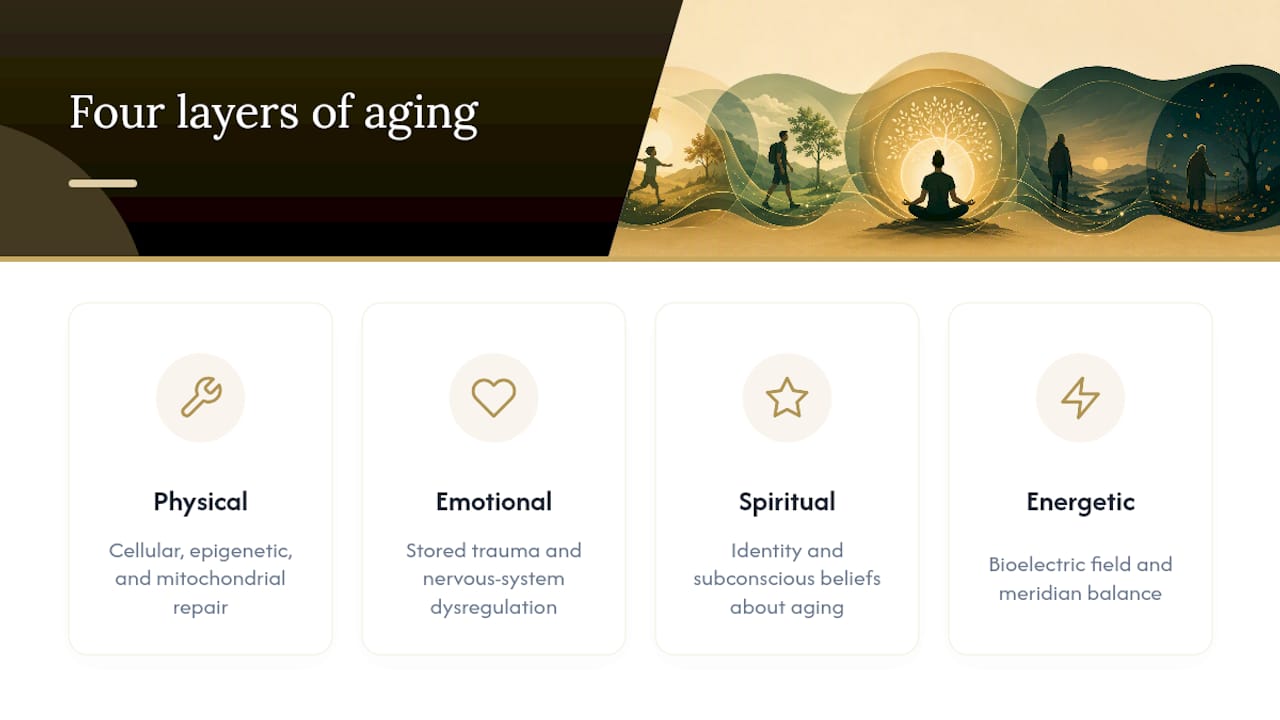
Aging is a four-layer problem. Most programs address one layer and call it a solution. The TIMELESS protocol works all four simultaneously: Physical (cellular, epigenetic, and mitochondrial repair), Emotional (stored trauma and nervous system dysregulation), Spiritual (identity and subconscious beliefs about aging), and Energetic (bioelectric field and meridian balance).
Resonance breathing sits squarely in the Physical and Emotional layers, calming a dysregulated nervous system and improving mitochondrial oxygen efficiency. Coached clients get their individual resonance frequency tested directly and their biological age verified through TruAge methylation testing, not guessed at.
What Clients Notice First When They Start Breathing Work
Most people notice the emotional shift before the numbers move. Sleep gets deeper in the first week or two, reactivity to small annoyances drops, and by week three or four, HRV trend lines on a wearable start climbing instead of staying flat.
Adherence is the real battle, not technique. Stack your resonance breathing onto something you already do daily, coffee, brushing your teeth, or getting into bed, so it doesn’t rely on willpower alone. Try the starter protocol above for four weeks before judging it. Track your RMSSD trend, not your best day.
— E. Christian Trejo
How Timeless Turns Breathing Into a Measured, Verified Program
Timeless - Reverse Your Age is the difference between guessing at breathing patterns online and having your actual resonance frequency measured, then trained, then verified against your DNA methylation age. Breathing is a foundation. It’s not the whole building.
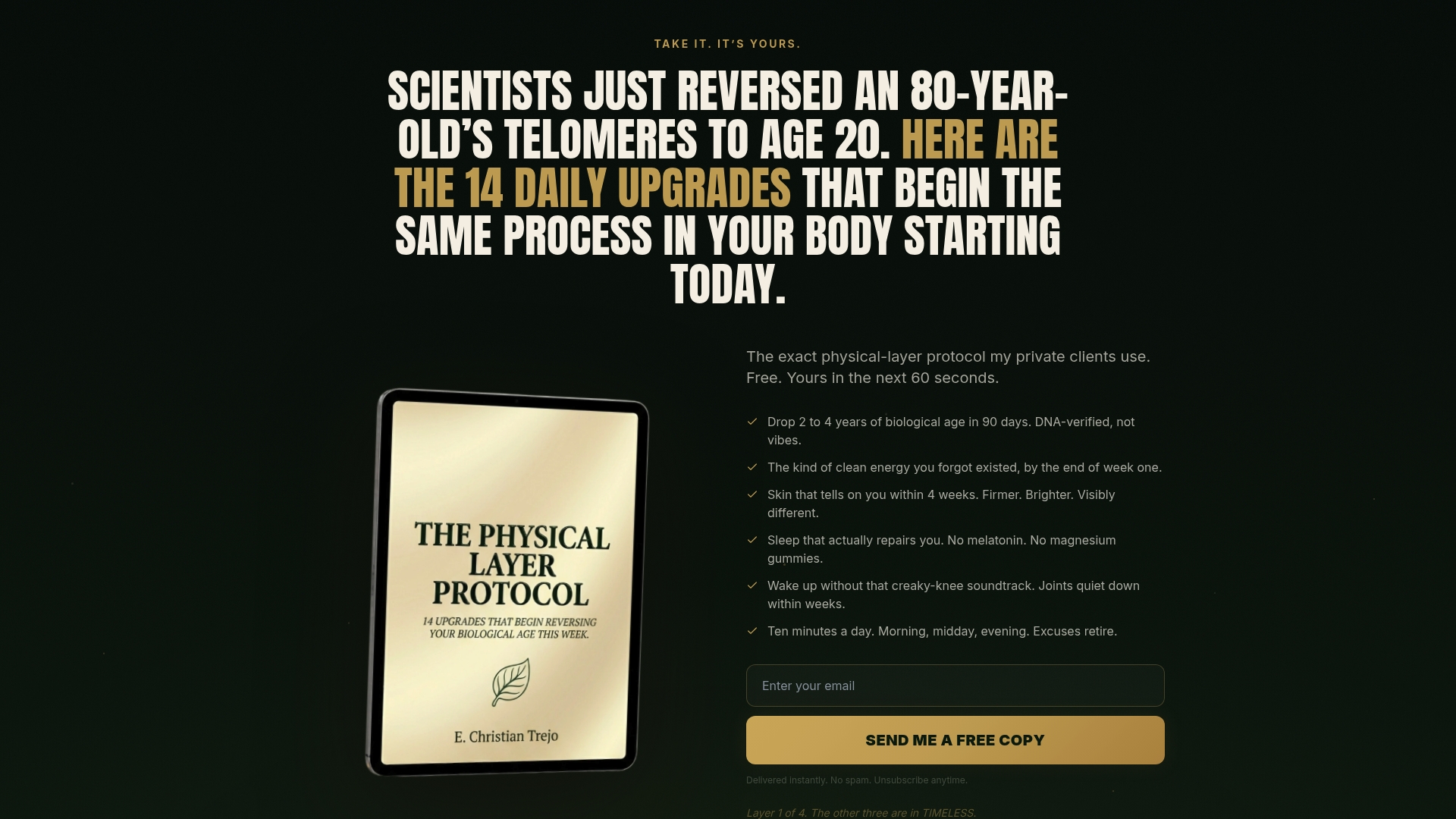
The 370-page book, Timeless: Reverse Your Age, walks you through the full four-layer protocol for $29.99, including how breathing work integrates with the emotional, spiritual, and energetic layers most programs never touch. If you want a faster start, grab the free guide at reverseyourage.org/14-upgrades for 14 upgrades you can apply this week.
For readers who want personalized RF testing, biomarker verification, and hands-on coaching, the TIMELESS Vitality Intensive is an 8-week program built on a guarantee no other longevity program makes: reverse your biological age by at least 10 years in 6 months, verified by TruAge DNA methylation testing, or you get every dollar back. Book your free vitality diagnosis call to see where your resonance frequency and biological age currently stand.
Sources
- Heart rate variability biofeedback: how and why does it work? — Frontiers in Psychology
- Do Longer Exhalations Increase HRV During Slow-Paced Breathing? — Springer
- HRV and breathing (HRV Zone guide)
- Longevity Magazin — Lassíts, lélegezz, gyógyulj – 3 légzőgyakorlat
FAQ
What is the best breathing rate for raising HRV?
Most adults see the strongest HRV response breathing between 4.5 and 6.5 breaths per minute, often close to 5.5, though your personal resonance frequency can sit anywhere in that range.
Does box breathing actually raise HRV?
Box breathing (4-4-4-4) produces an acute RMSSD increase of about 8 to 15% during the practice session itself, making it useful for immediate composure rather than long-term baseline change.
How long does it take to see HRV improvements from breathing?
Calming effects can show up within a single session, but measurable shifts in your baseline HRV trend typically take three to six weeks of daily practice to appear clearly on a wearable.
Is nose breathing really necessary for HRV benefits?
Yes. Mouth breathing at rest can undercut the gains built during practice sessions, so nasal breathing works as the daily foundation that sustains what your resonance sessions build.
What if breathing exercises make me feel dizzy or panicky?
That signals overbreathing; shorten your inhale, soften the effort, and drop any breath holds until symptoms clear, and check with a doctor first if you have a cardiac condition, are pregnant, or have a panic disorder history.
Can coaching improve on self-taught breathing techniques?
Self-practice works, but coached programs like the TIMELESS Vitality Intensive add individual resonance frequency testing and TruAge DNA methylation verification, giving you actual proof of change instead of a guess.