Superficial vs Cellular Anti-Aging: What the Science Says
Discover the key differences between superficial and cellular anti-aging. Learn how to achieve lasting skin health with scientific insights!
Superficial vs Cellular Anti-Aging: What the Science Says
Superficial anti-aging fixes what you can see at the skin’s surface. Cellular anti-aging changes what is happening inside your cells. That distinction determines whether your results last weeks or decades. TruAge DNA methylation testing, cellular senescence research, and the TIMELESS four-layer protocol all point to the same conclusion: appearance-only interventions plateau because they never address the biological programs driving tissue breakdown.
Three things you can act on right now:
- Today: Apply broad-spectrum SPF 30+ every morning and add one evidence-backed topical (retinoid or AHA) to your evening routine.
- For long-term skin longevity: Layer in cellular strategies, including mitochondrial antioxidants, procedural dermal remodeling, and systemic lifestyle changes that shift cell biology, not just surface texture.
- When to see a clinician: If you want procedural delivery (microneedling, fractional lasers, biostimulators) or are considering experimental senolytics, get a board-certified dermatologist involved before you start.
Key Takeaways
Cellular anti-aging targets the biological programs driving tissue breakdown, while superficial methods address visible signs only, and combining both layers with objective biomarker tracking produces the most durable results.
| Point | Details |
|---|---|
| Superficial vs cellular distinction | Superficial fixes epidermal appearance; cellular changes cell states, ECM dynamics, and systemic aging drivers. |
| Sunscreen is non-negotiable | Daily SPF 30+ prevents photoaging and protects every cellular intervention you layer on top. |
| Retinoids bridge both levels | Retinoids have strong RCT evidence for both epidermal and upper-dermal effects, making them the highest-value topical. |
| Delivery determines depth | Microneedling and fractional lasers increase dermal bioavailability of actives; topicals alone often plateau at the epidermis. |
| Timeless - Reverse Your Age | The TIMELESS four-layer protocol addresses Physical, Emotional, Spiritual, and Energetic aging simultaneously, with a DNA-verified guarantee of 10 years of biological age reversal in 6 months. |
Table of Contents
- What is superficial anti-aging, and what can it actually do?
- What is cellular anti-aging, and why does it matter for skin longevity?
- Which skin layer does each intervention actually reach?
- How do treatments compare by depth, evidence, and outcome?
- Why delivery is the gap between a good serum and a real result
- What does the science actually support today?
- How do you build a plan that actually works?
- What are the real risks, and which claims should you ignore?
- Why the four-layer model changes everything
- A DNA-verified path from surface fixes to real biological change
- Sources
- FAQ
What is superficial anti-aging, and what can it actually do?
Superficial anti-aging targets the epidermis, the outermost skin layer, with the primary goal of improving visible appearance. Think texture, brightness, fine lines caused by dehydration, and uneven pigment. These interventions work fast and carry low risk, which makes them the right foundation for any skin protocol.
Common superficial anti-aging methods include:
- Sunscreen (SPF 30+): Prevents UV-driven photoaging, the single most modifiable cause of visible skin aging.
- Moisturizers and humectants: Restore barrier function and reduce transepidermal water loss.
- AHAs, BHAs, and PHAs: Chemical exfoliants that accelerate epidermal cell turnover and improve surface texture within days to weeks.
- Topical brighteners: Niacinamide, kojic acid, and vitamin C derivatives address pigmentation at the melanocyte level, still within the epidermis.
- Superficial chemical peels: Superficial peels using AHAs or low-concentration TCA exfoliate epidermal layers without passing the basal layer, which is precisely what defines them as superficial.
Visible results from superficial interventions typically appear within days to weeks for texture and brightness, and weeks to months for fine-line smoothing. The core limitation is structural: no topical moisturizer or superficial peel reliably remodels the dermal extracellular matrix (ECM) or reduces the burden of senescent cells in the dermis. You can look better without changing the underlying biology at all.
What is cellular anti-aging, and why does it matter for skin longevity?
Cellular anti-aging targets the biological programs that govern how your cells age, divide, and repair tissue. The goal is not immediate smoothing. It is sustained tissue function, which is a fundamentally different objective.
The key mechanisms that cellular anti-aging strategies address:
- Cellular senescence and SASP: Senescent cells enter permanent growth arrest and secrete pro-inflammatory, matrix-degrading molecules called the senescence-associated secretory phenotype (SASP). These cells accumulate in aged skin and impair tissue homeostasis, making their clearance or suppression a priority for true skin longevity.
- Mitochondrial dysfunction and oxidative stress: Declining mitochondrial efficiency increases reactive oxygen species (ROS), which damages collagen, DNA, and cell membranes.
- ECM degradation: Matrix metalloproteinases (MMPs) break down collagen and elastin faster than fibroblasts can replace them. Cellular strategies aim to shift that balance.
- Telomere attrition and genomic instability: Shortened telomeres trigger senescence programs; interventions that support telomere maintenance slow this cascade.
- Inflammaging: Chronic, low-grade systemic inflammation accelerates every mechanism above.
Cellular anti-aging strategies that address these mechanisms include:
- Retinoids: At therapeutic concentrations, retinoids stimulate fibroblast activity, increase procollagen synthesis, and reduce MMP expression, going well beyond surface exfoliation.
- Peptides and growth factors: Signal fibroblasts to produce ECM components; evidence varies by peptide class.
- Mitochondrial antioxidants: Topical coenzyme Q10 can suppress collagenase expression after UVA exposure, and alpha-lipoic acid has shown in vivo benefits for UV-induced damage and mitochondrial function, though clinical outcome data remains mixed across compounds.
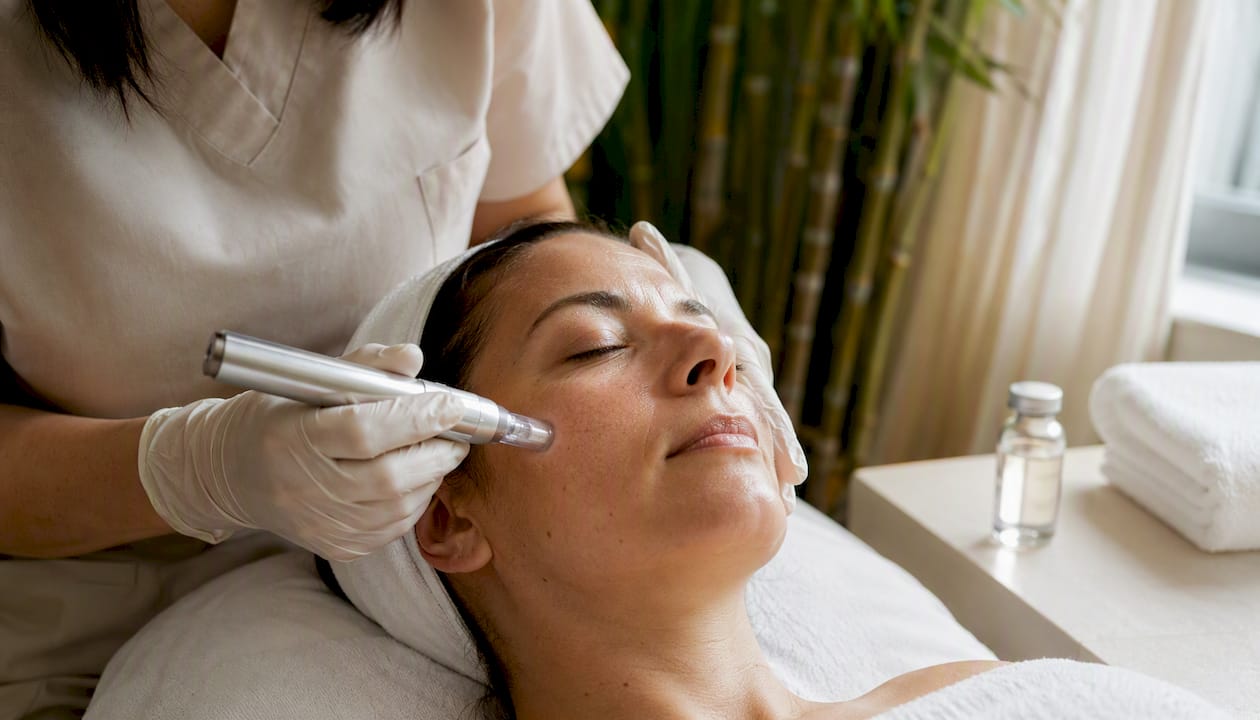
- Procedural dermal remodeling: Microneedling and fractional lasers create controlled injury that triggers neocollagenesis in the dermis.
- Experimental senolytics and senomorphics: Compounds designed to selectively clear or suppress senescent cells. Promising in preclinical models; translational barriers including safety, delivery, and regulatory hurdles remain significant.
- Systemic and lifestyle strategies: Nutrition, sleep architecture, metabolic health, and stress regulation all modulate inflammaging and cellular repair capacity.
A multilayer-targeted regimen combining topical and systemic interventions is what the clinical literature recommends for optimizing skin aging outcomes, because aging manifests across every skin layer simultaneously.
Which skin layer does each intervention actually reach?
Skin has four structural zones, and the layer an intervention reaches determines what it can change.
- Epidermis: The outer barrier, made up primarily of keratinocytes. Superficial interventions live here. Turnover slows with age, and the DEJ (dermoepidermal junction) flattens, reducing nutrient exchange between layers.
- Dermis: Where fibroblasts produce collagen and elastin. This is the structural layer. Senescent cells accumulate here. ECM degradation happens here. Reaching it is the challenge.
- Hypodermis: Fat and volume. Fillers and biostimulators work at this depth.
- DEJ (dermoepidermal junction): The interface between epidermis and dermis. Its flattening with age is a measurable sign of deeper structural decline.
The epidermal barrier is effective at its job, which means it blocks most topicals from reaching fibroblasts in the dermis. Effective transdermal delivery requires permeation enhancers, optimized vehicles, or physical disruption such as microneedling or lasers to increase dermal bioavailability. This is not a formulation problem you can solve by spending more on a serum.
Pro Tip: Retinoids are among the few topicals with consistent evidence for dermal-level activity, but even they benefit from delivery optimization. Applying a retinoid serum immediately after microneedling (under clinical supervision) increases dermal uptake substantially compared to topical application alone.
How do treatments compare by depth, evidence, and outcome?
The differences in anti-aging approaches become clearest when you map interventions against their actual target depth and the quality of evidence behind them.
Clinical dermatology increasingly recommends starting from deep-layer restoration and then addressing skin quality with cosmeceuticals and procedural sequencing for durable results. Superficial maintenance does not become less important; it becomes the layer you maintain while cellular strategies do the structural work.
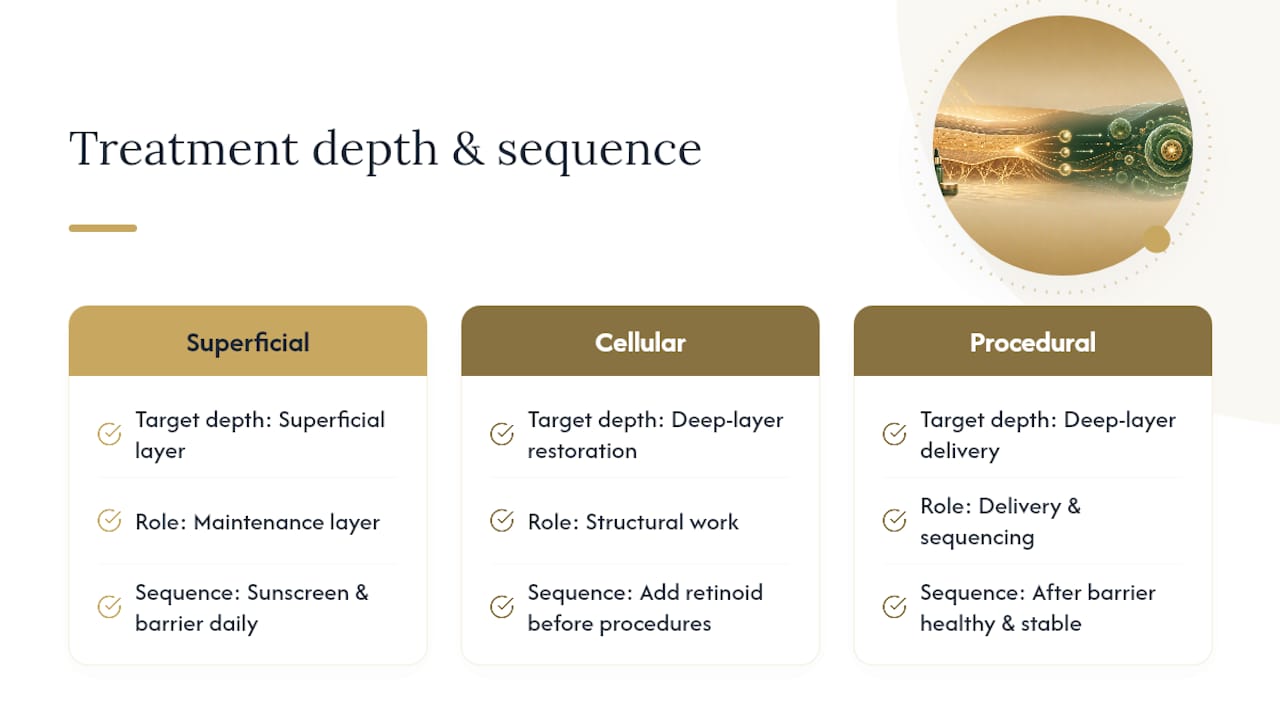
Pro Tip: Sequence matters. Sunscreen and barrier support are non-negotiable daily maintenance. Add a retinoid before considering procedural options. Procedural delivery is most effective when your skin barrier is already healthy and stable.
Why delivery is the gap between a good serum and a real result
Most people buy the right active and apply it the wrong way. The epidermal barrier does not care how expensive your peptide serum is. Without a delivery strategy, most actives stay in the epidermis.
Delivery methods that increase dermal bioavailability:
- Liposomes and nanoemulsions: Encapsulate actives to improve penetration depth and stability.
- Chemical permeation enhancers: Compounds like propylene glycol or certain fatty acids temporarily disrupt barrier lipids to increase permeability.
- Microneedling: Creates microchannels through the epidermis, allowing topical actives applied immediately after to reach the dermis directly.
- Fractional lasers: Ablate columns of tissue, stimulating neocollagenesis and creating temporary windows for adjuvant topical absorption.
- Iontophoresis: Uses a low electrical current to drive charged molecules through the skin.
- Injectable delivery: Fillers, biostimulators (e.g., poly-L-lactic acid), and mesotherapy bypass the barrier entirely.
- Systemic delivery: Oral or injectable compounds (certain antioxidants, metabolic interventions) reach the dermis via circulation, bypassing the barrier problem altogether.
Two practical use-cases worth understanding:
- Microneedling plus growth factors or peptides: Microneedling creates temporary channels; applying a growth-factor serum immediately after increases uptake into the dermis, where it can signal fibroblasts directly. This combination has stronger clinical rationale than topical application alone.
- Fractional laser plus topical adjuvants: Fractional lasers stimulate neocollagenesis in the dermis. Following the healing phase with retinoids or peptides sustains the remodeling signal and extends results.
Combining procedures with potent biological actives carries real risk. Infection, post-inflammatory hyperpigmentation, and barrier disruption are all possible when sequencing is wrong. Clinician oversight is not optional at this level.
What does the science actually support today?
Knowing the evidence tier behind an intervention is how you avoid spending money on hope.
Evidence tiers used in clinical dermatology:
- Randomized controlled trials (RCTs): The strongest evidence. Sunscreen, retinoids, and ablative lasers have this.
- Well-powered cohort studies: Strong observational data. Systemic lifestyle factors (sleep, nutrition, metabolic health) sit here.
- Small clinical trials: Promising signals, limited by sample size or duration. Many peptide and growth-factor studies fall here.
- Case series and mechanistic studies: Useful for generating hypotheses, not for clinical confidence.
- Preclinical / in vitro: Animal models or cell cultures. Senolytics and partial reprogramming are largely here for skin applications.
Advanced cellular and imaging methods, including skin autofluorescence for advanced glycation end-products (AGEs) and cellular morphology assays, can now quantify deeper aging beyond visible signs, linking molecular markers to phenotype. This matters because it means you can measure whether a cellular intervention is actually working, not just whether your skin looks better in a mirror.
Timeline expectations by intervention class:
- Superficial interventions: Days to months for visible improvement in texture, brightness, and hydration.
- Procedural dermal remodeling: Weeks to 6 months for measurable collagen changes; results continue improving post-procedure.
- Deep cellular and systemic rejuvenation: Months to years. Many therapies targeting senescence or epigenetic reprogramming remain in early clinical stages. Tracking with methylation-based biomarkers provides the most objective way to verify whether systemic interventions are shifting biological age.
| Intervention class | Evidence tier | Realistic timeline |
|---|---|---|
| Sunscreen | Strong RCT | Prevention; ongoing |
| Topical retinoids | Strong RCT | 3–6 months for dermal effect |
| Microneedling | Good clinical | 1–3 months post-series |
| Non-ablative laser | Strong clinical | 3–6 months |
| Systemic lifestyle | Strong cohort | 6–24 months |
| Senolytics (experimental) | Preclinical / early clinical | Unknown; not yet validated for skin |
How do you build a plan that actually works?
The goal is not to choose between superficial and cellular approaches. It is to layer them correctly.
- Establish baseline maintenance first. Daily SPF 30+ (non-negotiable), a barrier-supporting moisturizer, and adequate hydration. This is the foundation every other intervention builds on.
- Introduce evidence-backed topicals. A retinoid (start low, increase gradually) and a topical antioxidant. Give each at least 12 weeks before evaluating.
- Consider procedural delivery when topicals plateau. Microneedling or non-ablative fractional laser under clinical supervision, combined with adjuvant topicals, for deeper dermal remodeling.
- Add systemic and lifestyle strategies in parallel. Sleep architecture, metabolic health, and managing inflammaging through immune system support all affect the cellular environment your topicals are working in.
- Monitor with objective biomarkers. If you want to know whether you are changing biological age, not just appearance, TruAge DNA methylation testing gives you a measurable number. Skin autofluorescence (SAF) for AGEs is a noninvasive option for tissue-level assessment.
Questions to ask a clinician before starting any procedural or experimental intervention:
- What is the evidence level for this specific procedure in my skin type and age group?
- What is the required sequencing, and what should I avoid combining?
- How will we measure whether it is working beyond visual assessment?
- What are the realistic risks, and what is the recovery protocol?
Cost reality: superficial maintenance runs low (under $100/month for quality sunscreen and a retinoid). Procedural options range from medium ($200–$800 per session for microneedling) to high ($1,000+ per session for ablative lasers). Systemic lifestyle strategies cost little to nothing but require consistent commitment.
What are the real risks, and which claims should you ignore?
Medical disclaimer: this article is general information, not a substitute for personalized medical advice. Consult a board-certified dermatologist or licensed medical provider before beginning any procedural, prescription, or experimental anti-aging intervention.
Red flags that should prompt immediate medical consultation:
- Any at-home peel marketed as “deep” or “medical grade” without clinician supervision.
- Unregulated senolytics purchased online without a prescribing physician.
- Signs of infection after any procedure: increasing redness, swelling, warmth, or discharge.
- Products claiming to “reverse dermal collagen loss” with no clinical trial data cited.
- Any program promising biological age reversal without objective biomarker verification.
Common myths, corrected:
- “A high-end moisturizer can rebuild collagen.” Moisturizers improve barrier function and surface hydration. They do not stimulate fibroblast-level ECM production.
- “Antioxidants alone reverse cellular aging.” Antioxidants reduce oxidative stress, which is one mechanism among several. They do not clear senescent cells or reverse telomere attrition.
- “More procedures mean faster results.” Stacking procedures without recovery time disrupts the barrier, increases infection risk, and can trigger post-inflammatory hyperpigmentation, especially in darker skin tones.
- “Experimental senolytics are safe because they’re natural.” Cellular rejuvenation strategies including senolytics face significant safety, delivery, and regulatory challenges. “Natural” does not mean safe at therapeutic doses.
Why the four-layer model changes everything
Most anti-aging protocols address one layer of aging. That is why most results are temporary.
My TruAge DNA methylation test confirmed a biological age of 23 at chronological age 41. That result did not come from a good skincare routine. It came from 15 years of research and a protocol that addresses aging as a four-layer problem simultaneously.
The TIMELESS four-layer protocol maps directly onto the science in this article. The Physical layer covers cellular, epigenetic, and mitochondrial interventions, which is everything discussed in the cellular anti-aging sections above. But the other three layers are where most protocols fail completely. The Emotional layer addresses stored trauma and nervous system dysregulation, both of which drive chronic cortisol elevation and accelerate inflammaging at the cellular level. The Spiritual layer targets identity and subconscious beliefs about aging, because the programs you run about what aging means to you shape the epigenetic signals your cells receive. The Energetic layer works with the bioelectric field and meridian systems, which influence cellular communication in ways that purely biochemical models miss.
Skin longevity research confirms that an integrated, multilayer-targeted approach is necessary because aging manifests across every layer simultaneously. Addressing only the Physical layer, even with the best cellular interventions available, leaves three active aging programs running unchecked. That is the gap between looking younger and being biologically younger, verified by objective measurement.
A DNA-verified path from surface fixes to real biological change
If you have read this far, you already understand that superficial fixes and cellular strategies are not competing options. They are different rungs on the same ladder. The question is how high you want to climb.
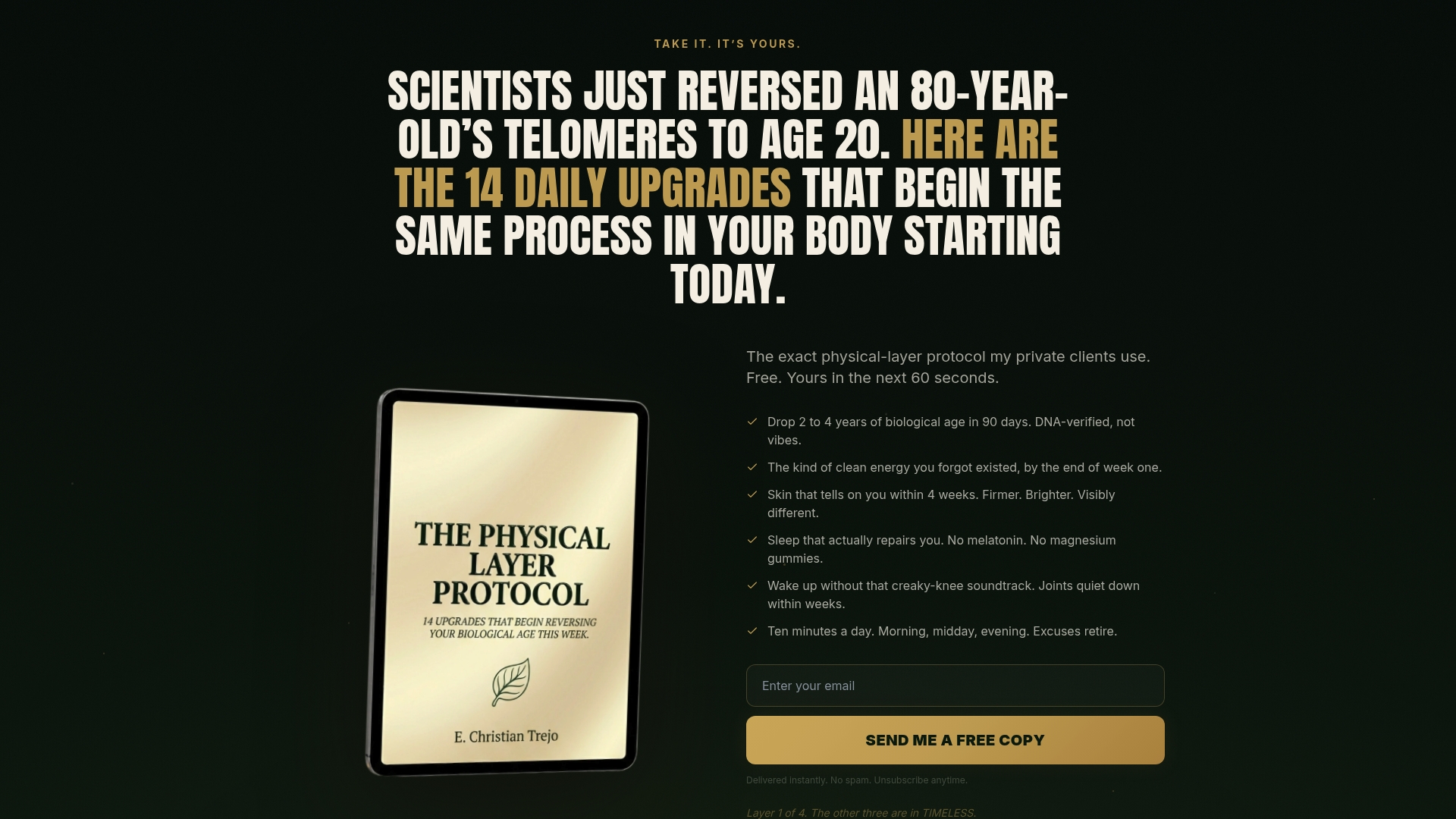
Timeless - Reverse Your Age offers three ways to go deeper. The free 14 Upgrades guide at Reverseyourage gives you the highest-leverage interventions from the TIMELESS protocol at no cost. The TIMELESS book ($29.99) is a 370-page blueprint covering the complete four-layer system, built on 15 years of research and tested across 40 countries. You can get your copy at the TIMELESS book page.
For those with serious, measurable longevity goals, the TIMELESS Vitality Intensive is an 8-week private coaching program with a DNA-verified guarantee: reverse your biological age by at least 10 years in 6 months, confirmed by TruAge DNA methylation testing, or every dollar is refunded. No other longevity program in the United States offers that level of accountability. Learn more and enroll at Reverseyourage.
Sources
- Skin Ageing: A Progressive, Multi-Factorial Condition Demanding an Integrated, Multilayer-Targeted Remedy - PMC
- The role of cellular senescence in skin aging and age-related skin pathologies - PMC
- Skin aging: mechanisms, evaluation, and rejuvenation — Springer/EMBO Journal (2026)
- Cellular rejuvenation therapies: review — MDPI (2024)
FAQ
What is the difference between superficial and cellular anti-aging?
Superficial anti-aging targets the epidermis to improve visible signs like texture and pigment, while cellular anti-aging targets deeper biological mechanisms, including senescence, ECM degradation, and mitochondrial dysfunction, to improve long-term tissue function.
At what age does cellular aging become a significant concern?
Cellular aging processes, including telomere shortening and senescent cell accumulation, begin in early adulthood, but their visible and functional impact on skin typically accelerates after age 30, which is when adding cellular strategies alongside superficial maintenance becomes clinically meaningful.
What are the four types of aging?
Aging is commonly categorized across biological, cellular, psychological, and environmental dimensions, though the TIMELESS four-layer model frames it as Physical (cellular, epigenetic, mitochondrial), Emotional, Spiritual, and Energetic, each requiring distinct interventions for complete reversal.
What is the most effective anti-aging procedure?
No single procedure is universally most effective. Ablative fractional lasers have strong clinical evidence for dermal remodeling, but the most durable outcomes come from combining procedural delivery with systemic lifestyle strategies and objective biomarker monitoring such as TruAge DNA methylation testing.
Can antioxidants alone reverse cellular aging?
No. Antioxidants reduce oxidative stress, one mechanism among several, but they do not clear senescent cells, restore telomere length, or reverse ECM degradation. They are a valuable component of a cellular protocol, not a complete solution on their own.