Trauma Accelerates Biological Age 0.4 Months/Year, and It Can Reverse
Evidence based analysis showing trauma can raise biological age (about 0.4 months per year in veterans), why some tests mislead, and a four layer reversal...
Trauma Accelerates Biological Age 0.4 Months/Year, and It Can Reverse
Trauma and biological age are directly linked. Studies using validated epigenetic clocks show that PTSD and severe adversity accelerate biological aging on several measures, but the effect isn’t universal or fixed. Veterans with current PTSD age roughly 0.4 months faster per calendar year on the DunedinPACE clock, yet stress-driven increases can partially reverse once the nervous system stabilizes. That distinction between temporary and permanent aging matters more than any single number.
TL;DR:
- Active PTSD is linked to an accelerated biological aging rate of about 0.4 months per year, but this speed can partially reverse with symptom remission.
- Different aging clocks measure distinct aspects, with third-generation clocks like DunedinPACE being more sensitive to trauma-related pace changes than traditional age estimates.
- Trauma influences aging through multiple systems, including cortisol-driven inflammation, epigenetic shifts, and behavioral factors like sleep disruption, all of which can be targeted for reversal.
- Biological age changes are dynamic; short-term stressors may temporarily spike age markers, but recovery efforts can lead to measurable improvements in biological aging.
- Combining trauma therapy, sleep, exercise, social reintegration, and verified testing offers the most effective route to reduce trauma-linked biological aging.
Table of Contents
- Trauma és Biológiai Kor: What Large Studies Show
- How Trauma Plausibly Speeds Up Biological Aging
- What Aging Tests Measure, and What They Miss
- Is Trauma-Linked Aging Reversible?
- Concrete Next Steps: Testing, Therapy, and Daily Practice
- Why Most Anti-Aging Advice Ignores the Emotional Layer
- Ready for a Structured, Verified Path Forward?
- Sources
- FAQ
Trauma és Biológiai Kor: What Large Studies Show
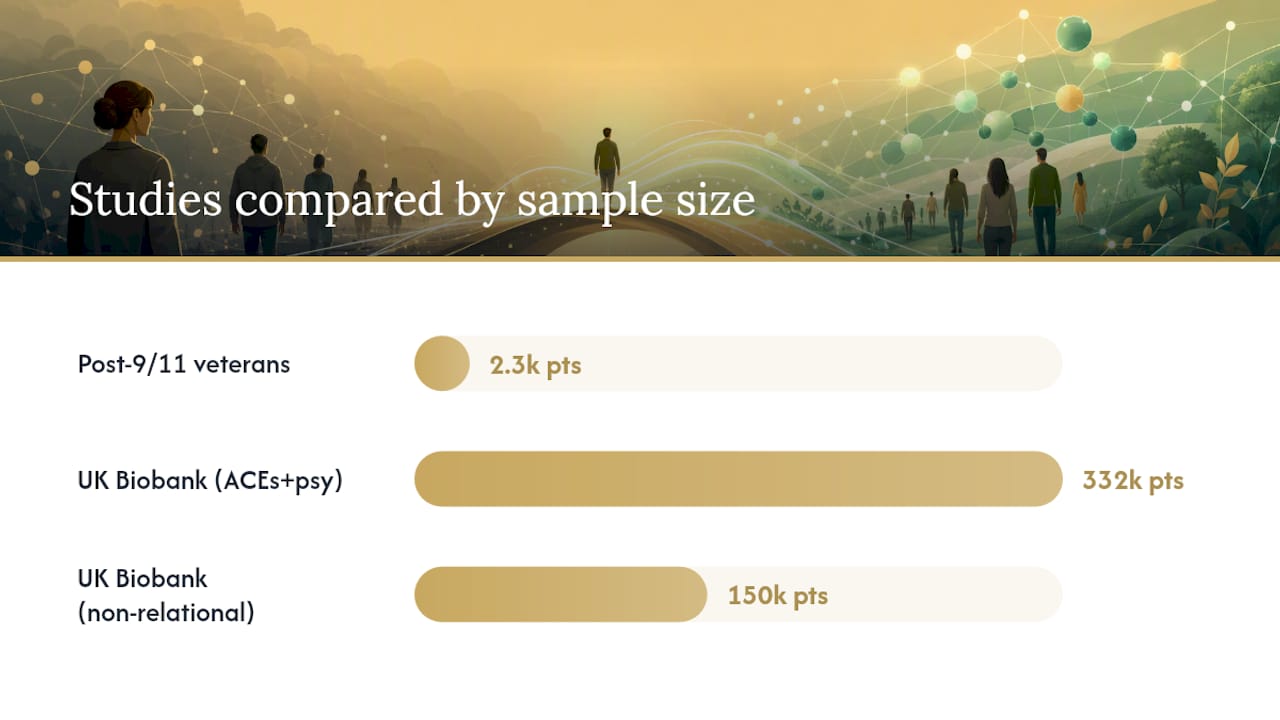
The strongest evidence comes from cohort research large enough to separate signal from noise. A study of 2,309 post-9/11 veterans found current PTSD tied to accelerated aging on DunedinPACE, a third-generation clock that measures aging rate rather than a fixed age estimate. The effect translated to about 0.4 additional months of biological aging for every calendar year lived with active PTSD.
Population data tells a similar story at a much larger scale. In a UK Biobank analysis covering more than 332,000 participants, researchers identified a cluster of people with adverse childhood experiences (ACEs) combined with active psychopathology. That group showed higher odds of both biological and facial aging acceleration, with facial aging odds roughly 1.52 times higher than in unaffected participants.
A separate UK Biobank study of over 150,000 people zeroed in on trauma outside close relationships, things like assault, disaster exposure, or witnessing violence. That research linked non-relational trauma to older metabolomic age, higher mortality risk scores, and greater frailty.
Not every study agrees. A systematic review spanning many observational studies found no consistent pooled association between cumulative ACE exposure and epigenetic age across commonly used clocks. That inconsistency isn’t a reason to dismiss the link. It’s a reason to stop trusting any single test as the final word.
What the data pattern shows:
- Current, active PTSD associates with faster aging pace, not just older age
- Trauma combined with diagnosed psychopathology shows stronger effects than trauma alone
- Non-relational trauma correlates with frailty and metabolomic markers, not just methylation clocks
- Effect sizes vary by which clock and which population get studied
Statistic to remember: Veterans with current PTSD aged biologically about 0.4 months faster per calendar year than veterans without PTSD, based on DunedinPACE tracking in a cohort of over 2,300 people.
How Trauma Plausibly Speeds Up Biological Aging
Trauma doesn’t age the body through one pathway. It works through several systems at once, which is exactly why a single intervention rarely fixes it.
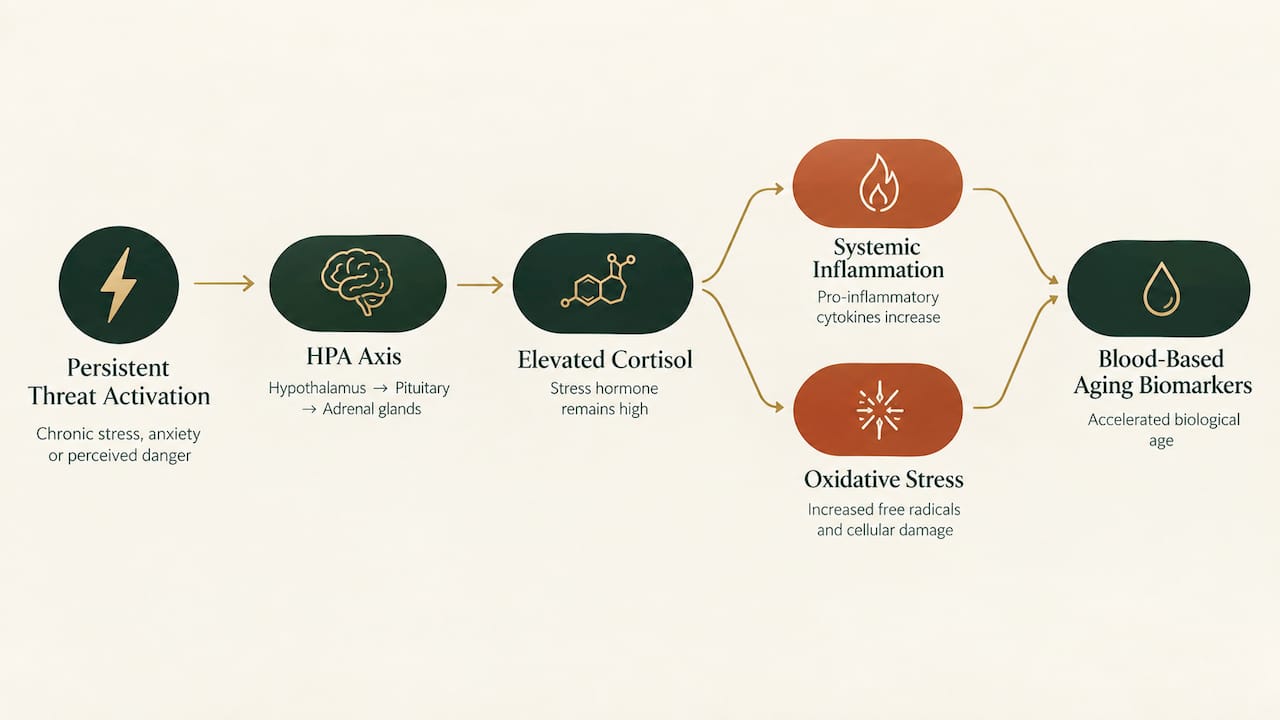
Chronic activation of the hypothalamic pituitary adrenal (HPA) axis keeps cortisol elevated long after the original threat is gone. Sustained cortisol exposure drives systemic inflammation and oxidative stress, both of which show up in blood-based aging biomarkers. This is the physiological engine behind “wear and tear” aging.
Epigenetic changes, specifically DNA methylation, are the regulatory layer that many aging clocks actually read. Methylation doesn’t rewrite your DNA sequence. It changes which genes get switched on or off, and trauma exposure has been linked to methylation shifts at stress and immune-related genes. That’s the biological fingerprint a methylation test is picking up.
Behavior fills the gap between stress and biology. Trauma frequently disrupts sleep, increases smoking and substance use, reduces physical activity, and drives social withdrawal. These behavioral mediators partially explain the adversity to aging pathway, and unlike genetics, they’re modifiable starting today.
- HPA axis dysregulation raises cortisol and downstream inflammation
- Epigenetic marks shift gene expression without altering DNA sequence
- Sleep loss, smoking, poor diet, and isolation compound the biological effect
- No single marker captures all four mechanisms, which is why integrated panels beat one-off tests
Pro Tip: If you’re evaluating your own biological age results, ask what the test measured beyond methylation. Inflammation markers and sleep quality data tell you which mechanism is actually driving your number.
What Aging Tests Measure, and What They Miss
Not all biological age tests measure the same thing, and that distinction changes how you should interpret your results.
First-generation clocks like Horvath’s estimate chronological age from methylation patterns. Second-generation clocks like GrimAge and PhenoAge weight those patterns against mortality risk, making them more clinically relevant. Third-generation clocks like DunedinPACE go further still, estimating the pace of aging rather than a static age, which is why it caught the veterans’ PTSD signal that a simpler clock might have missed.
Methylation isn’t the only window into aging. Metabolomic clocks, frailty indices, telomere length, and grip strength each index a different biological process. Telomere findings, in particular, tend to be inconsistent across trauma studies, while metabolomic and epigenetic measures show steadier population-level signals.
Timing matters too. A short-term stressor, surgery, an infection, an acute grief event, can spike your measured biological age temporarily. Testing during an acute crisis and again months later gives you a truer read than one snapshot.
- First-generation clocks estimate chronological age; second- and third-generation clocks estimate mortality risk and aging pace
- Metabolomic scores, frailty indices, and grip strength complement methylation data
- A single test during acute stress can overstate your baseline aging rate
- Integrated molecular, clinical, and functional assessment beats any one number
Is Trauma-Linked Aging Reversible?
Biological age isn’t a life sentence written at birth. It moves in both directions, and the veterans data proves it moves down when the underlying condition improves.
Research on dynamic biological age changes shows that acute stressors, pregnancy, surgery, severe illness, can temporarily raise your measured age, only for it to decline again during recovery. That reversibility is the most underreported finding in this entire field.
The veterans cohort adds a sharper detail: people with past PTSD that had remitted aged more slowly than people with current, active PTSD. In cohorts where PTSD symptoms resolved, aging pace shifted toward the non-PTSD group, a pattern that points directly at treatment as a lever for age reversal, not just symptom relief.
Four interventions carry the clearest research support:
- Trauma-focused psychotherapy (CBT, EMDR) to resolve the psychological driver, not just manage symptoms
- Sleep repair as a primary target, since disrupted sleep independently accelerates several aging markers
- Exercise and smoking cessation, both directly tied to the behavioral mediators identified in adversity-aging research
- Social reconnection, reversing the withdrawal pattern trauma often produces
Statistic worth holding onto: the same veterans data showing +0.4 months of aging per year with active PTSD also showed that pace moving back toward baseline once PTSD remitted. Aging accelerated by trauma is not automatically permanent aging.
Concrete Next Steps: Testing, Therapy, and Daily Practice
Start with a clinical evaluation, not a test kit. Address active mental health needs before chasing a number, since an untreated crisis will skew any biological age reading you get.
When you do choose a methylation test, ask which clock the lab uses and whether they interpret results in clinical context rather than handing you a raw score. Plan a baseline test, then a follow-up at three to six months if you’re actively intervening. That window is long enough to reflect real biological change, not noise.
Find a trauma-informed clinician trained in CBT or EMDR, and make sure sleep and substance use get addressed alongside the trauma itself. Daily priorities that move the needle: consistent sleep, regular moderate exercise, quitting smoking, a protocol built around reducing cellular aging markers, and rebuilding social connection.
- Get a clinical evaluation before ordering any biological age test
- Choose labs that name their clock and interpret results clinically
- Retest at 3 to 6 months, not weeks, to see real change
- Pair therapy with sleep, exercise, and social connection work simultaneously
Pro Tip: Track one behavioral metric alongside your biological age score, sleep duration or resting heart rate variability work well. It tells you whether your intervention is working before your next methylation test does.
Why Most Anti-Aging Advice Ignores the Emotional Layer
I built my biological age down to 23 at chronological age 41, verified through TruAge DNA methylation testing, and the emotional work mattered as much as anything physical. Most longevity protocols treat trauma as a mental health footnote instead of a measurable aging driver. The research above says otherwise.
The TIMELESS four-layer protocol exists because aging is a four-layer problem: physical (cellular, epigenetic, mitochondrial), emotional (stored trauma, nervous system dysregulation), spiritual (subconscious beliefs about aging itself), and energetic (the body’s bioelectric field). Address only the physical layer, supplements, exercise, sleep, and you’re fighting HPA axis dysregulation with one hand tied behind your back. Trauma stored in the nervous system keeps cortisol elevated regardless of what you eat.
Integrated programs work because they pair psychological processing with measurable biological endpoints. You don’t just feel better. You verify it on your next methylation test.
— E. Christian Trejo
Ready for a Structured, Verified Path Forward?
If the evidence on trauma and biological aging left you wanting a plan rather than more research, that’s the gap Timeless - Reverse Your Age was built to close. Most programs pick one layer, usually diet or supplements, and leave the emotional and energetic drivers of aging untouched. Timeless - Reverse Your Age addresses all four layers simultaneously, with your progress verified by TruAge DNA methylation testing rather than how you feel on a given day.
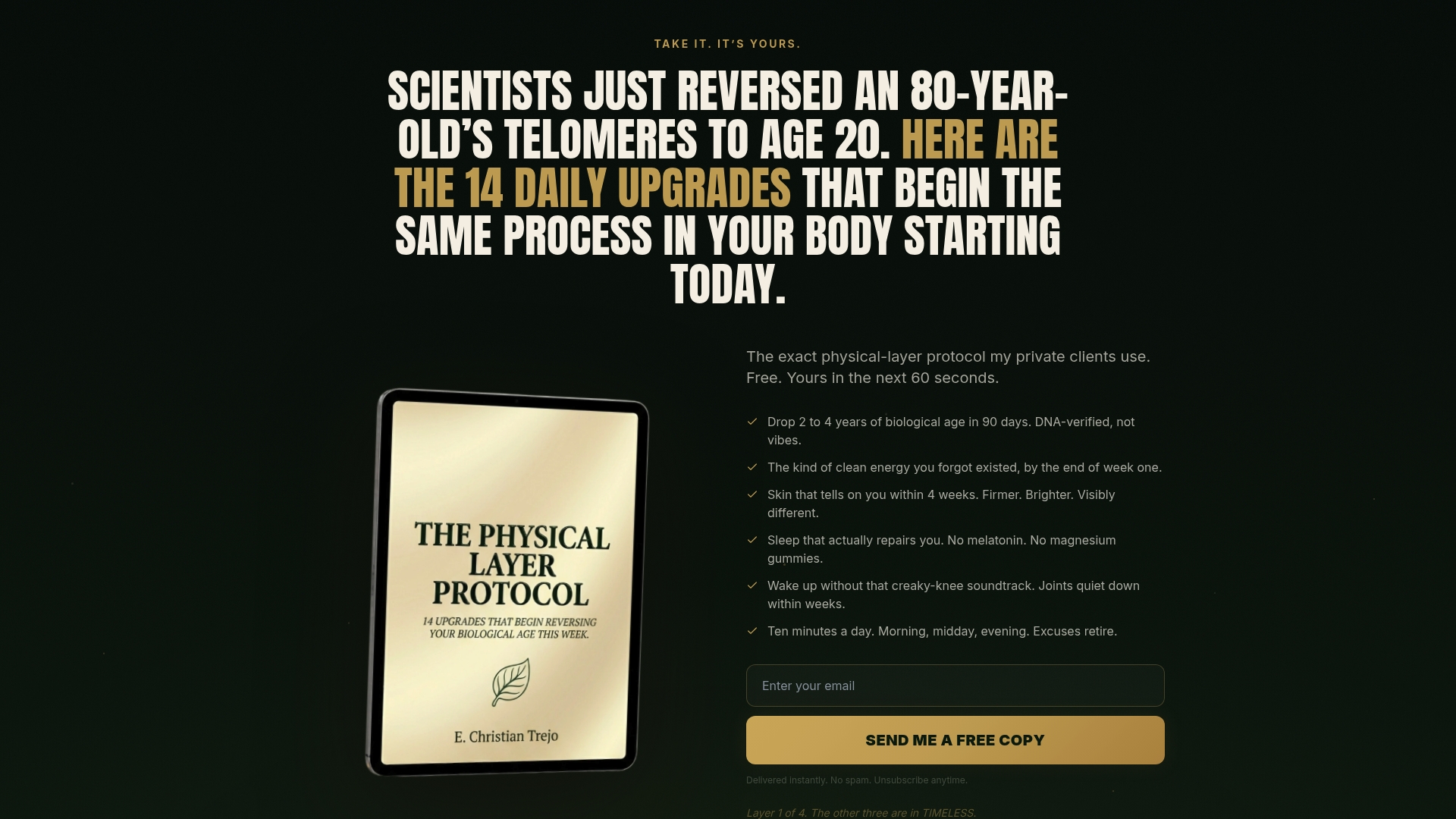
Start with the free guide at Reverseyourage for 14 upgrades you can apply this week. If you want the full framework, the Timeless — Reverse Your Age book ($29.99) walks through the complete four-layer system in 370 pages. Readers who want personalized guidance and measurable results can apply for the Vitality Intensive coaching program ($7,000), an 8-week private program guaranteed to reverse your biological age by at least 10 years in 6 months, verified by TruAge DNA methylation testing, or you get every dollar back. No other longevity program backs its results with that guarantee. If you’re ready to see where you stand, book a free Vitality Diagnosis call and get a clear read on your own four layers before you decide what’s next.
This article is general information, not a substitute for advice from a qualified doctor. Consult a qualified healthcare professional about your own circumstances before acting on anything here.
Sources
- Posttraumatic stress disorder, trauma, and accelerated biological aging among post-9/11 veterans - PMC
- The association of psychological and trauma-related factors with biological and facial aging acceleration: evidence from the UK Biobank
FAQ
Does trauma actually change your biological age?
Yes, on several validated markers. Veterans with current PTSD showed measurably faster aging pace on DunedinPACE, though effects vary depending on the trauma type and the clock used.
Can trauma-related biological aging be reversed?
Evidence suggests it often can. Veterans whose PTSD remitted showed aging pace shifting back toward non-PTSD levels, and short-term stress-driven spikes in biological age frequently decline during recovery.
Which biological age test is best for detecting trauma-related aging?
No single clock captures the full picture. Third-generation clocks like DunedinPACE measure aging pace and appear more sensitive to trauma, but pairing methylation results with inflammation markers and functional measures like grip strength gives a more reliable picture.
What can I do today to reduce trauma-linked aging risk?
Prioritize trauma-focused therapy, consistent sleep, regular exercise, and social connection, since these behavioral mediators partially explain the adversity to aging pathway. Programs like Timeless - Reverse Your Age combine this work with DNA-verified tracking to confirm the changes are real.