
Eight Week Habit Program to Reverse Biological Age for Ages 35–70
Run an eight week, cue linked habit program tied to DNA and transcriptomic clocks. Practical for ages 35–70; verify changes with TruAge testing.
Eight Week Habit Program to Reverse Biological Age for Ages 35–70
Research now shows that targeted, cue-linked daily habits can measurably lower biological age, not just how you feel about aging. The first move is small: pick one habit, anchor it to an existing routine (right after you brush your teeth, right before you check your phone), and run it for eight weeks. Ten minutes of brisk walking or slow breathing counts. Track it with a DNA methylation clock, a transcriptomic panel, or even resting heart rate and sleep data, and you will have a real number, not a guess.
TL;DR:
- Structured, cue-linked habits like consistent sleep, daily breathing, and a 12-hour eating window can produce measurable reductions in biological age within eight weeks.
- Combining movement, diet, sleep, and relaxation targets all four aging layers, increasing the likelihood of sustainable age reversal results.
- Individual baseline conditions influence which habits to prioritize first, with those experiencing high heart rate or fragmented sleep benefiting from stress regulation before high-intensity exercise.
- Significant age reductions have been demonstrated in small studies, with effects ranging from several years in methylation clocks to 3.59 years in transcriptomic age after brief HIIT interventions.
- Progress should be tracked via DNA methylation or transcriptomic testing at start, eight weeks, and six months, complemented by daily signals like heart rate variability and sleep quality.
Table of Contents
- What Is “Szokásépítés Fiatalodás” and Why Habits Drive Biological Age
- How Do You Build a Habit That Actually Sticks?
- Can Habits Actually Reverse Biological Age? The Clinical Evidence
- Your 8-Week Habit Plan for Measurable Age Reversal
- The Four-Layer Reason Most Habit Plans Stall Out
- How Do You Know If Your Habits Are Working?
- Which Habits Should You Actually Choose First?
- Are There Risks to Rushing Age-Reversal Habits?
- Do Supplements Help, or Is It All Habits?
- Author’s Perspective on Habit Formation and Measured Reversal
- Ready to Verify Your Own Biological Age Reversal?
- Sources
- FAQ
What Is “Szokásépítés Fiatalodás” and Why Habits Drive Biological Age
“Szokásépítés fiatalodás,” Hungarian for habit building for rejuvenation, describes a growing body of evidence that structured, repeated behaviors change biological aging markers within weeks, not years. The scientific term for this is epigenetic reprogramming through lifestyle intervention, and it is measured with DNA methylation clocks like the Horvath clock or newer transcriptomic age panels.
This matters because most people treat aging as fixed math: chronological age goes up, biological function goes down, and nothing changes that curve. It’s not fixed math. Your cells run on a program, and that program responds to inputs like sleep timing, movement, food windows, and stress load. Change the inputs consistently enough, and the clock itself can shift backward. That is not a metaphor borrowed from wellness marketing. It is what shows up on lab reports when researchers rerun DNA methylation tests after eight weeks of structured intervention.
The catch is that most habit advice ignores the “structured” part. People know exercise and sleep matter. What they lack is a framework for making a new behavior automatic before motivation runs out, which is usually within two to three weeks. That framework is where the real work happens.
How Do You Build a Habit That Actually Sticks?
The American Heart Association outlines a six-step model for habit change: identify your cues, disrupt the trigger for the old behavior, replace it with something new, simplify that replacement, think long-term, and persist until the new behavior runs on autopilot. The AHA’s approach emphasizes replacement over suppression because trying to simply stop a behavior, without swapping in something else, tends to fail. Your brain wants the cue-response loop filled, not deleted.
Cue planning matters more than most people realize. A randomized trial comparing routine-based cues (after I pour my coffee) against time-based cues (at 7:00 AM) found both worked equally well. The variable that predicted success was repeated enactment in the same context, and the median time to reach peak automaticity was about 59 days, with real variation between individuals. Expect roughly two months before a habit stops requiring willpower.
Implementation intentions work well for this age group specifically. Instead of “I’ll exercise more,” try: “If I finish my morning coffee, then I will do 10 minutes of brisk walking.” The if-then structure removes the decision fatigue that kills most new routines by week three.
Simple habit starters that tie directly to age-reversal aims:
- A fixed sleep and wake window, even on weekends
- Two 5 to 10 minute breathing sessions daily, one on waking and one before bed
- A 12-hour overnight eating window (stop eating by 8 PM, eat again after 8 AM)
- 20 to 25 minutes of brisk movement, five days a week
Pro Tip: Stack your new habit on your least negotiable existing routine, brushing your teeth or making coffee, not on your most flexible one. The strongest cues are the ones you already do without thinking.
Can Habits Actually Reverse Biological Age? The Clinical Evidence
Yes, and the effect sizes are measurable, not speculative. Three human studies now show biological age moving backward after structured, time-bound interventions.
A small but striking signal: An eight-week methylation-supportive diet and lifestyle program produced an average reduction of several years on the Horvath DNAmAge clock across six women, with most participants showing improvement.
That case series combined diet changes, sleep protocols, and relaxation practice, and the pre-post difference was statistically significant. It is a small sample, six people, so treat it as a promising signal rather than proof at population scale.
A second study looked at combined aerobic and strength training in women aged 50 to 70. Eight weeks of 60-minute sessions, three times weekly, reduced epigenetic age acceleration specifically in the women who started with higher acceleration. If your baseline aging markers run ahead of your chronological age, structured combined training appears to have more room to help.
The third study used a completely different clock. A randomized controlled trial testing low-dose HIIT, three 23-minute sessions weekly for four weeks, just 276 total minutes, found a 3.59-year reduction in transcriptomic age compared to control.
These three studies use different clocks (Horvath’s methylation clock versus RNA-based transcriptomic aging), different populations, and small samples. That variation is exactly why the field pushes toward replication and multi-metric tracking. One clock’s number is a data point. Three converging signals across different biological systems, methylation, transcription, and cardiovascular fitness, form a rejuvenation pattern.
Your 8-Week Habit Plan for Measurable Age Reversal
This plan compresses the interventions above into a single sequence you can run yourself, provided your physician clears you for the exercise components.
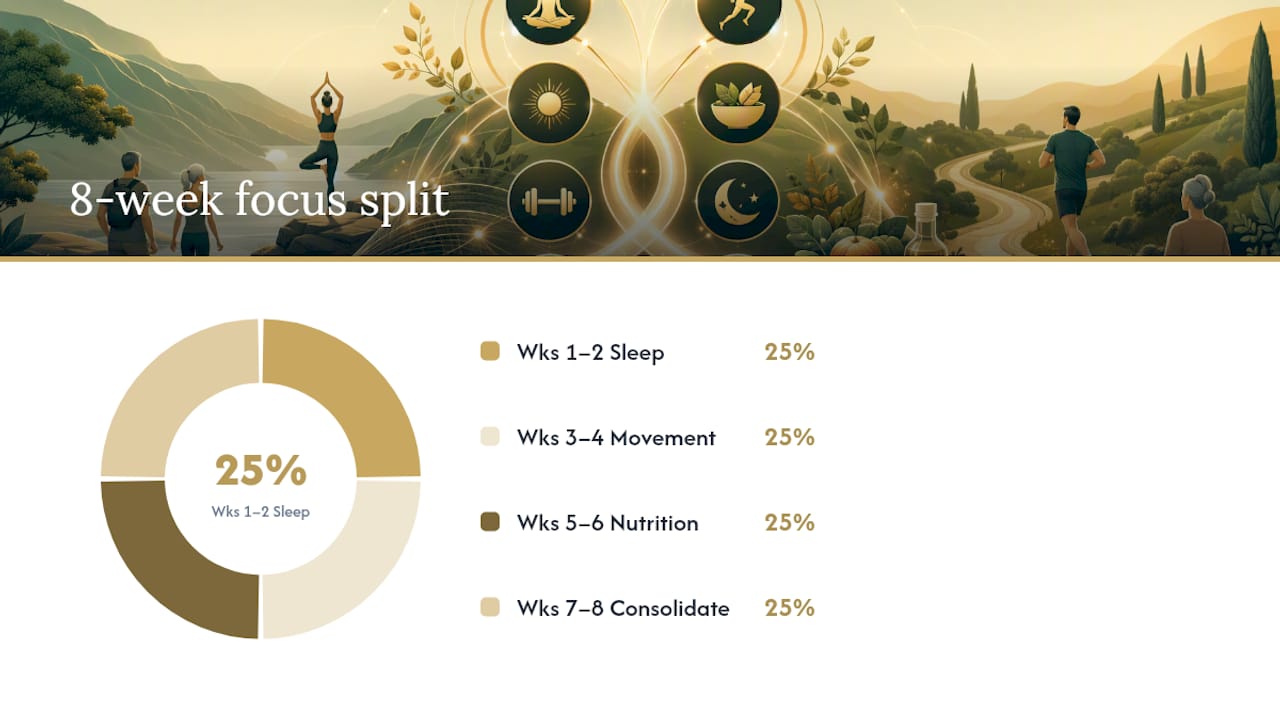
- Weeks 1 to 2: Anchor your cues. Lock in a fixed wake and sleep time. Add two 10-minute breathing sessions, one right after waking, one right before bed. Set a hydration target you hit every morning before coffee.
- Weeks 3 to 4: Add movement load. Introduce low-dose HIIT, three 20 to 25 minute sessions weekly, or substitute combined aerobic and strength training if HIIT is not appropriate for your fitness level. Add one simple mobility or strength session on a non-HIIT day.
- Weeks 5 to 6: Tighten your eating window. Compress food intake into a 12-hour window. Cut processed foods where you can and add produce dense in polyphenols and other epinutrients that support methylation health. Keep hydration consistent.
- Weeks 7 to 8: Consolidate and prepare to measure. Lock in whichever habits have become automatic. Add an accountability layer, a tracking app, a habit partner, or a coach, since adherence tends to drop right before the finish line. Schedule your eight-week re-check.
Pro Tip: Do not add all four categories, sleep, movement, nutrition, breathing, at once in week one. Sequencing them, as above, respects how the basal ganglia builds automaticity one loop at a time, and it is why the studies above ran their protocols over structured weeks rather than dumping everything on day one.
Safety note: if you have any chronic cardiovascular, metabolic, or joint condition, get medical clearance before starting HIIT specifically. Scale intensity down to brisk walking or combined training if HIIT is not advisable, and increase gradually rather than jumping straight to three full sessions in week one.
The Four-Layer Reason Most Habit Plans Stall Out
Most anti-aging protocols address one layer of biology and call it done. That is the core problem with conventional aging advice, and it is why so many people build a solid exercise habit, see modest results, then plateau. Timeless - Reverse Your Age treats aging as a four-layer problem, because the research keeps pointing to four distinct systems that all age independently.
- Physical: cellular, epigenetic, and mitochondrial function. Your 20-minute movement sessions and 12-hour eating window work here directly, since these are the same biological levers that produced measurable methylation shifts in the 8-week case series.
- Emotional: stored trauma and nervous system dysregulation. Breathing sessions and journaling regulate this layer, and unresolved dysregulation here can blunt physical-layer gains even when your workouts and diet are perfect.
- Spiritual: identity and subconscious beliefs about aging itself. If part of you still expects to decline on schedule, that belief shapes behavior in ways that undercut the other three layers.
- Energetic: the bioelectric field and meridian systems, addressed through targeted practices in the full TIMELESS protocol.
The 370-page book and coaching programs build habits across all four layers simultaneously, verified against DNA methylation testing rather than left to guesswork.
How Do You Know If Your Habits Are Working?
Two clock types dominate the research: Horvath’s DNA methylation clocks, used in the case series above, and transcriptomic (RNA-based) clocks, used in the HIIT trial. Methylation clocks track chemical marks on your DNA that shift with age and lifestyle. Transcriptomic clocks track gene expression activity, a faster-moving signal that may respond quicker to short interventions like a four-week HIIT block.
A reasonable testing cadence: a baseline test before you start, a check at eight weeks matching the studies above, and a confirmation test around six months to see if changes held.
Between lab tests, track cheaper daily signals that tend to move in the same direction as biological age:
- Heart rate variability (HRV), where rising trends often track improving recovery capacity
- Sleep efficiency and consistency of wake time
- Resting heart rate
- Body composition
- Subjective mood and energy on waking
One test result, high or low, means little on its own given normal lab variability. A trend across two or three checkpoints is the signal worth trusting.
Which Habits Should You Actually Choose First?
Not every habit that helped a study participant will help you first, and picking the wrong starting point is the most common reason people abandon a plan by week three. Match the habit to your actual baseline, not to whichever intervention sounds impressive.
If your resting heart rate runs high and your sleep is fragmented, start with the breathing and sleep-anchor habits before adding HIIT. Nervous system regulation has to come somewhat online before high-intensity training pays off, and pushing hard training onto a dysregulated system often backfires into poor recovery and abandoned routines.
If you already sleep well and move regularly but your eating windows sprawl across 14 or 15 hours, the 12-hour eating window is your highest-leverage next habit. You are not starting from zero, you are tightening an existing strength.
If lab work or a prior methylation test shows higher age acceleration than your chronological age suggests, the combined aerobic and strength training approach has direct evidence behind it for exactly that profile, since the study on women 50 to 70 found its strongest effect in participants who started with elevated acceleration.
Existing joint issues, cardiovascular conditions, or medication regimens should steer you toward combined training or walking protocols over HIIT, at least initially. The right habit is the one your current physiology can absorb and repeat for eight straight weeks, not the one with the most dramatic before-and-after numbers attached to it. Chasing the flashiest intervention before your foundation habits are automatic is how most people end up back at zero by month two.
Are There Risks to Rushing Age-Reversal Habits?
Yes, and the biggest one is intensity mismatch. Jumping straight into three weekly HIIT sessions without a fitness base or physician clearance raises real risk for anyone with undiagnosed cardiovascular issues, uncontrolled blood pressure, or joint damage. Consult a physician before starting HIIT if you have any chronic condition, and this caveat applies with equal weight to combined strength training at higher intensities for older adults with joint or bone density concerns.
Compressing your eating window too aggressively, dropping straight to an 8-hour window instead of building toward 12, can also spike cortisol and disrupt sleep in people already under chronic stress, which works against the emotional layer of recovery entirely.
Overcorrecting sleep by adding sedatives or aggressive supplementation without addressing underlying nervous system dysregulation treats a symptom, not the mechanism, and tends to produce shallow rather than restorative sleep.
The pattern across all three risks is the same: pushing physical-layer interventions harder without regulating the emotional and energetic layers underneath them. That mismatch is exactly why single-layer protocols stall out, and it’s the direct argument for the four-layer approach over piecemeal biohacking.
Do Supplements Help, or Is It All Habits?
Supplements play a supporting role, not a starring one, in the research behind measurable biological age reduction. None of the three clinical interventions described above, the methylation-supportive case series, the combined training study, or the HIIT transcriptomic trial, relied primarily on a supplement stack. The reductions came from diet structure, movement, sleep protocols, and relaxation practice.
That said, the methylation-supportive program did include nutrient-dense food choices aimed at supporting one-carbon metabolism, the biochemical pathway your body uses to add and remove methyl groups on DNA. Foods and nutrients that feed this pathway, folate-rich greens, B vitamins, and choline sources, appear as dietary components rather than isolated pills in that research.
Treat any supplement as an adjunct to the habits, not a substitute for them. If you are considering targeted supplementation, discuss it with a physician familiar with your labs and medication list before adding anything, particularly if you take blood thinners, have kidney or liver conditions, or are managing another chronic illness where nutrient interactions carry real weight.
Author’s Perspective on Habit Formation and Measured Reversal
My last TruAge DNA methylation test came back at a biological age of 23. I am 41 chronologically. That gap did not come from a single habit or a supplement stack. It came from treating aging as four separate systems that had to move together, and building the habits to match.
Pick one cue-linked habit today and run the eight-week test honestly. The evidence above is real, but individual results vary, and your starting point matters more than any single study’s average.
— E. Christian Trejo
Ready to Verify Your Own Biological Age Reversal?
You have the framework now: cue-linked habits, an eight-week testing window, and clocks that can prove whether your biology actually shifted. What most habit guides leave out is a way to address all four aging layers at once instead of chasing physical-layer wins while emotional, spiritual, and energetic dysregulation quietly cancels them out.
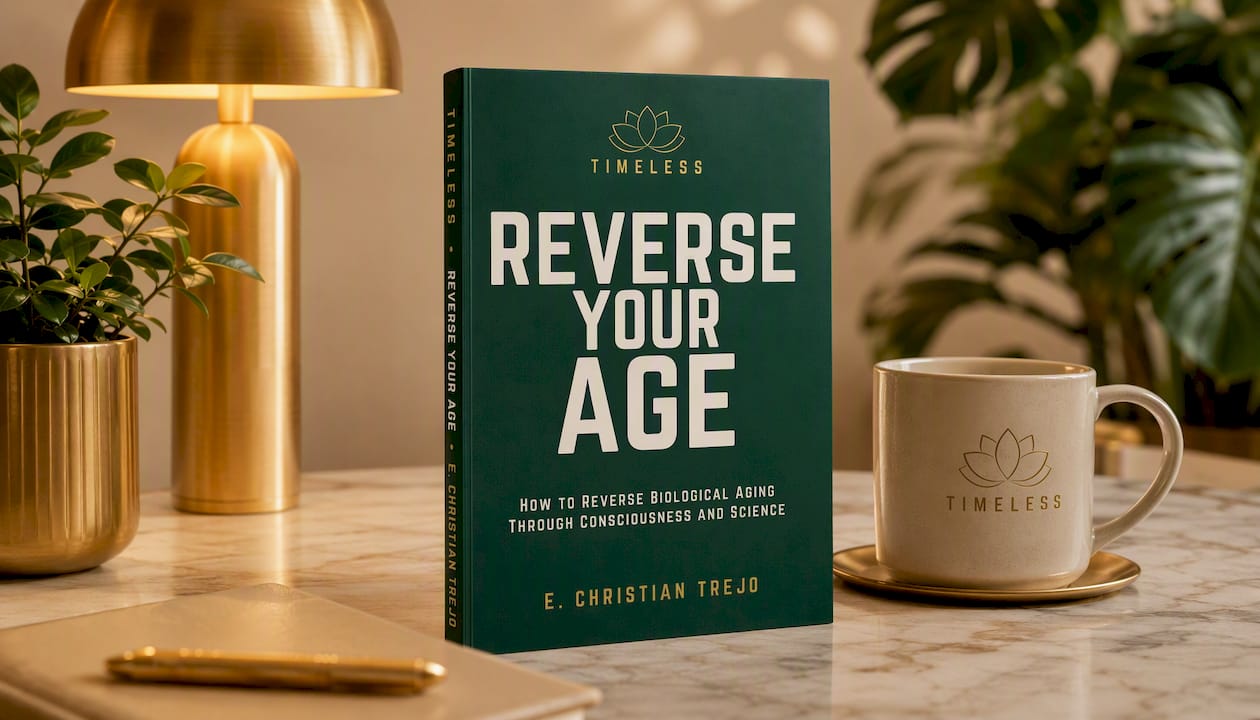
The TIMELESS book lays out the full four-layer protocol across 370 pages for $29.99, built for readers who want to run this themselves. For hands-on guidance, the TIMELESS Vitality Intensive is an 8-week coaching program at $7,000 with a guarantee: reverse your biological age by at least 10 years in 6 months, verified by TruAge DNA methylation testing, or you get every dollar back. No other longevity program offers this level of accountability. Not ready for either? Start with the free guide at Reverseyourage, or book a free Vitality Diagnosis call to talk through where your four layers stand right now.
Sources
- High‐Intensity interval training reduces transcriptomic age: A randomized controlled trial
- Potential reversal of biological age in women following an 8-week methylation-supportive diet and lifestyle program: a case series
- Habit formation following routine‐based versus time‐based cue planning: A randomized controlled trial
- Eight Weeks of Physical Training Decreases 2 Years of DNA Methylation Age of Sedentary Women
FAQ
What does “szokásépítés fiatalodás” mean in practice?
It refers to building structured, repeated daily habits, cue-linked exercise, sleep timing, and eating windows, that research links to measurable reductions in biological age markers within eight weeks.
How long does it take for a new habit to become automatic?
A randomized trial found a median of about 59 days to reach peak automaticity, though individual timelines vary based on consistency and cue strength.
Can exercise alone reverse biological age?
Low-dose HIIT produced a 3.59-year reduction in transcriptomic age in one trial, and combined training helped women with elevated age acceleration in another, but the largest reversal in the research came from a multi-component program combining diet, sleep, and relaxation.
How is biological age actually measured?
Researchers use DNA methylation clocks like Horvath’s or transcriptomic (RNA-based) clocks; Timeless - Reverse Your Age verifies results using TruAge DNA methylation testing at baseline and after coaching.
Is the TIMELESS approach different from a typical exercise or diet plan?
Yes. Most protocols target only the physical layer of aging, while Timeless - Reverse Your Age addresses physical, emotional, spiritual, and energetic layers simultaneously, backed by a DNA-verified guarantee no other program in the space currently offers.