
Does Your Gut Microbiome Control How Fast You Age?
Discover how your gut microbiome impacts aging. Learn simple steps to enhance gut health, boost vitality, and slow down biological age.
Does Your Gut Microbiome Control How Fast You Age?
Yes. The gut microbiome meaningfully drives biological aging, and you can start shifting it today. Three anchors prove this isn’t wellness speculation: epigenetic clocks that measure biological age from blood samples, a human study linking microbiome composition to the pace of epigenetic aging, and short-chain fatty acids that your gut bacteria produce every single day.
Here’s what to do right now:
- Add one high-fiber food to today’s meals (lentils, oats, chicory root, or leeks).
- Eat a serving of fermented food (kefir, sauerkraut, kimchi) daily.
- Prioritize seven to eight hours of sleep tonight. Microbial diversity drops fast under sleep deprivation.
Key Takeaways
Microbiome health drives biological aging through inflammation, epigenetic signaling, and gut-brain communication, but lasting reversal requires pairing gut interventions with sleep, stress, and movement changes inside a complete protocol.
| Point | Details |
|---|---|
| Fiber diversity matters most | Eat varied fiber sources daily; microbiome shifts begin in 24 to 48 hours, durable shifts typically take several weeks. |
| Inflammaging is the core mechanism | Dysbiosis weakens the gut barrier, allowing bacterial byproducts to trigger chronic low-grade inflammation. |
| Serotonin starts in your gut | About 90% of your body’s serotonin is produced in the gut, linking microbiome health to cognitive aging. |
| Rebuild after antibiotics deliberately | Full microbiome recovery after major disruption can take six to twelve months of consistent fiber and fermented food intake. |
| Choose targeted supplements, not generic ones | Age-specific probiotic formulations address functional gaps generic blends miss in older adults. |
| Nest microbiome work in a full protocol | The TIMELESS four-layer protocol pairs gut health with emotional, spiritual, and energetic work, verified by TruAge DNA methylation testing. |
Table of Contents
- How the Gut Microbiome Drives Biological Aging
- What Does the Research Actually Show?
- What Can You Actually Do to Support Your Microbiome?
- Do Probiotics and Prebiotics Actually Help With Aging?
- When Should You See a Doctor About Gut and Aging Concerns?
- Why a Microbiome-Only Approach Falls Short
- A Personal Note on Making This Practical
- Where to Go Deeper on the Full Protocol
- Sources
- FAQ
How the Gut Microbiome Drives Biological Aging
Your gut bacteria produce short-chain fatty acids such as butyrate, propionate, and acetate by fermenting fiber you can’t digest yourself. Butyrate feeds the cells lining your colon and keeps your gut barrier sealed. When bacterial diversity drops, a state researchers call dysbiosis, that barrier weakens. Gut bacteria and their byproducts, including lipopolysaccharides, leak into circulation. Your immune system responds with chronic, low-grade inflammation. Longevity researchers now call this inflammaging, and it’s considered one of the core hallmarks of aging.
The connection goes deeper than inflammation. Microbial metabolites directly influence your epigenetics. Butyrate acts as a histone deacetylase inhibitor, meaning it physically changes how tightly your DNA is packaged and which genes get switched on or off. That’s not theoretical. It’s exactly the kind of gene expression shift that epigenetic clocks are built to detect, which is why microbiome composition and biological age readings move together in the data.
Then there’s your brain. A large proportion of the body’s serotonin is manufactured in the gut, not your brain, and it travels along the vagus nerve as part of the gut-brain axis. Microbial imbalance in this system correlates with:
- Higher rates of anxiety and depressive symptoms.
- Measurable declines in cognitive performance with age.
- Increased neuroinflammation, a driver of brain aging specifically.
None of these pathways operate in isolation, which is why best peptides for anti-aging research targeting cellular health are a complementary avenue being explored alongside microbiome work. Inflammaging, epigenetic drift, and gut-brain signaling all compound each other, which is exactly why microbiome support has to be part of a wider strategy, not a stand-alone fix.
What Does the Research Actually Show?
The strongest human data comes from a study tracking gut microbiome composition against blood-based epigenetic clocks. Researchers found that people with higher fitness levels showed slower epigenetic aging paired with distinct, more favorable microbiome signatures. That’s a real correlation between what lives in your gut and how fast your cells are aging on a molecular level.
Animal research goes further, and it’s where causation actually gets tested. Transferring young microbiota into aged, germ-free mice reversed inflammation markers and extended healthspan metrics, a finding you can’t ethically test the same way in humans. Population data adds another layer: centenarians consistently show youth-like microbiome profiles rich in Akkermansia, Bifidobacterium, and other butyrate producers, the same species linked to gut barrier integrity.
Read this evidence with clear eyes, though:
- Most human studies show correlation, not proof that microbiome changes alone slow aging in people.
- Large-scale human intervention trials, the kind that would prove causation, remain limited.
- Older adults show enormous individual variation, making generalized advice imperfect.
A newer application worth watching: AI models can now estimate biological age directly from microbiome composition with real accuracy, turning your gut bacteria into both a marker of aging and a target for intervention.
What Can You Actually Do to Support Your Microbiome?
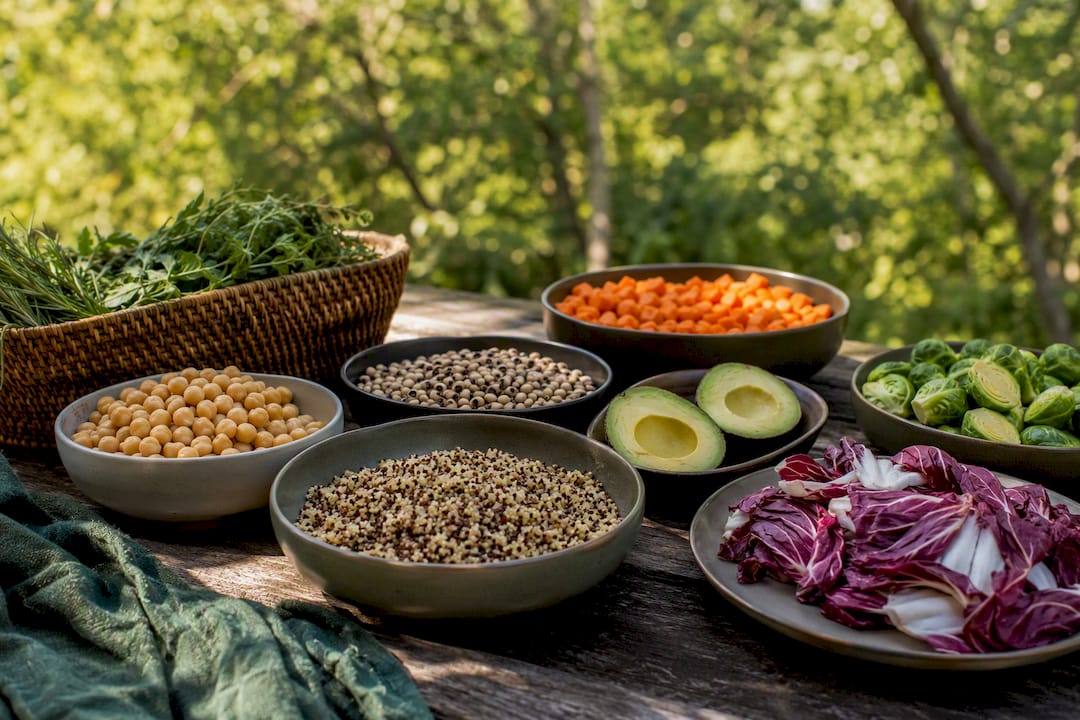
Diet moves first, and it moves fast. Diverse fiber sources, not just more fiber, feed the widest range of bacterial species. Think lentils and black beans, oats, artichokes, leeks, green bananas, and chicory root. Your microbiome starts shifting within 24 to 48 hours of a dietary change, but durable, functional shifts typically take four to eight weeks of consistency to show up.
Fermented foods play a different role than supplements. Kefir, plain yogurt with live cultures, sauerkraut, kimchi, and miso deliver live organisms alongside the fiber and compounds your resident bacteria feed on. Commercial probiotic capsules deliver isolated strains in a pill. Real fermented food delivers a fuller ecological signal, which is why we recommend food first and supplements second.

Movement, sleep, and stress management aren’t secondary to diet here, they’re primary drivers in their own right. Regular exercise reshapes microbial diversity independent of what you eat. Poor sleep and chronic stress both elevate cortisol, and elevated cortisol shifts your gut ecosystem toward inflammatory species within days.
Antibiotics deserve their own conversation. They’re sometimes necessary and you shouldn’t skip a prescribed course out of microbiome anxiety. But afterward, rebuild deliberately: increase fiber intake, add fermented foods daily, and give your gut real time. Full ecosystem recovery after major disruption can take six to twelve months, not weeks.
Here’s a realistic timeline for what to expect:
- 2 weeks: Digestive comfort often improves; energy may shift slightly.
- 6 to 8 weeks: Measurable diversity changes typically show up on stool testing.
- 6 to 12 months: Full ecosystem stability, especially after antibiotics or major dietary overhaul.
Pro Tip: Skip the generic, one-size-fits-all probiotic. Because your microbiome shifts predictably with age, targeted, age-specific formulations address the specific functional gaps, like reduced SCFA-producing species, that generic blends were never designed to fill.
Do Probiotics and Prebiotics Actually Help With Aging?
Supplements earn their place in specific situations, not as a default. They make the most sense after antibiotic treatment, when you have a diagnosed GI condition, or when you’re targeting a specific metabolic marker under a clinician’s guidance. If your goal is general microbiome health, whole-food fiber and fermented foods usually outperform a pill.
When you do choose a supplement, evaluate it the way you’d evaluate any health investment:
- Strain specificity: Generic “probiotic blend” labels mean less than a named strain with published evidence behind it.
- Dose: Look for CFU counts that match what was actually used in the research, not an arbitrary number.
- Manufacturing quality: Third-party testing and stability data matter more than marketing claims.
- Age-targeting: Formulations built for older adults address gaps generic products miss.
Set your expectations honestly. Probiotics can offer modest short-term symptomatic relief. Evidence for reversing biological age from supplements alone, without diet, movement, sleep, and stress changes working alongside them, remains thin.
When Should You See a Doctor About Gut and Aging Concerns?
Most microbiome optimization is safe to do on your own. Certain symptoms are not:
- Unexplained weight loss or rapid functional decline.
- Chronic, severe diarrhea lasting more than a few weeks.
- Iron deficiency anemia or any sign of GI bleeding.
Any of these warrant a visit to a gastroenterologist or geriatrician, not a supplement aisle. Stool microbiome testing can be genuinely useful when it’s paired with epigenetic or biological age testing and interpreted inside your full clinical picture, rather than read as a standalone verdict on your health.
Why a Microbiome-Only Approach Falls Short
Your gut bacteria don’t operate in a vacuum, which is exactly why microbiome-only protocols plateau. At TIMELESS, we treat aging as a four-layer problem: Physical (cellular and mitochondrial function), Emotional (stored stress and nervous system regulation), Spiritual (the subconscious beliefs that determine whether you actually stick with a protocol), and Energetic (bioelectric recovery, sleep architecture). Your microbiome sits inside the Physical layer, but it’s shaped daily by the other three.
Most longevity programs isolate one variable and call it a protocol. My own biological age reads 23 at a chronological 41, verified by TruAge DNA methylation testing, not because I fixed my gut alone, but because I addressed all four layers at once. Microbiome work nested inside a full protocol compounds. Done in isolation, it stalls.
Fixing your fiber intake while ignoring chronic stress or poor sleep leaves half the equation untouched.
A Personal Note on Making This Practical
I’ve watched clients hit a wall when they treat the microbiome as an isolated fix instead of one layer among four. The gains that stick come from stacking gut work with sleep discipline and stress regulation, not from a supplement swap.
If you want a concrete start, try a six-week fermented-food habit alongside a fixed nightly sleep window. Track how you feel, not just what you eat.
Where to Go Deeper on the Full Protocol
Everything covered here, fiber, fermented foods, sleep, and stress, works better inside a complete framework rather than as scattered habits. That’s the exact gap the TIMELESS four-layer protocol was built to close, addressing Physical, Emotional, Spiritual, and Energetic aging simultaneously instead of chasing one variable at a time.
If you want the fastest entry point, the free 14 Upgrades guide walks through practical starting shifts, including gut-supportive ones, at no cost. For the full framework in depth, the TIMELESS book lays out the complete four-layer system across 370 pages. And if you want this built around your specific biology with accountability attached, the TIMELESS Vitality Intensive is the only longevity coaching program backed by a DNA-verified guarantee: reverse your biological age by at least 10 years in six months, confirmed by TruAge methylation testing, or you get every dollar back. Book a free Vitality Diagnosis call to see if you qualify.
Sources
- Bel-agy tengely — a mentális egészség kulcsa | Longevity Magazin
- A mikrobiom állapota és az öregedés folyamata | National Geographic
- Science article (epigenetic and microbiome mechanisms)
This article is general information, not a substitute for advice from a qualified doctor. Consult a qualified healthcare professional about your own circumstances before acting on anything here.
FAQ
Can the gut microbiome actually reverse biological age?
Preclinical evidence shows microbiome transfer can reverse inflammation markers in animal models, but reversing biological age in humans requires a broader approach beyond gut health alone, which is the reasoning behind the TIMELESS four-layer protocol.
How fast does the microbiome respond to dietary change?
Bacterial composition can shift within 24 to 48 hours of a dietary change, though durable diversity improvements typically need four to eight weeks of consistency.
Are probiotics or whole foods better for healthy aging?
Whole, fermented foods generally outperform generic probiotic supplements for everyday microbiome support; supplements make more sense for targeted situations like post-antibiotic recovery.
What is the connection between the gut-brain axis and aging?
When should I get microbiome testing done?
Consider stool microbiome testing if you have persistent GI symptoms or want to pair the results with epigenetic biological-age testing for a fuller clinical picture, ideally with a specialist’s guidance.