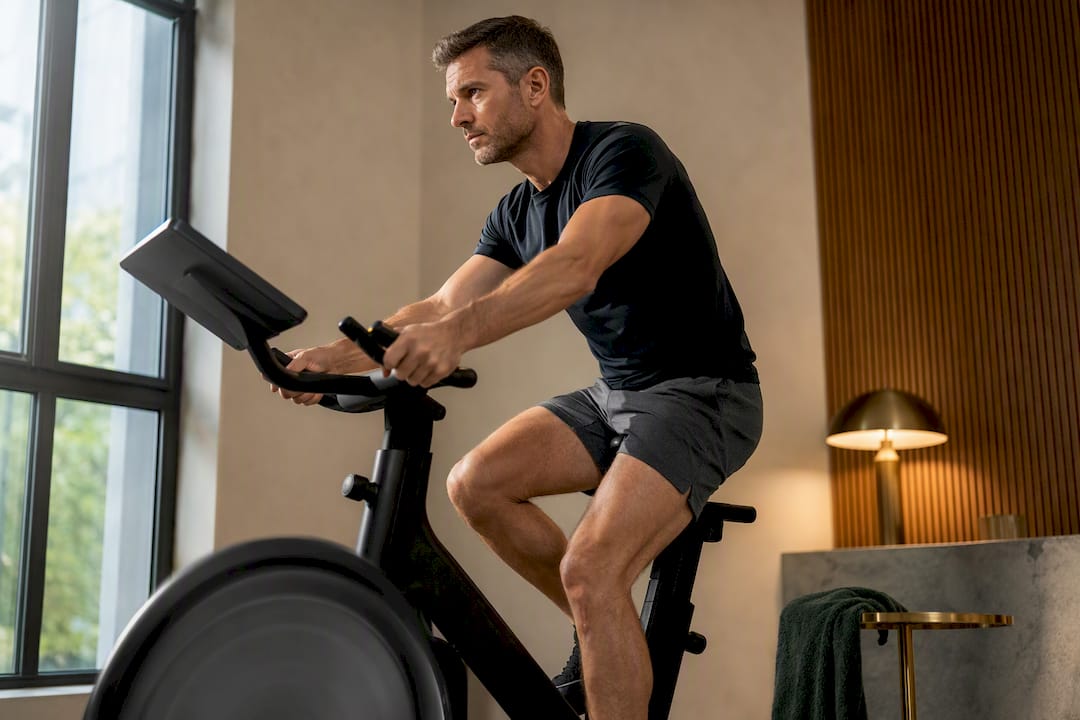
Zone 2 at 60–70% HR: Science-First Four-Layer Age Reversal
Science-first how-to for Zone 2 at 60–70% HR. Lab-backed steps to raise VO2max, boost mitochondrial fat oxidation, and turn aerobic gains into a...
Zone 2 at 60–70% HR: Science-First Four-Layer Age Reversal
Zone 2 training is low intensity aerobic exercise, roughly 60 to 70% of your maximum heart rate, that trains your mitochondria to burn fat efficiently and builds the aerobic base underneath every endurance and longevity outcome that matters. The core benefit is not speed. It is metabolic durability: a body that produces energy efficiently for decades. Anyone over 35 who wants to move well, think clearly, and stay off the fitness cliff most people hit in their fifties should be doing this weekly.
TL;DR:
- Consistently doing 150 to 300 minutes of Zone 2 training weekly, with gradual volume increases, significantly improves mitochondrial density and fat oxidation capacity.
- Recalibrate heart rate zones every 8 to 12 weeks as resting heart rate and fitness levels change, and verify accuracy with lab testing for precise zone identification.
- Most people mistakenly train too hard during Zone 2 sessions, which dilutes metabolic benefits, so slow down until nose breathing is sustainable.
- Zone 2 training contributes to reduced mortality risk and healthier aging mainly through mitochondrial and capillary adaptations, not just athletic performance.
- Combining aerobic work with emotional, spiritual, and energetic practices enhances overall aging reversal, as physical fitness alone cannot address all four layers of aging.
Table of Contents
- What Zone 2 Training Actually Is: The Physiology Behind the Zone
- Why Zone 2 Matters: VO2 Max, Mitochondria, and Longevity
- How to Find Your Zone 2: Formulas, Field Tests, and Lab Diagnostics
- Sample Zone 2 Sessions and a Progression Plan You Can Actually Follow
- Common Zone 2 Mistakes and How to Fix Them
- How Zone 2 Fits Into the Four Layers of Real Aging Reversal
- What the Research Actually Tells You to Prioritize
- Turn Zone 2 Progress Into a Full Biological Age Reversal
- Sources
- FAQ
What Zone 2 Training Actually Is: The Physiology Behind the Zone
Zone 2 sits at the intensity where your body relies primarily on fat oxidation through mitochondrial respiration rather than glycolysis. Push past it, and lactate starts accumulating faster than your body clears it. Stay under it, and you’re training the aerobic engine directly: more mitochondria, denser capillary networks, better oxygen delivery to muscle tissue.
Coaches define the zone a few different ways, and none of them are interchangeable:
- Heart rate percentage: roughly 60 to 70% of max heart rate, or 60 to 70% of heart rate reserve
- FatMax: the specific intensity where fat oxidation peaks, identified through metabolic testing
- Talk test: you can speak in full sentences, but singing feels impossible
- Lab measures: blood lactate under 2 mmol/L, or the first ventilatory threshold on a gas exchange test
The talk test is the most accessible field method, but FTP-based zone calculations can misplace an athlete’s true metabolic Zone 2, because power-based thresholds don’t always track with where your fat oxidation curve actually peaks. Lactate testing and ergospirometry remain the most precise way to locate your real number.
Why Zone 2 Matters: VO2 Max, Mitochondria, and Longevity
The evidence connecting aerobic fitness to lifespan isn’t subtle. Cardiorespiratory fitness, measured through VO2max, functions almost like biological insurance against premature death, and large cohort studies and meta-analyses tie higher VO2max to roughly 11 to 17% lower all-cause mortality per fitness increment, with the highest-fit groups showing risk reductions near 50% compared to the least fit.
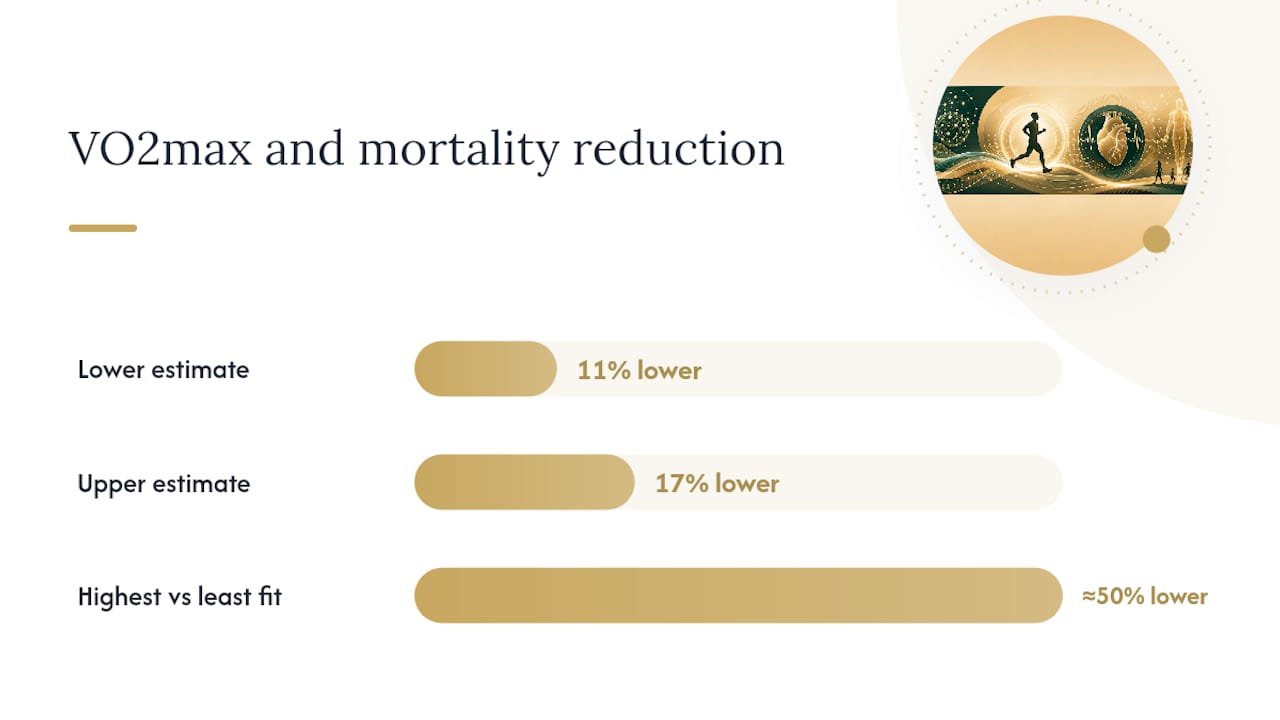
The number that should change your training priorities: a jump of one fitness category on a standard VO2max scale correlates with a meaningfully lower mortality risk across nearly every major cause of death, cardiovascular and cancer included.
Zone 2 is the intensity that builds this capacity without the recovery cost of high intensity work. Consistent sessions over months produce:
- More mitochondria per muscle cell, and mitochondria that function more efficiently
- Increased capillary density, meaning more oxygen delivered per heartbeat
- A shift toward fat as fuel at a given pace, sparing glycogen for when you actually need it
- VO2max remains highly trainable across the lifespan, with the largest gains occurring in people moving from sedentary to moderately active
The mitochondrial adaptations behind these changes are well documented, and they’re the same adaptations that show up when researchers study why some 70 year olds move like people 20 years younger.
How to Find Your Zone 2: Formulas, Field Tests, and Lab Diagnostics
Start with heart rate reserve (HRR), which is more accurate than a flat percentage of max heart rate because it accounts for your resting heart rate.
- Estimate max heart rate: 220 minus your age (a rough estimate, not a diagnosis)
- Subtract resting heart rate to get HRR. Example: a 41 year old with a resting heart rate of 60 has a max around 179, giving an HRR of 119
- Calculate 60 to 70% of HRR and add back resting heart rate: (119 × 0.6) + 60 = 131, and (119 × 0.7) + 60 = 143
- Your working Zone 2 range for this example: 131 to 143 beats per minute
The 220-minus-age formula carries real error margins person to person, so treat it as a starting point, not gospel. Pair it with the talk test: if you can speak in short sentences but couldn’t hold a conversation comfortably, you’re likely in range.
Wearables complicate this further. Most consumer devices estimate VO2max and training zones using population averages, and those estimates typically carry a 5 to 10% margin of error compared to lab testing. If you’re training seriously or chasing a specific longevity metric, a lactate test or ergospirometry session is worth the cost once or twice a year.
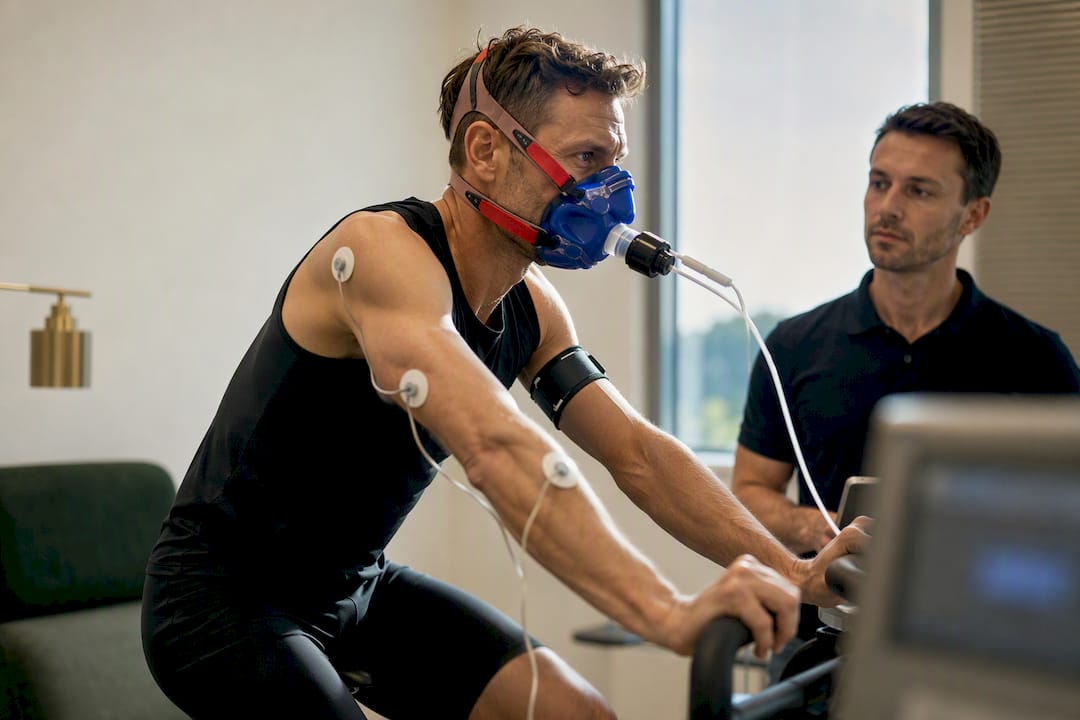
Pro Tip: Recalibrate your heart rate zones every 8 to 12 weeks. As your fitness improves, your resting heart rate drops and your true Zone 2 range shifts with it, so a formula from January can be wrong by June.
Sample Zone 2 Sessions and a Progression Plan You Can Actually Follow
Building an aerobic base isn’t complicated, but it does require patience most people skip past. Here’s how to structure it across three levels:
- Beginner: 20 to 30 minutes, 3 times per week, walk-run intervals if needed to keep heart rate in range
- Intermediate: 45 to 60 minutes, 3 to 4 times per week, steady state cycling, running, or rowing
- Long endurance: one 90 to 120 minute session weekly, plus 2 to 3 shorter 45 minute sessions
A sensible weekly target is 150 to 300 minutes of Zone 2 work, building gradually rather than jumping straight to the top of that range. Add 10 minutes per week to your total volume until you hit your target, then hold steady for 4 to 6 weeks before increasing again.
Track progress through three markers over a 6 to 12 week window:
- Heart rate drift: less drift at the same pace over a fixed duration means better aerobic efficiency
- Pace or power at the same heart rate: running or cycling faster at the same Zone 2 heart rate is the clearest sign of adaptation
- Periodic fitness testing: a VO2max test or field test every 8 to 12 weeks quantifies what you’re feeling
Most people notice measurable pace improvements at the same heart rate within 6 to 8 weeks of consistent training.
Common Zone 2 Mistakes and How to Fix Them
The single most common error is training too hard. Zone 2 should feel almost boringly easy, and if you’re finishing sessions breathing heavily, you’ve drifted into Zone 3 and diluted the exact adaptation you’re chasing.
Other frequent problems:
- Trusting a single heart rate formula for months without recalibrating
- Ignoring rest and stacking Zone 2 days on top of high intensity sessions without adjusting recovery
- Skipping the talk test entirely and relying only on a wearable’s zone label
Fixes are usually simple. Slow down, even if it means walking instead of running for a few weeks while your aerobic base catches up. Retest your zones periodically rather than assuming last year’s numbers still apply. And if your resting heart rate climbs, your sleep quality drops, or your Zone 2 pace suddenly feels harder for no reason, that’s worth a conversation with a physician before you push through it.
Pro Tip: If a 20 minute “easy” run leaves you breathing through your mouth, you’re not in Zone 2. Slow down until nose breathing feels sustainable, then build from there.
How Zone 2 Fits Into the Four Layers of Real Aging Reversal
Most training advice treats Zone 2 as a physical performance tool and stops there. That’s incomplete. Aging is a four layer problem: Physical, Emotional, Spiritual, and Energetic. Address only one, and you leave three of the four levers untouched.
Zone 2 hits the Physical layer directly through mitochondrial density, epigenetic signaling, and the cellular efficiency markers we track in the TIMELESS four-layer protocol. But it doesn’t stop there. Consistent aerobic work regulates the nervous system, which touches the Emotional layer’s stored stress response, and it shifts how you relate to your own body, which reaches into the Spiritual layer’s beliefs about aging itself.
My last TruAge DNA methylation test measured my biological age at 23 against a chronological age of 41. Zone 2 training was one input among many, but it never worked alone. It worked because I was also addressing what was happening in my nervous system and my beliefs about what aging even meant for me.
If you have an existing cardiovascular condition, get medical clearance before starting any new aerobic protocol.
What the Research Actually Tells You to Prioritize
The endurance world oversold high intensity interval training for the last decade, and the research on VO2max and mortality tells a different story. Zone 2 volume, not intensity, is what builds the aerobic engine that predicts how long you live and how well you move at 70. Most people training for longevity have this backward: they chase hard sessions because they feel productive, then wonder why their resting heart rate never improves.
The conventional advice fails in one specific way. It treats Zone 2 as a performance tool for athletes rather than a metabolic intervention for anyone aging. That framing misses the point entirely. Fat oxidation efficiency and mitochondrial density aren’t athletic metrics. They’re aging metrics.
If you take one thing from this, prioritize consistency over intensity. Three to four Zone 2 sessions a week, sustained for months, will do more for your biological age than any single hard workout. But Zone 2 alone won’t rewrite your aging trajectory if the other three layers, emotional, spiritual, energetic, stay untouched. That’s the gap most fitness content never addresses.
— E. Christian Trejo
Turn Zone 2 Progress Into a Full Biological Age Reversal
Zone 2 training builds the Physical layer, but it’s one piece of a four-layer system, not the whole picture. The TIMELESS book walks through the complete protocol across all four layers for $29.99, giving you the framework to pair your aerobic training with the emotional, spiritual, and energetic work that determines whether those physical gains actually show up in your biological age.
If you want personalized guidance instead of a self-guided approach, the TIMELESS Vitality Intensive is an 8-week coaching program built around your specific biology, backed by a guarantee: reverse your biological age by at least 10 years, in 6 months, verified by TruAge DNA methylation testing, or you get a full refund. No other longevity program puts that kind of accountability behind its results.
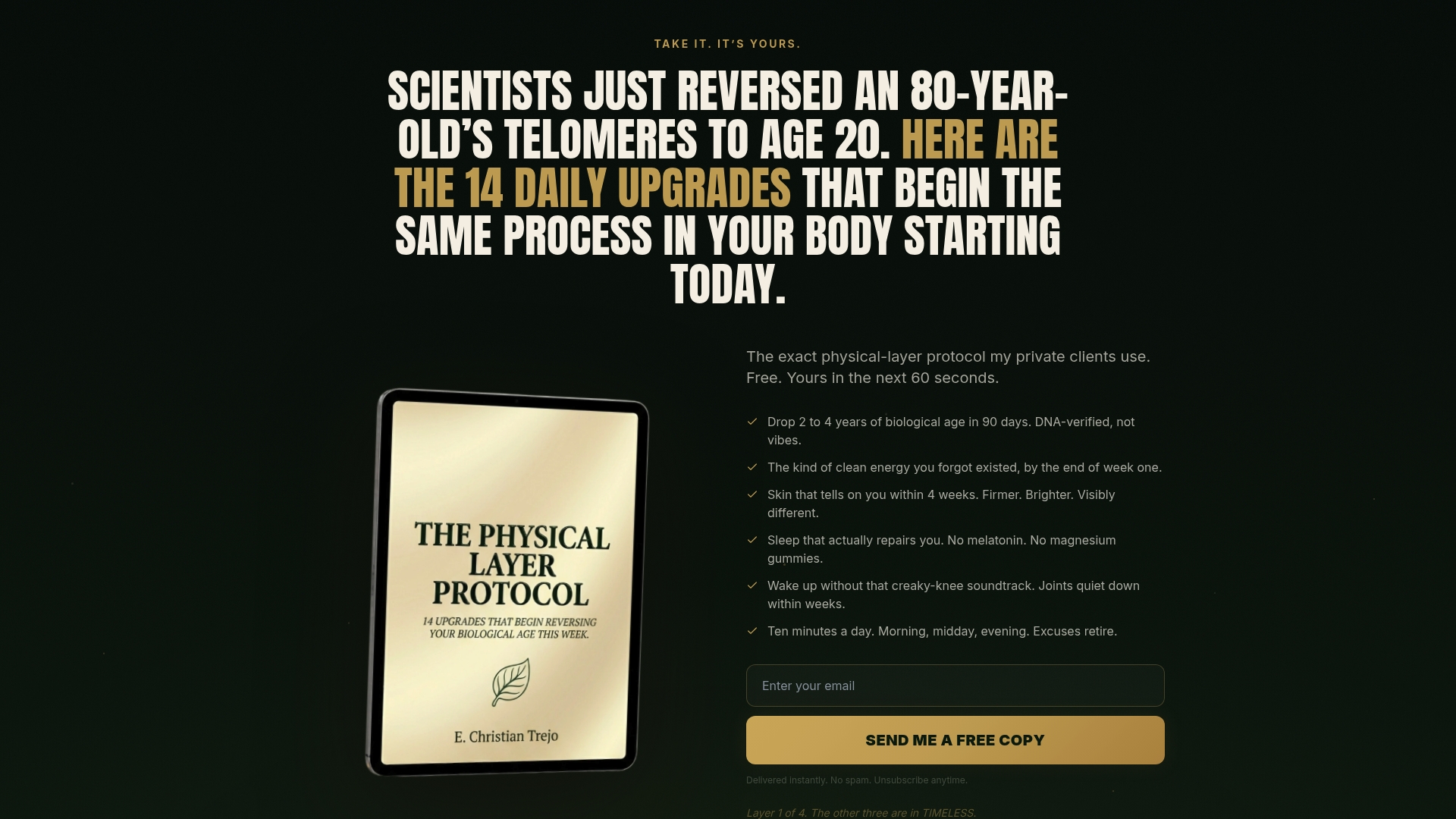
Not ready for coaching? Start with the free guide covering 14 upgrades you can apply this week, or book a Vitality Diagnosis call to see where your four layers currently stand.
Sources
- Az oxigénszint kulcsfontosságú | Magyar Hírlap
- Zone 2 edzés: divathóbort vagy a mitokondriumok titkos fegyvere? - Longevity Magazin
FAQ
What heart rate zone should I run in for Zone 2?
Use the talk test as a check: you should be able to speak in short sentences without gasping.
What is the aerobic zone in exercise?
The aerobic zone, often called Zone 2, is the intensity range where your body relies primarily on fat oxidation and mitochondrial respiration rather than fast glycolysis for fuel. It typically falls at 60 to 70% of heart rate reserve or below a blood lactate threshold of roughly 2 mmol/L.
How do I determine my heart rate zones accurately?
Start with the heart rate reserve formula using 220 minus your age for an estimated max, then refine it with the talk test over a few sessions. For precise numbers, lactate testing or ergospirometry gives a more accurate individual measurement than formula estimates or wearable algorithms.
Is Zone 2 training actually effective, or is it overrated?
Zone 2 is genuinely effective for building aerobic base, improving fat oxidation, and supporting the mitochondrial adaptations tied to long-term metabolic health. It’s not a replacement for all other training, but as a foundation for endurance and longevity, the evidence supports it strongly.
What’s the best wearable for tracking VO2max and Zone 2?
Most consumer wearables provide a reasonable starting estimate but carry a typical 5 to 10% margin of error against lab measurements. If you’re serious about precision, treat wearable data as a trend indicator and get periodic lab testing rather than relying on the device alone.