
Why Energy Metabolism Slows Aging: A Science-Backed Guide
Discover why energy metabolism slows aging and how optimizing it can significantly reduce your risk of age-related diseases. Learn more!
Why Energy Metabolism Slows Aging: A Science-Backed Guide
Energy metabolism is defined as the process by which cells convert nutrients into usable energy, and its decline is a primary driver of aging at the molecular and cellular levels. Understanding why energy metabolism slows aging requires looking past calorie counts and body weight. The real story lives inside your mitochondria, your NAD+ levels, and the epigenetic switches that control how your cells produce and use energy. Optimized metabolic health reduces the risk of cardiovascular disease, Type 2 diabetes, cancer, and dementia by 80%. That single statistic reframes metabolism as the most powerful lever you have against age-related disease.
Why energy metabolism slows aging at the cellular level
The shift from efficient mitochondrial energy production to a less efficient backup pathway is the central mechanism behind metabolic aging. Young, healthy cells generate ATP primarily through oxidative phosphorylation inside the mitochondria. As you age, NAD+ depletion drives a forced shift toward aerobic glycolysis, a pathway that produces far less energy per glucose molecule. This is not a minor inefficiency. It is a systemic failure that accelerates the aging phenotype across every tissue in the body.
NAD+ is the molecule that powers sirtuins, the enzymes responsible for DNA repair, mitochondrial biogenesis, and gene expression regulation. When NAD+ drops, sirtuin activity collapses, and your cells lose their ability to repair damage and maintain energy output. The result is a compounding cycle: less NAD+ means less repair, which means more cellular damage, which consumes even more NAD+.

Chronic low-grade inflammation, known as inflammaging, makes this worse. Inflammaging consumes NAD+ at high rates, creating what researchers call a NAD+ sink. This is why taking an NAD+ supplement without addressing inflammation often produces disappointing results. The supplement cannot outpace the drain.
Lipid peroxidation adds another layer of damage. Oxidative stress attacks cell membranes, and targeting lipid peroxidation has been shown to preserve nuclear integrity and extend lifespan in research models. The cell membrane is not just a boundary. It is a signaling platform, and when it degrades, metabolic communication breaks down.
Key mechanisms driving metabolic aging:
- Mitochondrial dysfunction: Reduced oxidative phosphorylation forces cells into less efficient energy pathways.
- NAD+ depletion: Silences sirtuins and impairs DNA repair capacity.
- Inflammaging: Creates a chronic NAD+ drain that undermines supplementation.
- Lipid peroxidation: Damages cell membranes and disrupts metabolic signaling.
- Epigenetic metabolic memory: Locks cells into an inefficient metabolic state that resists reversal.
Pro Tip: Before investing in NAD+ precursors like NMN or NR, get a baseline inflammatory marker panel including hsCRP and IL-6. If inflammation is high, address it first. Otherwise, you are refilling a bucket with a hole in it.
What is metabolic flexibility and why does it matter for longevity?
Metabolic flexibility is the body’s capacity to switch fuel sources efficiently, burning glucose when carbohydrates are available and shifting to fat oxidation during fasting or exercise. This flexibility is a hallmark of youth. It declines steadily with age, and that decline accelerates the aging process across multiple organ systems.
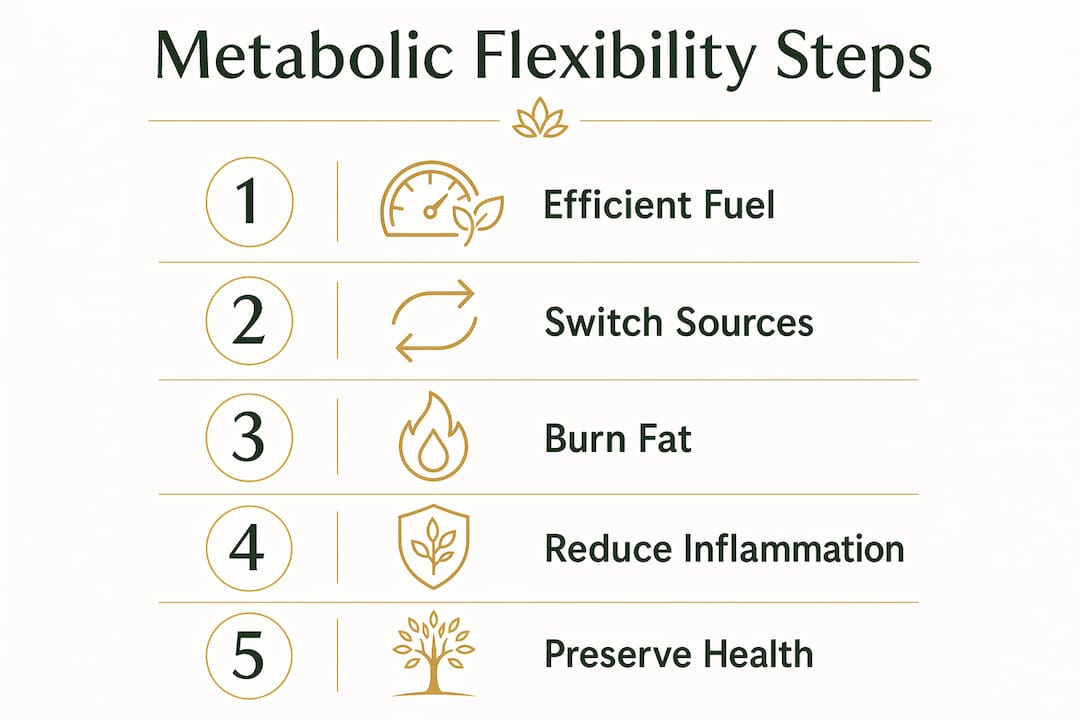
The mechanism behind this decline is less obvious than most people expect. Peroxisomal protein import decreases with age, causing metabolic inflexibility and organelle collapse. Peroxisomes are small organelles that handle lipid metabolism and neutralize reactive oxygen species. When their import function fails, lipid processing breaks down, and the mitochondria downstream receive poor-quality fuel signals. This is a cascade failure, not a single-point breakdown.
The practical consequence is that an aging cell cannot efficiently burn fat for fuel. It becomes dependent on glucose, which makes it vulnerable to blood sugar swings, energy crashes, and accelerated cellular aging. Metabolic inflexibility from peroxisomal failure precedes mitochondrial collapse, meaning the peroxisome is the earlier warning sign that most longevity protocols ignore entirely.
Lifestyle choices accelerate or slow this decline significantly. Sedentary behavior, processed food consumption, and chronic stress all impair peroxisomal function and reduce the body’s ability to switch fuel sources. Conversely, regular fasting windows, aerobic exercise, and dietary fat quality directly support peroxisomal health.
Pro Tip: A simple self-test for metabolic flexibility: if you feel irritable, foggy, or fatigued when a meal is delayed by two hours, your metabolic flexibility is compromised. A metabolically flexible person can go four to six hours between meals without energy disruption.
How can you preserve or boost energy metabolism to slow aging?
The evidence points to four categories of intervention that genuinely move the needle on metabolic aging.
-
Resistance training after 40. Muscle loss and declining activity reduce basal metabolic rate, but resistance training directly counteracts this effect. Muscle tissue is metabolically active at rest. Every pound of muscle you preserve or build raises your baseline energy expenditure and improves insulin sensitivity. Two to three sessions per week of progressive resistance training is the minimum effective dose for adults over 40.
-
Reducing lipid peroxidation through diet. Omega-3 fatty acids, polyphenol-rich foods, and minimizing refined seed oils reduce oxidative stress on cell membranes. This protects the lipid signaling environment that peroxisomes and mitochondria depend on. Think wild-caught salmon, extra virgin olive oil, and berries rather than a supplement stack.
-
Addressing inflammation before supplementing NAD+. The NAD+ salvage pathway loses efficiency with age and chronic inflammation. Restoring it requires reducing the inflammatory drain first. Anti-inflammatory dietary patterns, sleep quality, and stress regulation are prerequisites, not optional add-ons.
-
Epigenetic reprogramming strategies. Age-related epigenetic changes driven by metabolic shifts lock cells into an inefficient state. Emerging 2026 research confirms that reversing this metabolic memory requires combinatorial approaches, not single-molecule interventions. This is exactly where the Timeless - Reverse Your Age four-layer protocol operates.
| Intervention | Mechanism | Evidence Level |
|---|---|---|
| Resistance training | Preserves muscle mass and BMR | Strong |
| Anti-inflammatory diet | Reduces NAD+ drain from inflammaging | Strong |
| Fasting protocols | Restores metabolic flexibility | Moderate to strong |
| Peroxisomal support | Protects lipid metabolism upstream of mitochondria | Emerging 2026 |
| Epigenetic reprogramming | Reverses metabolic memory locks | Emerging 2026 |
Pro Tip: Pair resistance training with a 12-hour overnight fast three to four times per week. This combination activates both mitochondrial biogenesis and peroxisomal lipid processing simultaneously, giving you a compounding metabolic benefit that neither strategy delivers alone.
Common misconceptions about metabolism and aging
The biggest myth is that metabolic slowdown is simply about losing muscle mass. Muscle loss matters, but the molecular shifts in NAD+ and mitochondrial function happen independently of muscle mass changes. A lean, active person can still have severely compromised cellular energy metabolism if their NAD+ is depleted and their inflammaging is unchecked.
The second myth is that NAD+ supplements alone reverse metabolic aging. They do not. Without controlling inflammation, the supplement feeds the NAD+ sink rather than restoring sirtuin function. Metabolic health goes beyond weight management. It is about cellular energy efficiency and repair capacity at the molecular level.
The third myth is that chronological age determines metabolic rate. Inactivity contributes to metabolic decline far more than the number of years you have lived. A sedentary 35-year-old can have worse metabolic markers than an active 60-year-old. Age is a factor, not a sentence.
The fourth and most consequential misconception is that metabolism is purely physical. Stored emotional trauma drives nervous system dysregulation, which elevates cortisol chronically, which accelerates NAD+ depletion and mitochondrial stress. The emotional layer of aging is not separate from the metabolic layer. They are the same system viewed from different angles.
Key Takeaways
Optimizing energy metabolism is the most direct, science-verified path to slowing biological aging, and it requires addressing cellular, inflammatory, epigenetic, and lifestyle factors simultaneously.
| Point | Details |
|---|---|
| NAD+ depletion drives aging | Silenced sirtuin activity impairs DNA repair and accelerates the aging phenotype. |
| Inflammaging blocks recovery | Chronic inflammation creates a NAD+ sink that undermines supplementation without inflammation control. |
| Metabolic flexibility declines early | Peroxisomal dysfunction precedes mitochondrial collapse and must be addressed upstream. |
| Resistance training is non-negotiable | Preserving muscle mass after 40 directly maintains basal metabolic rate and insulin sensitivity. |
| Single-layer protocols fail | Metabolic aging involves physical, emotional, epigenetic, and energetic factors that require a combined approach. |
What 15 years of research taught me about metabolism and aging
Most people come to me focused on the wrong variable. They want to know which supplement will fix their metabolism. The honest answer is that no single supplement will, and the research confirms it.
When my TruAge DNA methylation test showed a biological age of 23 at 41 years old, the result was not from one intervention. It came from addressing metabolism as a four-layer problem. The physical layer covered mitochondrial function, NAD+ restoration, and resistance training. The emotional layer addressed stored trauma and nervous system dysregulation, which were silently driving cortisol and consuming NAD+ around the clock. The spiritual layer cleared subconscious beliefs about aging that were literally programming my biology toward decline. The energetic layer worked with the bioelectric field and meridian system that most Western protocols never touch.
The science on metabolic epigenetic memory confirms what I observed clinically: cells get locked into an aging metabolic state, and reversing that lock requires combinatorial strategies. One supplement, one diet, one exercise program cannot rewrite an epigenetic program. You need all four layers working together.
The readers I see make the most progress are the ones who stop looking for the one thing and start treating aging as the integrated biological program it actually is. That shift in perspective is itself a form of metabolic medicine. It removes the chronic stress of searching, which reduces cortisol, which protects NAD+, which supports mitochondrial function. The aging reversal methods that actually work are never linear. They are layered.
— E. Christian Trejo
The Timeless - Reverse Your Age protocol for metabolic longevity
Metabolic aging is a four-layer problem, and the Timeless - Reverse Your Age program is the only protocol built to address all four simultaneously: Physical, Emotional, Spiritual, and Energetic.
The TIMELESS Vitality Intensive is an 8-week private coaching program with a verified guarantee: reverse your biological age by at least 10 years in 6 months, confirmed by TruAge DNA methylation testing, or every dollar is refunded. No other longevity program in the world offers that level of accountability. If you are ready to see where your biological age stands and what is driving your metabolic decline, book a free vitality call with the TIMELESS team. You can also start with the TIMELESS program overview to understand the full four-layer framework before committing.
FAQ
Why does energy metabolism slow down with age?
NAD+ depletion forces cells away from efficient mitochondrial energy production toward aerobic glycolysis, a less productive pathway. Inflammaging accelerates this process by consuming NAD+ faster than the body can restore it.
Can improving metabolism actually slow biological aging?
Yes. Optimized metabolic health reduces the risk of cardiovascular disease, Type 2 diabetes, cancer, and dementia by 80%, and emerging 2026 research confirms that reversing metabolic epigenetic memory can measurably lower biological age.
What is the role of NAD+ in aging and metabolism?
NAD+ activates sirtuins, the enzymes that repair DNA and drive mitochondrial biogenesis. When NAD+ drops with age, these repair systems shut down, accelerating cellular aging and metabolic failure.
Does resistance training really affect how fast you age metabolically?
Resistance training preserves muscle mass and basal metabolic rate, both of which decline with inactivity more than with age itself. Adults over 40 who train consistently maintain significantly better metabolic markers than sedentary peers of any age.
What is metabolic flexibility and why does it decline?
Metabolic flexibility is the ability to switch efficiently between burning glucose and burning fat for fuel. It declines because peroxisomal protein import decreases with age, disrupting lipid metabolism upstream of the mitochondria and locking cells into glucose dependence.