
Why Emotional Health Affects Aging: The Epigenetic Truth
Discover why emotional health affects aging and how stress accelerates biological age. Learn how to potentially reverse this process.
Why Emotional Health Affects Aging: The Epigenetic Truth
Chronic emotional dysregulation accelerates biological aging through a precise molecular chain: HPA-axis glucocorticoid signaling rewrites DNA methylation patterns, systemic inflammation damages telomeres, and epigenetic clocks register years of added biological age that your birth certificate never shows. This is not a theory. It is measurable, and it is partially reversible.
The three consequences that matter most:
- Telomere shortening: chronic stress drives oxidative damage that erodes protective chromosome caps, accelerating cellular senescence
- Epigenetic clock acceleration: stress-driven DNA methylation (DNAm) changes push GrimAge, Horvath, Hannum, and DunedinPACE scores years ahead of chronological age
- Functional decline: accelerated biological age correlates with reduced grip strength, slower gait speed, and higher all-cause mortality risk
TruAge DNA methylation testing can quantify exactly where you stand. The TIMELESS four-layer protocol addresses the emotional layer directly, alongside the physical, spiritual, and energetic layers simultaneously.
Table of Contents
- How does emotional stress biologically accelerate aging?
- What do human studies show about stress and epigenetic aging?
- Which interventions actually move biological age markers?
- What the science does not yet prove, and what to do anyway
- Key Takeaways
- The part most longevity programs get completely wrong
- The TIMELESS protocol puts a DNA-verified guarantee behind this science
- Useful sources
- FAQ
How does emotional stress biologically accelerate aging?
The pathway is specific. Stored trauma and nervous-system dysregulation activate the hypothalamic-pituitary-adrenal (HPA) axis, flooding the body with glucocorticoids, primarily cortisol. Glucocorticoid receptors then bind to regulatory DNA sites called glucocorticoid response elements (GREs). Research shows that many epigenetic clock CpG sites colocalize with these GREs, and dexamethasone exposure induces direct methylation changes at those sites. The stress hormone does not just make you feel worse. It rewrites your epigenetic code.
Downstream, glucocorticoids amplify pro-inflammatory cytokines and increase reactive oxygen species. This dual hit of inflammation and oxidative stress shortens telomeres and impairs mitochondrial energy production. Cells that accumulate enough damage enter senescence, a state where they stop dividing but keep secreting inflammatory signals that age surrounding tissue.
The chain looks like this:
- Emotional stress or stored trauma activates the HPA axis
- Glucocorticoids alter DNAm at stress-sensitive CpGs, creating epigenetic “memory” of the event
- Systemic inflammation and oxidative stress damage telomeres and mitochondria
- Cells enter senescence; epigenetic clocks register accelerated biological age
Key finding: Epigenetics research confirms that chronic psychological distress drives decreased telomere length and accelerated epigenetic aging through these inflammatory and oxidative pathways.
The autonomic nervous system compounds this. Chronic sympathetic dominance, the “fight-or-flight” state that never fully resolves, suppresses parasympathetic recovery and keeps cortisol elevated. Over years, that imbalance becomes the default setting, and the epigenetic machinery records every day of it.
What do human studies show about stress and epigenetic aging?
The evidence is consistent across multiple cohorts and measurement tools. A meta-analysis across nine cohorts found that childhood trauma exposure and lifetime PTSD severity were significantly associated with accelerated DNAm age. The direction of the effect does not vary by clock and population.
Key findings from the research:
- Untreated major depressive disorder shows significant GrimAge and HannumAge acceleration alongside DNAm-based immune cell changes, suggesting clinical depression is not just a mood disorder but a biological aging accelerant
- Meta-analytic evidence links depression and other psychiatric conditions to shorter telomeres, with chronic stress and allostatic load as the primary drivers
- Cumulative lifetime stress predicts epigenetic clock acceleration
Pro Tip: Different clocks measure different biology. GrimAge and DunedinPACE are stronger predictors of mortality and disease risk than the original Horvath or Hannum clocks. When interpreting your results, a high DunedinPACE score signals fast current aging pace, while an elevated GrimAge signals cumulative damage. Both matter, but they call for different interventions.
The Horvath clock, built on 353 CpG sites, tracks developmental and chronological age across tissues. Hannum’s clock uses blood-based methylation and correlates with age-related disease. GrimAge incorporates DNAm surrogates of plasma proteins and smoking pack-years, making it the strongest mortality predictor. DunedinPACE measures the current speed of aging, not just accumulated damage.
Which interventions actually move biological age markers?
Ranked by evidence strength and realistic timeline for measurable DNAm change:
- Structured resilience training and social interventions: group-based programs that build belonging and coping skills; behavioral mechanisms research identifies social connection as an emerging treatment target
- Integrated multi-layer protocols: DNAm age is dynamic and decreases with targeted interventions, with functional improvements in grip strength and gait speed documented alongside epigenetic changes
Pro Tip: Do not attempt trauma processing without clinical supervision if you have a history of severe PTSD, dissociation, or suicidal ideation. The biological benefits are real, but the psychological process requires a qualified therapist. Biological age reversal is not worth a mental health crisis.
What the science does not yet prove, and what to do anyway
Honest limits of the current evidence:
- Effect sizes vary significantly across epigenetic clocks, cohorts, and intervention types; no single study proves a universal reversal magnitude
- Most intervention studies are small-sample and lack randomized control designs; replication is ongoing
- Behavioral mediators like smoking and poor sleep confound many stress-aging associations, making it hard to isolate purely psychological effects
- Pharmacological senolytics and anti-inflammatory agents targeting stress-related aging remain in early clinical development; no established protocol exists for general use yet
Recommended next steps:
- Get a baseline TruAge or equivalent DNAm test before starting any intervention
- Prioritize trauma-focused therapy and sleep before adding supplements or advanced protocols
- Consult a physician or psychiatrist before beginning intensive trauma processing, especially with a history of psychiatric illness
- Consider a structured program like the TIMELESS Vitality Intensive if you want personalized guidance with DNA-verified accountability
Key Takeaways
Chronic emotional dysregulation accelerates biological aging through glucocorticoid-driven DNA methylation changes, inflammation, and telomere damage, all of which are measurable with epigenetic clocks and partially reversible with targeted interventions.
| Point | Details |
|---|---|
| HPA axis is the core pathway | Glucocorticoids from chronic stress alter DNAm at clock CpG sites, encoding biological memory of trauma. |
| Multiple clocks, multiple signals | GrimAge and DunedinPACE are most sensitive to stress; pair them with grip strength and gait speed for reliable tracking. |
| Protective factors are biological | Social support and organizational membership measurably reduce GrimAge acceleration after trauma exposure. |
| Interventions work in months | DNAm age decreases with targeted lifestyle and psychological interventions; functional markers improve alongside epigenetic scores. |
| Timeless - Reverse Your Age | The TIMELESS four-layer protocol addresses the Emotional layer alongside Physical, Spiritual, and Energetic layers, with TruAge-verified results. |
The part most longevity programs get completely wrong
Most longevity protocols treat the body like a machine with worn parts. Fix the mitochondria, lengthen the telomeres, optimize the hormones. That framework is not wrong. It is just incomplete by three layers.
What I see consistently, across thousands of practitioners in 40 countries, is that people who address only the physical layer plateau. Their labs improve, then stall. The reason is almost always unresolved nervous-system dysregulation. Stored trauma keeps the HPA axis primed. Glucocorticoids keep rewriting the epigenetic code. No supplement undoes that.

The science now confirms what the TIMELESS protocol was built around: emotional health is not a soft add-on to a longevity plan. It is a primary biological driver of how fast you age. Ignoring it while optimizing everything else is like patching a roof while leaving a window open in a storm.
The four-layer approach matters because aging is a four-layer problem. Physical interventions without emotional resolution produce partial results. Emotional work without physical support leaves the body under-resourced. The four-layer longevity protocol works because it closes all four windows simultaneously.
The TIMELESS protocol puts a DNA-verified guarantee behind this science
Most programs ask you to trust the process. TIMELESS asks you to verify it.
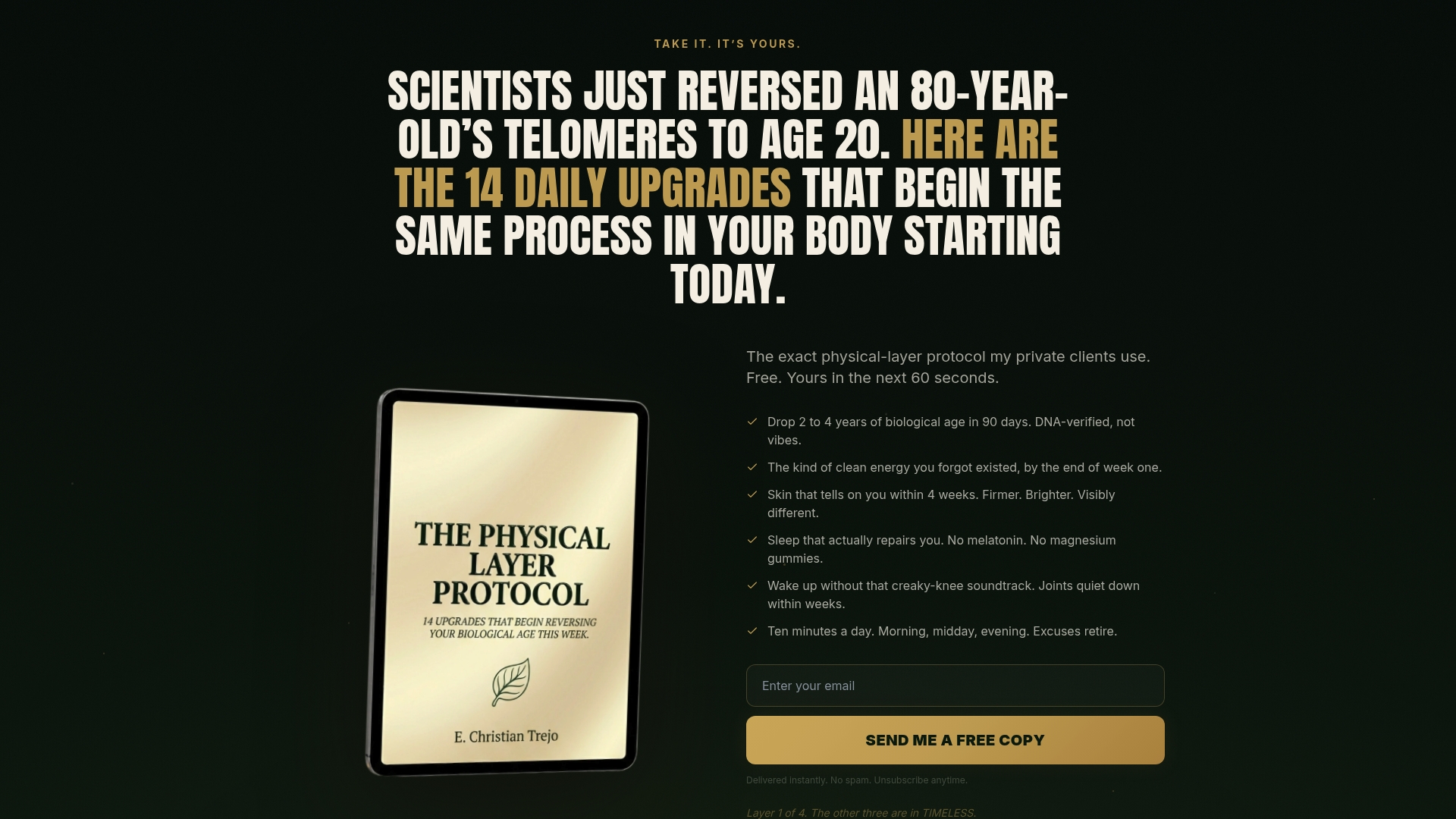
The TIMELESS Vitality Intensive is an 8-week private coaching program that addresses all four aging layers, including the Emotional layer described throughout this article, with personalized 1-on-1 guidance. Every enrollment includes TruAge DNA methylation testing at baseline and at six months. The guarantee is simple: reverse your biological age by at least 10 years in 6 months, verified by TruAge, or receive a full refund. No other longevity program in the market offers that level of scientific accountability.
If you want to start with the full framework before committing to coaching, the book TIMELESS: Reverse Your Age is a 370-page blueprint available for $29.99. Ready to act now? Book your free Vitality Diagnosis call and get a personalized assessment of your biological age and which of the four layers needs the most attention. Or enroll in the full program with the DNA-verified guarantee behind every step.
This article is for general informational purposes only and does not constitute medical or psychiatric advice. Consult a qualified clinician before beginning any trauma-processing or intensive longevity protocol.
Useful sources
- Epigenetics as a key link between psychosocial stress and aging: concepts, evidence, mechanisms
- Recalibrating the epigenetic clock after exposure to trauma: The role of risk and protective psychosocial factors
- Trauma, adversity, and biological aging: behavioral mechanisms relevant to treatment and theory
- Traumatic stress and accelerated DNA methylation age: a meta-analysis
FAQ
How does emotional health affect biological aging?
Chronic emotional dysregulation activates the HPA axis, releasing glucocorticoids that alter DNA methylation at epigenetic clock sites, accelerate telomere shortening, and drive systemic inflammation, all of which push biological age ahead of chronological age.
Which epigenetic clock best measures stress-related aging?
GrimAge and DunedinPACE are most sensitive to stress and trauma effects. GrimAge reflects cumulative damage and mortality risk, while DunedinPACE tracks your current speed of aging, making it the better tool for monitoring intervention progress.
Can emotional health interventions actually reverse biological age?
Yes. Research documents that targeted lifestyle and psychological interventions produce measurable decreases in DNAm age alongside improvements in functional markers like grip strength and gait speed. The TIMELESS Vitality Intensive guarantees a 10-year biological age reversal in 6 months, verified by TruAge, or a full refund.

How long does it take to see epigenetic changes from stress reduction?
Early DNAm shifts can appear within 3 months of consistent intervention. The primary outcome window for structured programs is 6 months, which is why the TIMELESS protocol uses baseline and 6-month TruAge testing as its verification standard.
Does social support really change epigenetic aging?
Research confirms it does. A longitudinal study found that social support and organizational membership measurably reduced GrimAge acceleration in individuals exposed to occupational trauma, making social connection a biological intervention, not just a psychological one.