
Why a Plant-Based Diet Reverses Aging, Explained
Discover why a plant-based diet reverses aging by slowing biological clocks and enhancing health. Learn the science behind it!
A plant-based diet reverses aging by decelerating biological aging clocks through antioxidant-rich, anti-inflammatory foods that directly modify DNA methylation patterns. This is not a wellness trend. It is measurable science. Epigenetic clocks like GrimAge2 and PhenoAge now give researchers a precise molecular window into how fast your cells are aging, and the data consistently shows that plant-forward eating slows that clock. The mechanisms involve oxidative stress reduction, inflammation control, and body fat modulation. Understanding why plant-based diet reverses aging means understanding all three.
What does the science say about plant-based diets and aging?
The evidence base here is strong and growing. A meta-analysis combining ARIC and NHANES cohort data found that higher adherence to healthy plant-based patterns produced significant reductions in GrimAge2 and PhenoAge acceleration, with beta coefficients ranging from -0.28 to -0.16 per standard deviation increase in plant-based diet scores. That means people eating more plants were biologically younger than their chronological age suggested.
A 2026 Communications Medicine study of 764 French adults added another layer. A 10-point increase in plant-based diet score corresponded to approximately 1.1 years lower PhenoAge acceleration. Body fat reduction mediated roughly 26% of that effect. The finding matters because it shows diet does not work through a single pathway. It works through a system.
The INSPIRE-T study added a demographic nuance worth noting. Older males showed stronger effect sizes for plant-based diet scores and PhenoAge acceleration than other groups. If you are a man over 50, the data suggests you may have the most to gain from this shift.
Not every population study agrees. A RODAM study of 705 Ghanaian adults found no significant broad plant-based pattern correlation with epigenetic age acceleration. That result does not undermine the overall evidence. It confirms that population context, food quality, and study design all matter when interpreting these findings.
| Study | Population | Key Finding |
|---|---|---|
| ARIC + NHANES Meta-analysis | U.S. adults | GrimAge2 and PhenoAge deceleration with higher plant-based scores |
| INSPIRE-T (Communications Medicine) | 764 French adults | 1.1 years lower PhenoAge per 10-point diet score increase |
| RODAM Study | 705 Ghanaian adults | No significant broad plant-based pattern correlation found |
How do plant foods biologically slow the aging process?
Aging at the cellular level is largely a story of damage accumulation. Plant-based diets interrupt that story at multiple points simultaneously.
Here is how the biology works, step by step:
- Antioxidants neutralize free radicals. Vitamins A, C, and E, along with polyphenols found in berries, leafy greens, and legumes, scavenge reactive oxygen species before they damage DNA. Reduced oxidative stress means fewer errors written into your epigenome.
- Inflammation biomarkers drop. Plant-rich diets lower C-reactive protein and fibrinogen, two key inflammatory markers that causally influence epigenetic aging. Lower inflammation means slower biological clock progression.
- Lipid profiles improve. LDL cholesterol falls with consistent plant-based eating. Improved LDL and blood pressure control reduce cellular damage pathways that accelerate aging at the molecular level.
- Body fat decreases. Mediation analysis confirms that 25–30% of aging deceleration from plant-based diets is explained by reduced adiposity. Fat tissue is metabolically active and pro-inflammatory. Less of it means a younger biological profile.
- DNA methylation patterns shift. All of the above converge on your epigenome. The result is a measurable change in how your aging genes are expressed, captured by clocks like GrimAge2 and PhenoAge.
The key insight from the Aging journal review is that dietary effects on epigenetic clocks involve system-level interactions, not single nutrients. Eating one superfood does not move the needle. Consistent, whole-diet patterns do.
Pro Tip: Add one cup of cooked legumes daily. Legumes deliver fiber, polyphenols, and plant protein simultaneously, hitting three of the five biological pathways above in a single food.

Which plant-based diet type works best for slowing aging?
Not all plant-based diets produce the same results. The research distinguishes between several dietary pattern indices, and the differences are significant.
The Overall Plant-Based Diet Index (PDI) scores all plant foods positively and all animal foods negatively. It captures broad plant-forward eating without distinguishing food quality.
The Healthy PDI (hPDI) scores only whole, minimally processed plant foods positively. Fruits, vegetables, whole grains, nuts, and legumes score high. Refined grains and sugary plant products score low. This index shows the strongest correlation with slowed epigenetic aging in the ARIC and NHANES data.
The Unhealthy PDI (uPDI) scores refined grains, fruit juices, and sugary beverages positively. The ARIC and NHANES analysis found no significant benefits for the unhealthy PDI on GrimAge2 results. A diet of white bread, fruit juice, and potato chips is technically plant-based. It does not slow your biological clock.
The Provegetarian Diet allows modest animal food inclusion while emphasizing plant foods. It sits between the overall PDI and hPDI in terms of aging benefits.
| Diet Pattern | Food Quality Focus | Aging Benefit |
|---|---|---|
| Healthy PDI (hPDI) | Whole plants, legumes, whole grains | Strongest epigenetic deceleration |
| Overall PDI | All plant foods, no quality filter | Moderate benefit |
| Provegetarian | Plants primary, some animal foods | Moderate benefit |
| Unhealthy PDI | Refined grains, sugary plant foods | No significant benefit |
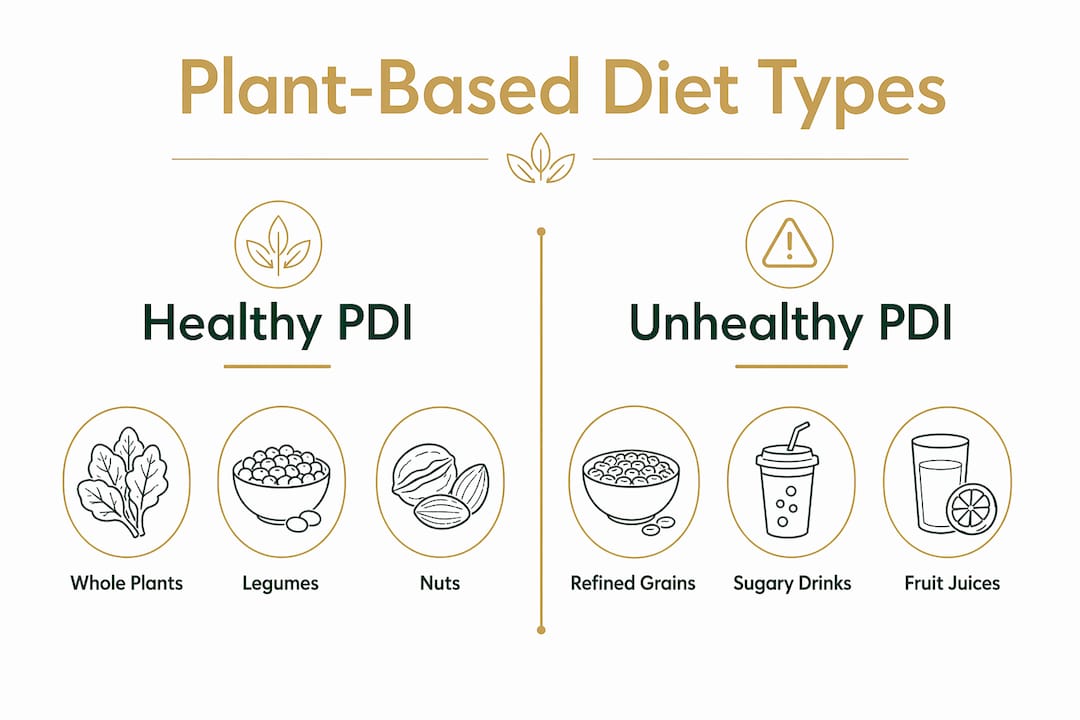
The takeaway is direct. Quality determines outcome. Switching from meat to refined carbohydrates does not rewrite your aging program. Switching to whole plant foods does.
What should you actually eat to reverse biological aging?
The evidence points to a clear set of priorities. Here is what to build your plate around:
- Dark leafy greens (spinach, kale, Swiss chard): high in vitamins A, C, K, and anti-inflammatory compounds
- Berries (blueberries, strawberries, blackberries): among the highest polyphenol concentrations of any food
- Legumes (lentils, black beans, chickpeas): fiber and plant protein that support lipid control and gut microbiome health
- Whole grains (oats, quinoa, brown rice): fiber-rich carbohydrates that avoid the blood sugar spikes linked to accelerated aging
- Nuts and seeds (walnuts, flaxseed, chia): omega-3 fatty acids and vitamin E that reduce oxidative stress
Equally important is what to minimize. Refined grains, sugary beverages, and ultra-processed plant foods actively undermine the benefits of an otherwise healthy pattern. The ARIC and NHANES data make this clear. You can eat “vegan” and still accelerate biological aging if your diet is built on processed foods.
One finding that should motivate you immediately: a vegan diet can produce measurable anti-aging effects on DNA methylation clocks in as little as eight weeks. You do not need years to see results. Eight weeks of committed, whole-food plant eating can shift your biological age in a measurable direction.
Pro Tip: Track your diet quality, not just your food category. Use the Healthy PDI framework as a mental checklist: did today’s meals emphasize whole plants, legumes, and whole grains? If yes, you are moving the needle.
For a broader look at how nutrition intersects with biological aging, aging reversal strategies offer additional context on the clinical pathways involved.
Individual responses to plant-based eating vary by age, sex, genetics, and baseline health. The RODAM study is a reminder that population and context shape outcomes. Work with your biological data, not against it.
Key takeaways
A plant-based diet slows biological aging by reducing oxidative stress, inflammation, and body fat through whole, minimally processed plant foods that directly modify epigenetic clock measurements.
| Point | Details |
|---|---|
| Epigenetic clocks confirm the effect | GrimAge2 and PhenoAge show measurable deceleration with higher healthy plant-based diet scores. |
| Diet quality determines outcome | Unhealthy plant-based patterns show no significant aging benefit; whole foods drive results. |
| Body fat mediates 25–30% of the benefit | Reducing adiposity through plant eating is a critical pathway to biological age deceleration. |
| Eight weeks is enough to start | Measurable DNA methylation changes appear in as little as eight weeks on a whole-food plant diet. |
| Older males may benefit most | INSPIRE-T data shows stronger effect sizes for plant-based diets in older male populations. |
What 15 years of longevity research taught me about plants and aging
I have run my own TruAge DNA methylation test. At 41, my biological age came back at 23. Diet is one pillar of how I got there, and I want to be direct about what I have learned from working with thousands of practitioners across 40 countries.
Most people who adopt a plant-based diet for longevity make one critical mistake. They focus on what they are removing rather than what they are building. They cut meat and add pasta. They eliminate dairy and replace it with sugary oat milk drinks. The epigenetic data does not reward subtraction. It rewards construction of a whole-food pattern.
The second thing I have observed is that the people who see the fastest biological age reversal are not the most restrictive. They are the most consistent. A person eating legumes, greens, and whole grains five days a week outperforms someone eating a perfect raw vegan diet for two weeks and then burning out. Consistency rewrites the program. Perfection does not.
I also want to address the “reversal” language directly. When researchers say a plant-based diet reverses aging, they mean it decelerates the biological clock. Chronological age does not run backward. But your cells can behave younger than your birth year suggests. That gap between chronological and biological age is where your real opportunity lives. I have seen clients close that gap by 10 or more years through sustained dietary and lifestyle change, verified by TruAge testing.
Diet alone will not get you there. At Timeless - Reverse Your Age, we address aging at four layers simultaneously: physical, emotional, spiritual, and energetic. Plants are a powerful entry point. They are not the complete protocol.
— E. Christian Trejo
Ready to verify your biological age and reverse it?
The science is clear. Whole-food plant-based eating decelerates your biological clock. But knowing the mechanism and actually measuring your results are two different things.
At Timeless - Reverse Your Age, we built the only program in the longevity space that guarantees a 10-year biological age reversal in six months, verified by TruAge DNA methylation testing, or every dollar comes back to you. No other program makes that offer because no other program has the 15 years of research and the four-layer protocol to back it up. If you are ready to stop guessing and start measuring, book your free vitality call and find out exactly where your biological age stands today.
FAQ
Does a plant-based diet actually reverse aging?
A plant-based diet decelerates biological aging rather than reversing chronological age. Studies using GrimAge2 and PhenoAge epigenetic clocks confirm measurable slowing of biological aging with higher adherence to healthy plant-based patterns.
How long does it take to see anti-aging effects from a plant diet?
Measurable changes in DNA methylation aging clocks can appear in as little as eight weeks on a whole-food plant-based diet. Consistency over months produces stronger and more sustained biological age deceleration.
Is a vegan diet better for longevity than a vegetarian diet?
The research supports diet quality over strict category. A healthy plant-based diet index emphasizing whole grains, legumes, fruits, and vegetables outperforms any pattern that includes refined grains and sugary plant foods, regardless of whether it is labeled vegan or vegetarian.
What foods matter most for slowing biological aging?
Dark leafy greens, berries, legumes, whole grains, and nuts show the strongest evidence for reducing oxidative stress and inflammation, the two primary drivers of accelerated epigenetic aging.
Can an unhealthy plant-based diet still slow aging?
No. ARIC and NHANES data show that unhealthy plant-based dietary patterns high in refined grains and sugary beverages produce no significant benefit on GrimAge2 epigenetic aging measurements. Food quality is the determining factor.