
What Is Biological Age? Your 2026 Health Guide
Discover what is biological age and how it impacts your health. Learn to modify your biological clock for a healthier future in 2026!
Biological age is defined as how old your body’s cells, tissues, and systems actually function, regardless of how many years you have lived. This measure, formally called physiological age or cellular age in clinical research, tells you far more about your health trajectory than the number on your birth certificate. Biological age reflects cellular damage and is directly modifiable through lifestyle and medical intervention, unlike chronological age, which is fixed. For adults in their 40s, 50s, and 60s, understanding this distinction is the first step toward rewriting the aging program running inside your body.
What is biological age and why does it matter?
Biological age is your body’s functional state measured through biomarkers, not years lived. Scientists use epigenetic clocks like Horvath, GrimAge, and DunedinPACE to calculate it. These tools read DNA methylation patterns from blood or saliva samples and produce an age estimate that reflects how well your cells are maintaining themselves.
The reason this matters is direct: biological age predicts chronic disease risk more accurately than chronological age. Two people who are both 55 years old can have biological ages of 45 and 68 respectively. The person at 45 carries significantly lower risk for cardiovascular disease, cognitive decline, and metabolic disorders. The person at 68 does not have to stay there. That is the empowering truth at the center of longevity science.

Biological age also captures what researchers call resilience, the body’s capacity to recover from stress, illness, and injury. Inflammation, tissue scarring, and genetic instability are among the hallmarks measured by biological clocks. When those markers are elevated, your body is aging faster than the calendar suggests.
Biological age vs. chronological age: key differences
Chronological age is simply the number of years since your birth. It moves at one fixed rate for everyone and cannot be changed. Biological age moves at a variable rate determined by genetics, environment, diet, sleep, stress, and dozens of other factors. This is the core of the biological vs. chronological age difference.
The Dunedin Study, which tracked 954 participants, found that at age 38, biological ages ranged from 28 to 61. That is a 33-year spread among people who were all the same chronological age. This finding proves that the number on your driver’s license is a poor proxy for your actual health status.
| Feature | Chronological Age | Biological Age |
|---|---|---|
| Definition | Years since birth | Cellular and physiological function |
| Fixed or variable | Fixed | Variable |
| Influenced by lifestyle | No | Yes |
| Predicts disease risk | Weakly | Strongly |
| Can be reversed | No | Yes |
Pro Tip: If you are in your 50s and your biological age comes back 5–7 years younger than your chronological age, that is a strong result. In your 60s, a gap of 10–15 years younger is considered excellent, because biological variability widens significantly with age.
How is biological age measured?
The science of biological age assessment has advanced considerably in the past decade. No single test gives a perfect answer, but several approaches provide reliable estimates when used consistently over time.
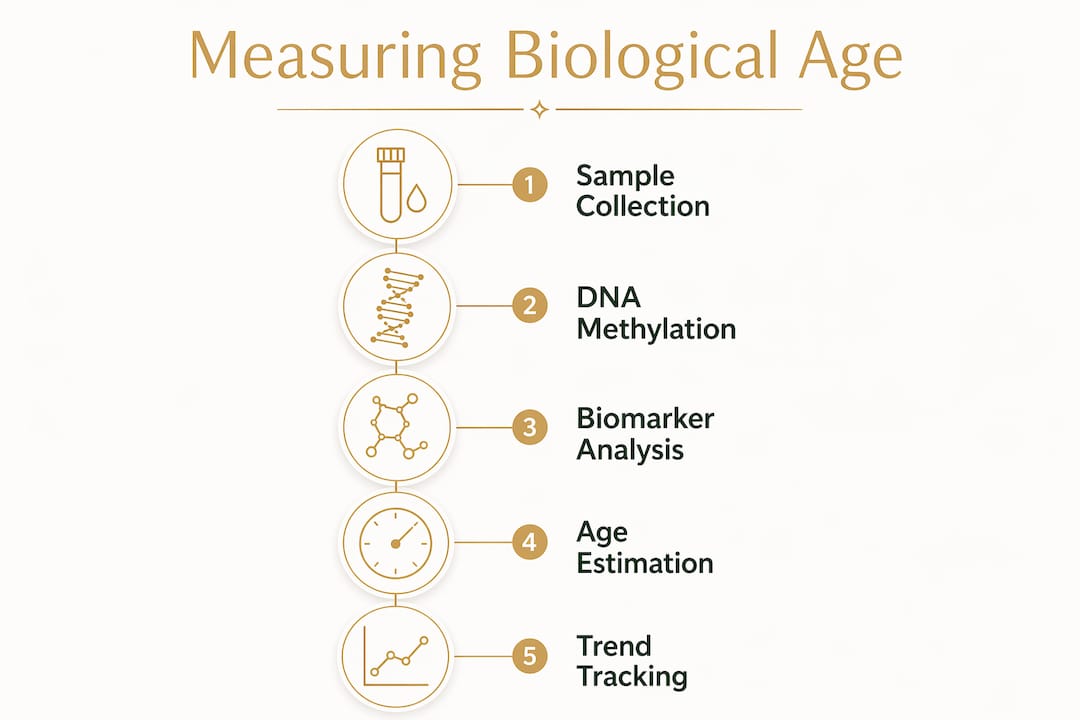
Epigenetic clocks are the gold standard. Clocks like Horvath, GrimAge, and DunedinPACE estimate biological age within 2–3 years using DNA methylation patterns. Each clock serves a different function. Horvath and GrimAge act as “odometers,” measuring cumulative cellular damage over a lifetime. DunedinPACE acts as a “speedometer,” measuring the current rate at which you are aging right now. Knowing which type of clock you are using changes how you interpret your results.
Common biological age assessment methods include:
- TruAge DNA methylation test: Reads epigenetic patterns from blood; used by Timeless - Reverse Your Age as its verification standard
- GrimAge clock: Strongly predicts mortality and disease onset
- DunedinPACE: Measures pace of aging, useful for tracking intervention effects
- Blood biomarker panels: Assess markers like C-reactive protein, telomere length, insulin sensitivity, and HbA1c
- Functional and physical tests: Grip strength, VO2 max, cognitive assessments, and reaction time
These tests produce estimates, not diagnoses. A single result is a snapshot. Tracking trends over 12–24 months is far more useful than reacting to one data point. Short-term fluctuations from illness, poor sleep, or stress can temporarily shift results by several years.
Pro Tip: Before investing in an epigenetic clock test, confirm whether it measures cumulative damage or current aging pace. The answer changes what interventions make sense for your situation.
What factors raise or lower your biological age?
Biological age is not destiny. Biological age acceleration is not permanent and can be reversed with targeted lifestyle and medical interventions. The factors below have the strongest scientific backing for moving the needle.
Factors that lower biological age:
- Plant-forward diet: Diets rich in vegetables, legumes, whole grains, and healthy fats reduce inflammatory markers and support DNA repair
- Regular aerobic exercise: Consistent cardio, at least 150 minutes per week, is among the most replicated interventions for slowing cellular aging
- Quality sleep: Seven to nine hours of restorative sleep per night supports cellular repair and hormonal regulation
- Stress management: Chronic psychological stress accelerates epigenetic aging; practices like meditation and breathwork show measurable effects
- Avoiding smoking: Smoking is one of the fastest-known accelerators of biological age, adding years of cellular damage within months
Factors that raise biological age:
- Sedentary behavior
- Processed food diets high in refined sugar and seed oils
- Chronic sleep deprivation
- Unmanaged psychological stress
- Smoking and heavy alcohol consumption
Anti-aging supplements have weak evidence compared to these foundational habits. Resveratrol, NMN, and similar compounds generate significant marketing attention but have not demonstrated the consistent, measurable results that exercise and diet produce in controlled studies. A bio-optimization approach grounded in nutrition, movement, sleep, and stress management remains the most evidence-backed path to a younger biological age.
One counterintuitive finding: extreme restrictive diets pursued without professional oversight can actually raise biological age due to metabolic stress, even when they appear beneficial in the short term. Aggressive caloric restriction without proper nutrient density creates physiological stress that epigenetic clocks detect and penalize.
How to interpret your biological age results
Understanding your score requires context. A single number means little without knowing your chronological age, the type of clock used, and your trend over time.
Here is a practical framework for interpreting results by decade:
| Age Group | Good Biological Age | Excellent Biological Age |
|---|---|---|
| 40s | Within 3 years younger | 5+ years younger |
| 50s | 5–7 years younger | 8–10 years younger |
| 60s | 7–10 years younger | 10–15+ years younger |
Biological age variance widens with chronological age. This means a 65-year-old with a biological age of 50 is not unusual among people who have committed to consistent health practices. The gap is achievable. It is also measurable and verifiable.
If your biological age comes back older than your chronological age, treat it as data, not a verdict. Biological age is a resilience and vulnerability indicator, not a fixed sentence. Work with a physician or longevity specialist to identify which biomarkers are most elevated and build a targeted intervention plan.
Pro Tip: Retest every 6–12 months using the same clock type to track your trend. A consistent downward trajectory over 18–24 months is the most meaningful signal that your protocol is working.
Key takeaways
Biological age is the single most actionable health metric available to adults over 35, because it is modifiable, measurable, and directly tied to disease risk and longevity.
| Point | Details |
|---|---|
| Biological age is modifiable | Unlike chronological age, cellular age responds to diet, exercise, sleep, and stress management. |
| Epigenetic clocks are the gold standard | Tools like TruAge, GrimAge, and DunedinPACE measure DNA methylation to estimate biological age within 2–3 years. |
| Track trends, not single results | Monitor your biological age every 6–12 months; a consistent downward trend over 18–24 months signals real progress. |
| Lifestyle beats supplements | Exercise, plant-forward diet, and quality sleep have far stronger evidence than anti-aging supplements. |
| Older biological age is reversible | Biological age acceleration can be slowed and reversed through targeted medical and lifestyle interventions. |
The number that changed how i think about aging
My last TruAge DNA methylation test confirmed a biological age of 23. I was 41 years old at the time. That result did not happen by accident, and it did not happen because I found a miracle supplement.
What I have learned across 15 years of research and working with thousands of practitioners in 40 countries is this: most people treat aging as something that happens to them. They track their chronological age and assume the body follows. The science says otherwise. Aging is a program. Programs can be rewritten.
The most common mistake I see is people chasing biohacks before they have mastered the fundamentals. They spend hundreds of dollars on peptides and NAD+ infusions while sleeping six hours a night and eating processed food. Epigenetic clocks do not lie. They see the stress, the inflammation, and the cellular damage regardless of what you are taking.
The second mistake is treating a single test result as a verdict. I have seen clients come to me devastated by a biological age that was 12 years older than their chronological age. Six months later, after committing to a structured protocol, they retested and had reversed that gap by 8 years. The body responds faster than most people expect when you address all four layers: physical, emotional, spiritual, and energetic.
Biological age is not a number to fear. It is the most honest feedback your body can give you. Use it that way.
— E. Christian Trejo
Ready to find out how old your body really is?
If this article has made one thing clear, it is that your biological age is not fixed. The question is whether you have a verified, structured plan to change it.
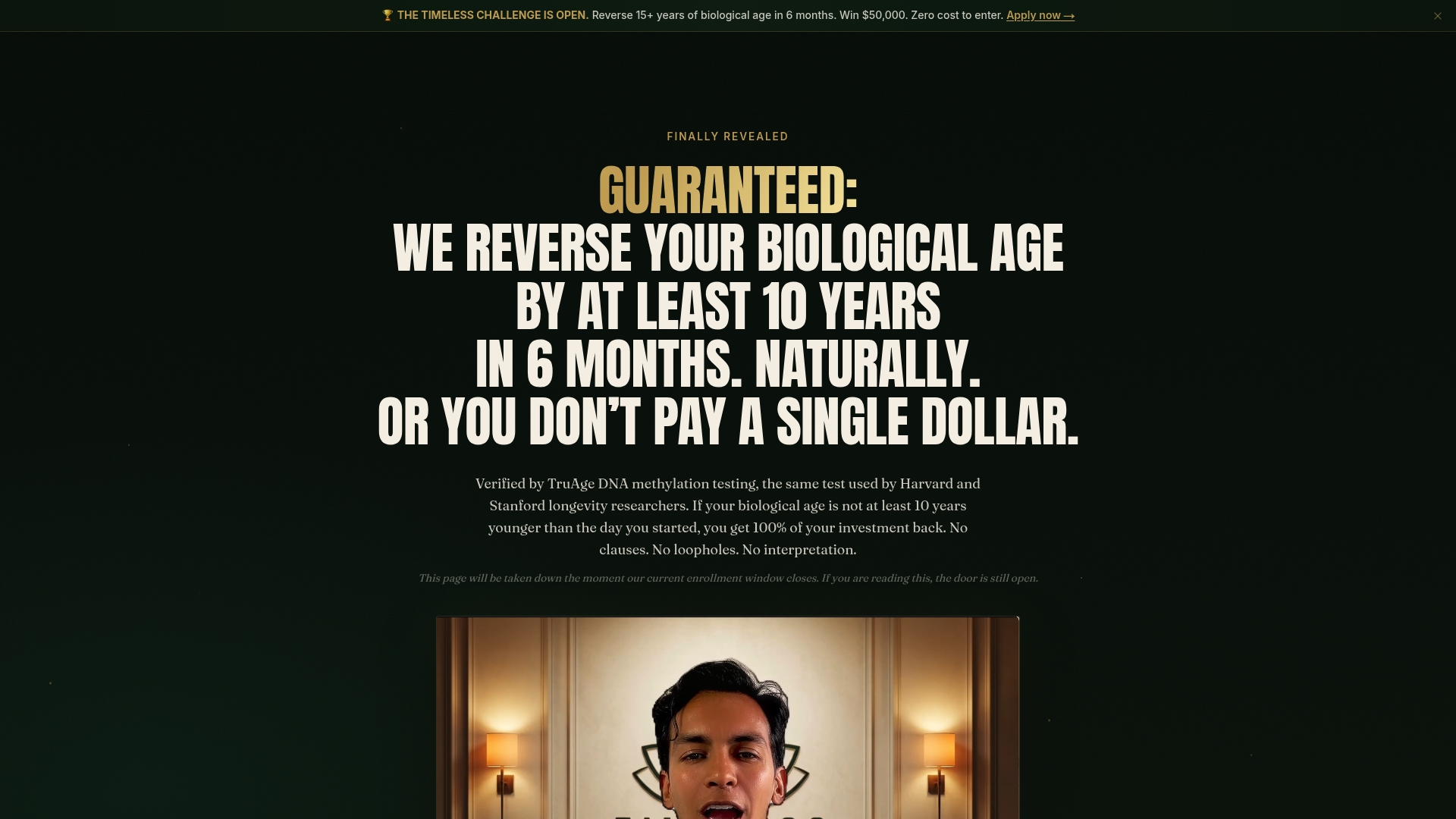
Timeless - Reverse Your Age offers the TIMELESS Vitality Intensive, an 8-week private coaching program built on 15 years of research and tested across 40 countries. The program is guaranteed to reverse biological age by at least 10 years in 6 months, verified by TruAge DNA methylation testing, or every dollar is refunded. No other longevity program in the world makes that offer with scientific accountability behind it. If you want to know exactly where you stand and what to do about it, book your free vitality diagnosis call and get a personalized assessment from the team that has already helped thousands of people rewrite their aging program.
FAQ
What is biological age in simple terms?
Biological age is how old your body’s cells and systems function, measured through biomarkers like DNA methylation patterns. It can be younger or older than your chronological age depending on your lifestyle, genetics, and environment.
Can biological age be reversed?
Yes. Biological age acceleration is not permanent and responds to targeted lifestyle and medical interventions. Consistent changes to diet, exercise, sleep, and stress management can produce measurable reductions in biological age within 6–12 months.
What is a good biological age for someone in their 50s?
A biological age 5–7 years younger than your chronological age is considered good in your 50s. Eight to ten years younger is excellent, based on population data from epigenetic clock studies.
How is biological age measured?
The most accurate method is an epigenetic clock test like TruAge, GrimAge, or DunedinPACE, which reads DNA methylation patterns from blood or saliva. Blood biomarker panels and functional tests like VO2 max and grip strength also contribute to a full biological age assessment.
What is the difference between biological age and chronological age?
Chronological age is fixed and counts years since birth. Biological age is variable and reflects the actual functional state of your cells and tissues. The Dunedin Study found a 33-year biological age spread among people who were all the same chronological age, proving the two measures are fundamentally different.