
Reverse Aging Success Markers List: 10 Key Indicators
Discover the reverse aging success markers list: 10 key indicators that prove your body is truly growing younger at the cellular level.
Reverse Aging Success Markers List: 10 Key Indicators
A reverse aging success markers list is defined as a set of measurable biological and functional indicators that confirm your body is growing younger at the cellular level, not just feeling better. The gold standard among these indicators is the DunedinPACE epigenetic clock, which measures the speed at which your DNA methylation patterns are aging. Alongside DunedinPACE, markers like muscle mass, fasting insulin, hs-CRP, and handgrip strength form the core of any credible aging reversal assessment. Tracking this list objectively separates real biological progress from wishful thinking. If you are between 35 and 70 and serious about reversing your biological age, these are the numbers that tell the truth.
1. The reverse aging success markers list: what it includes and why it matters
Biological age is not fixed. It is a program written in your cells, and it can be rewritten. The markers on this list are the proof of that rewriting. Research confirms that a minimal marker set combining muscle mass, standing balance, and DunedinPACE achieves nearly the same predictive accuracy (C-index 0.63) as full biomarker panels (C-index 0.65). That finding matters because it tells you where to focus your attention and your testing budget.
Most people chasing anti-aging results measure the wrong things. They track weight, skin appearance, or energy levels. Those are outputs. The markers on this list are inputs at the cellular and epigenetic level, and they predict mortality risk, disease onset, and functional capacity decades in advance.

2. DunedinPACE epigenetic clock
DunedinPACE is the strongest predictor of mortality and biological aging pace currently available. It measures the rate at which your epigenome is aging, expressed as a pace score. A score below 1.0 means you are aging slower than your chronological peers. A score above 1.0 means your biology is running ahead of your birth certificate.
What makes DunedinPACE superior to older clocks like Horvath or GrimAge is that it measures pace, not position. It tells you how fast you are aging right now, not just where you are. Clinical trials confirm that Semaglutide lowered DunedinPACE by 9% over 32 weeks and reduced DNAm PhenoAge by 4.9 years. That is a measurable, drug-verified shift in biological aging speed.
TruAge testing, which Timeless - Reverse Your Age uses to verify client results, is built on this same methylation science. My own TruAge result confirmed a biological age of 23 at 41 years old.
3. Metabolic blood biomarkers
Metabolic markers are the daily report card of how well your cells process energy and manage inflammation. The key targets are fasting insulin below 5 µIU/mL, HbA1c below 5.2%, and IGF-1 in the optimal range of 150–300 ng/mL. Each of these reflects a different dimension of metabolic health.
Fasting insulin is the most underused marker in standard medicine. Most labs flag insulin as normal up to 25 µIU/mL. That range is designed to catch diabetes, not to optimize biological age. Keeping fasting insulin below 5 µIU/mL signals deep insulin sensitivity, which correlates directly with slower epigenetic aging. HbA1c below 5.2% confirms that glucose control is consistent over the prior three months, not just on the morning of your blood draw.
4. Inflammation markers: hs-CRP and IL-6
Chronic low-grade inflammation is one of the primary drivers of accelerated aging. High-sensitivity C-reactive protein (hs-CRP) and interleukin-6 (IL-6) are the two most clinically validated markers of this process. Stable metabolic health, including controlled inflammation, correlates with sustained biological age reversal.
hs-CRP below 0.5 mg/L is the target for longevity-focused individuals. Most conventional labs consider anything below 3.0 mg/L acceptable. That gap represents years of biological aging difference. IL-6 is harder to test affordably but provides earlier warning of immune system dysregulation than hs-CRP alone.
Pro Tip: Test hs-CRP in the morning after a full night of sleep and at least 12 hours without food. Recent illness, intense exercise within 48 hours, or poor sleep will artificially inflate your result and distort your trend data.
5. NAD+ levels and cellular energy capacity
NAD+ is the molecule your mitochondria use to produce energy and repair DNA. Levels decline with age, and that decline accelerates the aging program at the cellular level. Restoring NAD+ is one of the most studied interventions in longevity science, with precursors like NMN and NR showing measurable effects on mitochondrial function.
Testing NAD+ in whole blood gives you a direct read on cellular energy capacity. Optimal levels are generally above 40 µM in whole blood, though reference ranges vary by lab. Low NAD+ correlates with poor mitochondrial output, increased DNA damage, and faster epigenetic aging. This marker sits squarely in the Physical layer of the TIMELESS four-layer protocol.
6. Muscle mass and body composition
Muscle mass is one of the most powerful predictors of longevity and one of the most neglected anti-aging indicators in clinical practice. Skeletal muscle is metabolically active tissue. It regulates glucose, produces myokines that protect the brain, and directly supports physical function into old age. Combined exercise and nutrition can produce biological age reversals of 3 or more years in as little as 8 weeks.
DEXA scanning is the gold standard for measuring muscle mass and body fat distribution. Appendicular lean mass index (ALMI) is the specific metric to track. Low ALMI is associated with sarcopenia, insulin resistance, and accelerated epigenetic aging. Building and preserving muscle is not optional for age reversal. It is foundational.
7. Handgrip strength
Handgrip strength is a proxy for total body muscle quality and neuromuscular function. It is one of the cheapest and most predictive functional markers available. Low grip strength predicts cardiovascular disease, cognitive decline, and all-cause mortality with striking accuracy across multiple large population studies.
A hand dynamometer costs under $30. Testing takes 30 seconds. For men, a grip strength above 40 kg is a strong longevity signal. For women, above 25 kg. These numbers decline with age, but they respond to resistance training within weeks. Tracking grip strength monthly gives you a real-time functional aging reversal benchmark.
8. Standing balance and single-leg balance
The ability to stand on one leg for 10 seconds is a predictor of mortality that most people have never heard of. Balance reflects the integration of the vestibular system, proprioception, and neuromuscular control. All three degrade with biological aging. All three respond to targeted training.
Single-leg balance with eyes closed for 10 seconds is the clinical threshold. Failure to hold this position is associated with significantly elevated mortality risk in middle-aged and older adults. This test costs nothing and takes 20 seconds. Add it to your monthly self-assessment alongside grip strength and walking speed.
9. Walking speed and VO2 max
Walking speed over a 4-meter course is a validated functional aging marker used in geriatric medicine. A pace below 0.8 meters per second signals elevated risk. Above 1.2 meters per second signals strong functional age. VO2 max, your maximal oxygen uptake, is the single best predictor of cardiovascular longevity and is directly trainable through Zone 2 aerobic exercise.
Exercise activates multiple longevity pathways simultaneously, including cardiovascular health and epigenetic rejuvenation. Combining aerobic, resistance, and flexibility training produces measurable improvements in biological aging markers. Zone 2 training, which keeps your heart rate at 60–70% of maximum, specifically targets mitochondrial density and metabolic efficiency.
10. Brain age biomarkers
Brain age is an emerging aging reversal benchmark with serious mortality implications. Younger brain age reduces mortality risk by 40% over 15 years. Aged brain markers increase mortality risk by 182%. These numbers place brain age among the most consequential markers on this list.
Brain age can be estimated through blood-based biomarkers including GFAP, NfL (neurofilament light chain), and BDNF. MRI-based brain age gap analysis is the most precise method but requires imaging. For most people, tracking BDNF and NfL through blood panels is a practical starting point. Sleep quality, cognitive training, and aerobic exercise are the three most evidence-backed interventions for improving brain age.
Pro Tip: Biomarkers are more than measurements. They reflect underlying cellular processes. Focusing on aging drivers versus bystanders yields better outcomes than chasing every trendy supplement that moves a single number.
Key takeaways
The most reliable aging reversal benchmarks combine epigenetic clocks like DunedinPACE with functional markers like grip strength, balance, and VO2 max, because no single test captures the full picture of biological age.
| Point | Details |
|---|---|
| DunedinPACE is the top marker | It measures aging pace, not position, and responds to both lifestyle and clinical interventions. |
| Metabolic markers require tight targets | Fasting insulin below 5 µIU/mL and HbA1c below 5.2% signal deep metabolic health, not just absence of disease. |
| Functional tests are free and predictive | Grip strength, single-leg balance, and walking speed predict mortality and respond to training within weeks. |
| Test every 6–12 months under consistent conditions | Morning, fasted, and post-rest testing reduces noise and makes trend data reliable. |
| Synergy beats single interventions | Combined exercise, nutrition, and sleep produce biological age reversals that isolated approaches cannot match. |
Why most people track the wrong things
I have run my own TruAge DNA methylation tests for years. My last result confirmed a biological age of 23 at 41 years old. That number did not come from tracking my weight or how I felt on a given morning. It came from systematically addressing all four layers of aging simultaneously: Physical, Emotional, Spiritual, and Energetic.
Most longevity protocols address one layer. They fix the mitochondria or reduce inflammation or optimize sleep. Those are real gains. But aging is a four-layer problem. Stored emotional trauma dysregulates the nervous system and accelerates epigenetic aging. Subconscious beliefs about aging shape behavior and biology in ways that no supplement can override. The bioelectric field and meridian system influence cellular communication in ways that standard blood panels do not capture.
The markers on this list are real and necessary. But they are outputs of a deeper system. When I see a client with a DunedinPACE score that refuses to move despite perfect metabolic markers, the answer is almost never another supplement. It is almost always in the Emotional or Energetic layer. That is the insight that 15 years of research and work with practitioners across 40 countries has confirmed repeatedly. Track the markers. But do not mistake the scoreboard for the game.
— E. Christian Trejo
Start reversing your biological age with verified results
The markers in this article are the foundation of the TIMELESS four-layer aging protocol, built on 15 years of research and tested across 40 countries. Timeless - Reverse Your Age is the only program that addresses Physical, Emotional, Spiritual, and Energetic aging simultaneously, with DNA-verified results.
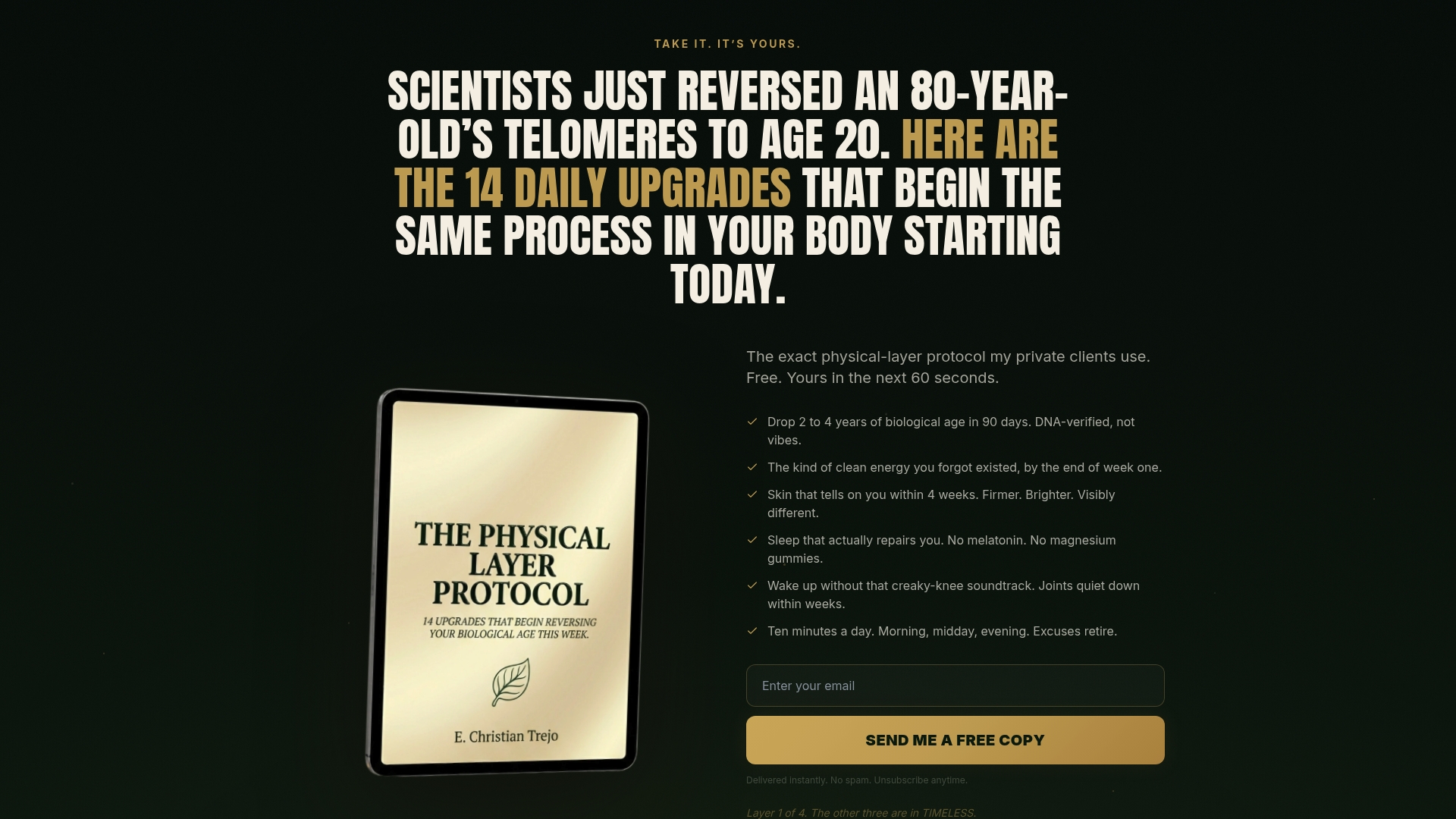
The TIMELESS Vitality Intensive guarantees a 10-year biological age reversal in 6 months, verified by TruAge DNA methylation testing, or every dollar is refunded. No other longevity program offers that level of accountability. The complete protocol is documented in the TIMELESS paperback for $29.99. If you want a personalized assessment of your current markers and a plan built around your biology, book a free vitality call and we will map your path forward together.
FAQ
What is the most accurate marker for measuring biological age reversal?
DunedinPACE is the most accurate single marker for measuring biological aging pace. It outperforms traditional biomarkers in predicting mortality and responds measurably to lifestyle and clinical interventions.
How often should I retest my aging reversal markers?
Retest every 6–12 months under consistent conditions, specifically in the morning, fasted, and without recent intense exercise. Long-term trends are more reliable than individual snapshots.
Can lifestyle changes actually move these markers?
Yes. An 8-week intensive lifestyle intervention reduced biological age by an average of 3.23 years in clinical trials. Synergistic lifestyle stacks combining exercise, nutrition, and sleep produce the largest measurable shifts.
What does a comprehensive biomarker panel cost?
Comprehensive anti-aging biomarker testing costs $800–$1,500 in 2026. Retesting every 6–12 months is the recommended frequency for tracking meaningful trends.
Is brain age a reliable anti-aging indicator?
Brain age is an emerging but highly predictive marker. Younger brain age reduces mortality risk by 40% over 15 years, making it one of the most consequential longevity metrics to track alongside epigenetic and metabolic markers.