
Real Examples of Epigenetic Age Reversal in 2026
Discover real examples of epigenetic age reversal in 2026. Explore how interventions like laser treatments can reduce biological age.
Real Examples of Epigenetic Age Reversal in 2026
Epigenetic age reversal is defined as the measurable modification of DNA methylation patterns that reduce biological age markers below a person’s chronological age. Science now confirms this is not theoretical. Clinical studies using tools like the Horvath clock and DunedinPACE have documented real, quantifiable reversals in biological aging across multiple intervention types. Whether through laser treatments, lifestyle protocols, or pharmaceutical agents, the evidence is building fast. What matters most is understanding which examples are backed by rigorous data, and how to apply them across all four layers of aging: physical, emotional, spiritual, and energetic.
1. Examples of epigenetic age reversal with non-ablative fractional laser
Non-ablative fractional laser treatment is one of the most striking examples of measurable epigenetic age reversal in recent clinical literature. A 2026 study published in Nature’s Scientific Reports examined Candela’s Nordlys laser and found that 83.9% of aging-associated CpG sites shifted in the direction of younger methylation patterns after treatment. That figure means the laser did not just improve skin appearance. It rewrote the molecular aging signature of the tissue itself.

The clinical outcomes matched the molecular data. Participants showed a median 38% reduction in brown spot counts, along with improved skin texture and tone. Critically, these improvements stabilized over six months rather than fading, suggesting progressive epigenetic remodeling rather than a temporary surface effect.
One important nuance: skin epigenetic clocks measure tissue-specific aging, not systemic biological age. A younger skin methylation profile does not automatically mean your blood-based biological age has dropped. This distinction matters when evaluating any domain-specific intervention.
- Laser treatment targets local epigenetic aging in skin tissue
- Molecular improvements persist for at least six months post-treatment
- Results require serial testing to confirm durability over time
- Skin-based reversal should be paired with systemic protocols for full-body impact
Pro Tip: Laser therapy is a domain-specific epigenetic rejuvenation technique. Pair it with systemic lifestyle and emotional protocols to address aging at all four layers simultaneously.
2. Multimodal lifestyle intervention with probiotics
A randomized controlled trial published in Aging journal tested a 12-week program combining dietary guidance, moderate exercise, and daily probiotic yogurt containing Bifidobacterium longum BB536 in overweight men over 50. The result was a 2.2% slower pace of aging measured by DunedinPACE, one of the most respected next-generation epigenetic clocks. DunedinPACE measures how fast you are aging right now, not just where your biological age sits. Slowing it by 2.2% in 12 weeks is a meaningful, measurable shift.
The intervention worked across three reinforcing components:
- Diet guidance: Participants followed structured nutritional recommendations that reduced inflammatory load and supported methylation pathways
- Moderate exercise: Regular physical activity improved mitochondrial function and reduced oxidative stress, both of which influence DNA methylation
- Probiotic consumption: Daily Bifidobacterium longum BB536 yogurt reduced renal-related epigenetic markers, suggesting gut-to-epigenome signaling
This trial matters beyond its specific population. The mechanisms at play, including reduced inflammation, improved gut health, and better metabolic function, apply broadly to adults in the 30–65 age range. The physical layer of aging responds directly to these inputs. What the trial did not address is the emotional, spiritual, and energetic layers, which is where most lifestyle programs fall short.
Pro Tip: Consistency over 12 weeks produced measurable epigenetic change. Sporadic effort does not move the needle on DunedinPACE. Commit to the full protocol duration before expecting verified results.
3. Pharmaceutical agents that modify epigenetic aging clocks
Pharmaceuticals represent some of the most studied examples of measurable age reversal results at the molecular level. A 2026 systematic review identified semaglutide, pitavastatin, and ketamine infusions as drugs with significant effects on next-generation epigenetic clocks. These are not fringe compounds. Semaglutide is a GLP-1 receptor agonist widely prescribed for metabolic conditions, and its epigenetic effects appear linked to its anti-inflammatory action.
| Pharmaceutical | Clock Type Affected | Primary Mechanism |
|---|---|---|
| Semaglutide | Inflammation-linked clocks | GLP-1 receptor agonism, reduced systemic inflammation |
| Pitavastatin | Vascular aging clocks | Lipid modulation, endothelial protection |
| Ketamine infusions | Neurological aging clocks | NMDA receptor modulation, neuroplasticity |
The table reflects effects documented in human studies, not animal models. Each drug class targets a different pathway, which reinforces the principle that epigenetic clocks quantify multiple aging-related pathways including inflammation, tissue regeneration, and metabolic health. No single drug addresses all of them.
One critical finding from the same review: nicotinamide riboside, rapamycin, and senolytics showed no consistent detectable effect on next-generation epigenetic clocks in human studies. Many people spend significant money on these supplements based on animal data. The human evidence does not currently support their use for epigenetic age reversal.
Pharmaceuticals carry real side effects and require medical supervision. They also address only the physical layer of aging. Emotional dysregulation, subconscious beliefs about aging, and bioelectric imbalances remain untouched by any drug on this list.
4. Cellular reprogramming and epigenetic rejuvenation techniques
Partial epigenetic reprogramming is the most ambitious category of age reversal research currently underway. The concept is direct: reset the methylation patterns inside a cell to a younger state without erasing the cell’s identity. Animal models have produced successful results in rodents and primates, with measurable reductions in biological age markers across multiple tissue types. The first human trial has begun, though researchers describe the current phase as cautiously optimistic rather than conclusive.
The distinction between local and systemic reprogramming is critical:
- Local reprogramming targets a specific tissue, such as the eye or skin, and resets aging markers in that organ without affecting the rest of the body
- Systemic reprogramming aims to reset biological age across all tissues simultaneously, which is the goal but also the greater risk
- Partial reprogramming uses defined molecular factors to push cells toward a younger state without triggering full dedifferentiation, which would cause cancer risk
The gap between animal success and human application remains wide. Rodent biology differs from human biology in ways that matter for epigenetic interventions. What works in a mouse at 80% efficacy may work in a human at a fraction of that rate, or not at all. Cellular reprogramming is the most promising frontier in reversing biological age at the systemic level. It is also the one that requires the most patience before it becomes a practical option for most people.
5. Chronic stress reduction as an epigenetic intervention
Chronic stress accelerates epigenetic aging by disrupting DNA methylation through the cortisol-methylation cycle. This is not a soft wellness claim. Cortisol directly interferes with the enzymes responsible for maintaining healthy methylation patterns. Sustained elevation of cortisol, which occurs during chronic stress, pushes biological age markers upward in measurable ways.
The research is clear that reducing chronic stress exposure produces stronger epigenetic improvements than resilience-building alone. Resilience helps you cope. Removing the stressor changes your biology. This distinction separates surface-level wellness advice from genuine epigenetic intervention.
Somatic practices for epigenetic age reversal, including breathwork, vagal nerve stimulation, and trauma-informed movement, address the emotional layer of aging directly. Stored trauma and nervous system dysregulation keep the body in a low-grade stress state even when external stressors are absent. Resolving that internal state is not optional if you want durable biological age reversal. It is a prerequisite. The physical layer responds to diet and exercise. The emotional layer requires a different set of tools entirely.
6. Serial epigenetic testing to confirm real reversal
Single epigenetic clock readings are insufficient to confirm true biological age reversal. Intervention effects vary between blood-based clocks and organ-specific tissue clocks, and a one-time measurement cannot distinguish a genuine trend from normal biological fluctuation. Serial testing, meaning multiple measurements over time, is the standard that separates verified reversal from wishful interpretation.
The laser study illustrates this well. Epigenetic remodeling in skin tissue stabilized progressively over six months. A measurement at week two would have shown partial results. A measurement at six months showed the full picture. The same logic applies to lifestyle and pharmaceutical interventions. You need a baseline, a midpoint, and a follow-up to build a credible case for reversal.
TruAge DNA methylation testing is one of the validated tools for tracking biological age over time. My own TruAge results confirmed a biological age of 23 at a chronological age of 41. That result came from 15 years of applying a protocol that addresses all four aging layers, not from any single intervention. Serial testing made the result verifiable rather than anecdotal. You can explore aging reversal methods that go beyond surface-level approaches to understand what moves the needle on DNA methylation testing.
Key Takeaways
Epigenetic age reversal is measurable, multifactorial, and requires addressing physical, emotional, spiritual, and energetic aging layers simultaneously to produce durable results.
| Point | Details |
|---|---|
| Laser treatment reverses skin epigenetic age | 83.9% of aging-associated CpG sites shifted after Nordlys treatment, with results stable at six months. |
| Lifestyle plus probiotics slows aging pace | A 12-week multimodal program reduced DunedinPACE by 2.2% in overweight men over 50. |
| Pharmaceuticals vary in epigenetic impact | Semaglutide and pitavastatin show clock-verified effects; popular supplements like NR and rapamycin do not. |
| Stress reduction is a direct epigenetic tool | Chronic stress disrupts DNA methylation via cortisol; removing stressors produces stronger results than coping strategies. |
| Serial testing confirms real reversal | Single measurements are unreliable; multiple TruAge or DunedinPACE readings over time verify genuine biological change. |
What 15 years of testing taught me about epigenetic age reversal
Most people who come to me have tried one thing at a time. They did the diet. Then the supplements. Then the breathwork. Each intervention produced some result, but nothing that moved the needle on a DNA methylation test in a lasting way. The reason is structural. Aging is a four-layer problem. Physical, emotional, spiritual, and energetic. Address only one layer and the other three pull you back.
The epigenetic clock research confirms this. Clock type, tissue specificity, and whether you are measuring pace or cumulative age all change what the numbers mean. I have seen people with excellent blood-based clock results who still showed accelerated aging in tissue-specific markers. One test in one tissue tells you one thing. It does not tell you everything.
The intervention I see most consistently undervalued is stress reduction. Not stress management. Actual removal of chronic stressors, including the internal ones driven by unresolved trauma and subconscious beliefs about aging. The cortisol-methylation cycle is relentless. You cannot out-supplement a nervous system that is running a threat response 18 hours a day. Somatic practices for epigenetic age reversal address this directly, and they belong in any serious protocol alongside the clinical interventions.
My biological age of 23 at 41 is not the result of a single drug or a single test. It is the result of applying all four layers consistently, verifying with serial TruAge testing, and adjusting based on what the data shows. That is the standard I hold for every person I work with.
— E. Christian Trejo
The Timeless - Reverse Your Age program for DNA-verified results
Timeless - Reverse Your Age is built on the same four-layer protocol that produced a verified biological age of 23 at 41. The TIMELESS Vitality Intensive is an 8-week private coaching program that integrates physical, emotional, spiritual, and energetic interventions simultaneously. It is the only program in the longevity space that guarantees 10 years of biological age reversal in six months, verified by TruAge DNA methylation testing, or every dollar is refunded.
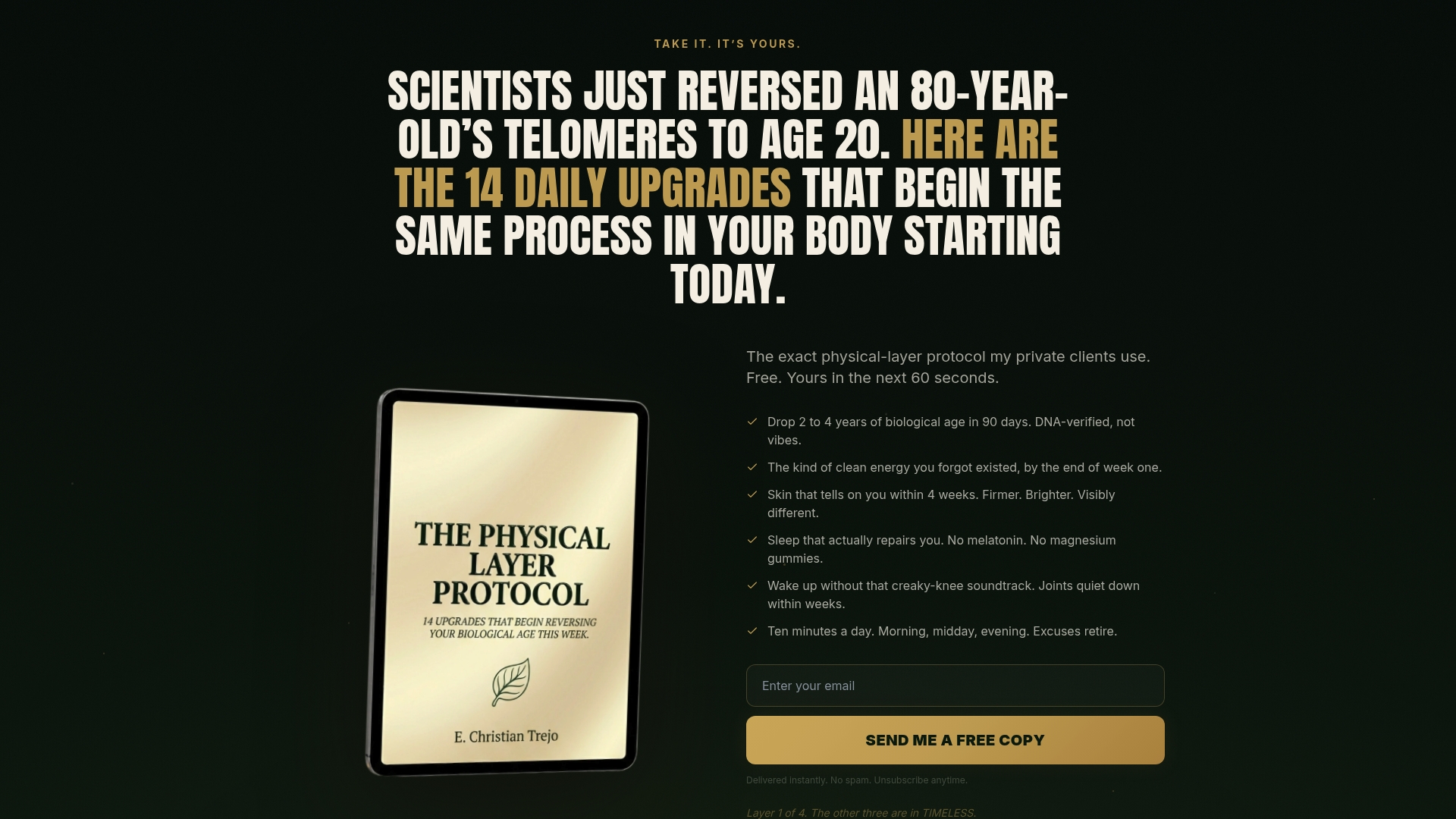
If you are ready to see what your biological age actually is and what is possible for you, start with the free vitality diagnosis call. You can also access the free 14-upgrade guide at reverseyourage.org/14-upgrades to begin applying the protocol immediately. The science is clear. The only question is whether you are ready to verify your own results.
FAQ
What is epigenetic age reversal?
Epigenetic age reversal is the measurable reduction of biological age markers through targeted modifications to DNA methylation patterns. It is quantified using validated tools like the Horvath clock, DunedinPACE, and TruAge testing.
What are the best-documented examples of measurable age reversal results?
The strongest current examples include non-ablative fractional laser treatment reversing skin epigenetic signatures, a 12-week lifestyle and probiotic intervention slowing DunedinPACE by 2.2%, and pharmaceutical agents like semaglutide reducing inflammation-linked epigenetic clock scores.
Do supplements like nicotinamide riboside reverse epigenetic age?
No. A 2026 systematic review found that nicotinamide riboside, rapamycin, and senolytics showed no consistent detectable effect on next-generation epigenetic clocks in human studies. Their popularity in wellness communities is not matched by human clinical evidence.
How does chronic stress affect epigenetic aging?
Chronic stress elevates cortisol, which directly disrupts the enzymes that maintain healthy DNA methylation patterns. Removing chronic stressors produces stronger epigenetic improvements than stress management techniques alone.
How many tests do I need to confirm biological age reversal?
Serial testing is required. A single measurement cannot distinguish a genuine trend from normal biological fluctuation. A baseline reading, a midpoint check, and a follow-up measurement over at least six months provide a credible picture of true epigenetic change.