
Purpose-Driven Longevity Research Examples for 2026
Discover purpose driven longevity research examples that reveal how a strong sense of purpose enhances life span and cognitive function.
Purpose-Driven Longevity Research Examples for 2026
The science is clear: people with a strong sense of purpose live longer, stay physically stronger, and maintain sharper cognitive function well into old age. Eric S. Kim’s research on older American adults found that those with the highest sense of purpose had substantially lower mortality risk over a four-year follow-up period. The Semmelweis Study reinforced this, linking purpose in life to measurable reductions in stress-related disease and inflammation. The Japanese concept of ikigai, which translates roughly as “a reason for being,” shows in cross-sectional research that high ikigai levels independently predict both expected and preferred longevity, partly through stronger social integration and reduced desire to withdraw from life.
Here is what the core research shows at a glance:
- Mortality risk: Eric S. Kim’s study found the highest-purpose adults had markedly lower four-year mortality compared to low-purpose peers.
- Functional disability: Purpose is associated with a 31% lower risk of functional disability in older adults.
- Dementia protection: A sense of purpose correlates with a 36% lower risk of developing dementia.
- Physical vitality: High levels of purpose are associated with maintenance of walking speed and grip strength equivalent to being 2.5 years younger biologically.
- Biological age reversal: Purpose-driven programs like Emprende 50+ have produced biological aging markers indicating a younger biological age than chronological age in participants.
- Ikigai and longevity: People with high ikigai feel more socially integrated, which reduces isolation and increases access to informal care, both of which extend resilient life.
These are not soft correlations. They are replicated findings across continents, demographics, and methodologies. Purpose is one of the most underutilized levers in longevity science.
What researchers actually mean by a “purposeful life”
Purpose, in the scientific literature, is not a vague feeling of happiness. Researchers define it as a stable sense of direction and meaning, the belief that your life matters and that you are moving toward goals that reflect your core values. Psychologist Carol Ryff, whose six-dimension model of psychological well-being has shaped decades of aging research, places purpose at the center of what distinguishes people who age well from those who do not.
Three dimensions appear consistently across purpose-driven health studies. The first is social integration: purposeful people maintain active roles in their communities, which buffers against isolation and its downstream effects on inflammation and immune function. The second is generativity: a commitment to contributing to the next generation, whether through mentoring, parenting, teaching, or community leadership. The third is values alignment: the degree to which daily activities reflect what a person genuinely cares about, rather than obligations imposed from outside.

Ikigai captures all three dimensions within a single cultural framework. The concept sits at the intersection of what you love, what you are good at, what the world needs, and what you can be compensated for. Cross-sectional findings from Germany’s 2026 study confirmed that ikigai independently predicts longevity expectations, separate from income, health status, or social support. That independence is what makes it scientifically interesting. Purpose is not simply a proxy for being healthy or wealthy. It is a distinct variable with its own biological pathway.
Researchers measure purpose using validated scales such as the Ryff Purpose in Life subscale and the Meaning in Life Questionnaire. Both instruments ask respondents to rate agreement with statements about direction, goals, and the sense that life has significance. These scores then get correlated with biomarkers, mortality records, and functional assessments over years or decades.
How purpose physically changes your biology
Purpose does not just feel good. It rewrites how your body ages at the cellular level. The Semmelweis Study documented that purpose fosters resilience and self-regulation while measurably lowering systemic inflammation, one of the primary drivers of accelerated biological aging. Chronic low-grade inflammation, sometimes called “inflammaging,” accelerates cellular senescence, shortens telomeres, and disrupts mitochondrial function. Purpose appears to interrupt that cascade.

The stress regulation pathway is the most well-documented mechanism. People with strong purpose show lower cortisol reactivity to acute stressors and faster cortisol recovery afterward. That blunted stress response translates directly into reduced wear on the cardiovascular system, lower blood pressure, and better metabolic markers over time. Harvard Health research confirms that lifestyle factors including psychological well-being play a measurable role in longevity outcomes alongside diet and physical activity.
Purpose also drives behavior. People who feel their life has direction exercise more consistently, sleep better, maintain stronger social networks, and are less likely to smoke or drink excessively. These are not trivial secondary effects. They compound over decades into dramatically different biological age trajectories. The Buck Institute’s Healthspan Horizons initiative is now building the longitudinal data infrastructure to quantify exactly how these behavioral and biological signals interact over time, using AI to detect early divergence from healthy aging trajectories.
This is where the TIMELESS four-layer aging protocol becomes relevant. Aging is not a single-layer problem. The Physical layer covers cellular, epigenetic, and mitochondrial function. The Emotional layer addresses stored trauma and nervous system dysregulation. The Spiritual layer targets identity and subconscious beliefs about aging. The Energetic layer works with the bioelectric field and meridian system. Purpose operates most powerfully across the Emotional and Spiritual layers, but its downstream effects reach every layer simultaneously. Most longevity protocols address one layer. That is why most longevity protocols produce partial results.
Purpose protects your brain as you age
Cognitive decline is the fear that drives most people to take aging seriously. The research on purpose and brain health is among the most compelling in the entire field. Latin American aging research found that a strong reason for living is associated with a 36% lower risk of developing dementia, a finding that holds even after controlling for education, income, and baseline health status.
The Semmelweis Study provides a mechanistic explanation. Purpose reduces chronic stress exposure, which in turn lowers glucocorticoid-driven hippocampal damage. The hippocampus, the brain region most vulnerable to stress hormones and most critical for memory formation, appears structurally protected in people who maintain high purpose scores over time. This is not a metaphor. Neuroimaging studies show measurable differences in hippocampal volume between high-purpose and low-purpose older adults.
Functional disability follows a similar pattern. The same Latin American research found a 31% lower risk of functional disability among purpose-driven older adults, meaning they retained the ability to perform daily activities independently for longer. That independence is not just a quality-of-life issue. It is a survival issue. Loss of functional independence is one of the strongest predictors of mortality in adults over 70.
Emotional resilience is the connective tissue here. People with strong purpose recover faster from health setbacks, maintain social engagement through illness, and are less likely to experience the depression that accelerates cognitive decline. The Emotional layer of the TIMELESS protocol addresses exactly this: stored trauma and nervous system dysregulation that, left unresolved, accelerate brain aging from the inside out.
How purpose shifts across your lifespan
Purpose is not static. It evolves, sometimes dramatically, across the decades of a human life. Research on lifespan development shows that purpose in midlife tends to center on career achievement, parenting, and community contribution. By later adulthood, those anchors often shift or disappear entirely, and people who do not actively rebuild their sense of direction experience measurable declines in both psychological and physical health.
Generativity becomes the dominant purpose driver in later life. Erik Erikson’s developmental framework identified generativity, the drive to nurture and guide the next generation, as the central psychological task of middle and late adulthood. Research consistently shows that older adults who maintain generative roles, whether as mentors, grandparents, volunteers, or community leaders, report higher purpose scores and show better health outcomes than those who withdraw into passive leisure.
The transition periods are the most dangerous. Retirement, the death of a spouse, children leaving home, or the end of a long career can strip away the structures that gave life its direction. Studies of aging populations show that purpose scores often drop sharply in the first two years after retirement, and that this drop correlates with accelerated functional decline. The people who navigate these transitions well are those who intentionally design new purpose structures before the old ones disappear.
This is why purpose cultivation cannot be treated as a one-time event. It requires ongoing, deliberate attention across every phase of life. The Spiritual layer of the TIMELESS protocol addresses this directly, targeting the subconscious beliefs about aging and identity that either support or undermine a person’s capacity to find new meaning as life changes.
Practical strategies to cultivate purpose and enhance longevity
Building purpose is a skill, not a personality trait. The research from Latin America is particularly instructive here because it demonstrates that purpose-driven interventions produce measurable physical and biological outcomes, not just psychological ones. Here are the strategies with the strongest evidence base:
-
Pursue pro-social missions over passive leisure. Community initiatives built around shared goals produce significantly higher wellbeing than social gatherings organized purely for enjoyment. When older adults feel their presence is necessary for a group to achieve a specific outcome, isolation drops and biological markers improve.
-
Align work with intrinsic values. Meaning emerges from self-concordance, the state where daily tasks reflect what you genuinely care about. Organizations and individuals that design roles around intrinsic values rather than external obligations see measurable improvements in health outcomes.
-
Build intergenerational connections. Generativity is one of the strongest predictors of purpose in later life. Programs like reverse mentoring, where older adults transfer knowledge while learning from younger peers, require a shared goal to be effective. Proximity alone is not enough.
-
Rebuild confidence through structured reinvention. The Argentinian nonprofit Diagonal launched Diagui in June 2025, an AI-driven assistant that has supported over 2,600 adults over 45 through structured reinvention paths. The tool guides users to realign their professional identity with intrinsic goals, reducing the psychological inertia that blocks purposeful transitions.
-
Engage with entrepreneurship frameworks. The Emprende 50+ program, part of Peru’s Ecosistema Plateado initiative, has supported 239 adults over 50 through purpose-centered business development. Nearly half joined with an existing idea and developed it further; 12% built a business from scratch during the program. Fifteen ventures secured early-stage funding through national programs.
-
Practice values clarification regularly. Journaling, structured reflection, and values-mapping exercises help people identify what genuinely matters to them, separate from social expectations. This is the foundation of the Spiritual layer work in the TIMELESS protocol.
-
Prioritize social engagement as a health intervention. Purpose and social connection are mutually reinforcing. Harvard Health research confirms that frequent socialization is associated with significantly longer survival, with greater frequency correlating with greater longevity benefit.
Pro Tip: Do not wait for a life transition to force a purpose audit. Schedule a quarterly values review the same way you would a medical checkup. The people who age best are the ones who treat purpose as a biological priority, not a philosophical luxury.
How the TIMELESS four-layer protocol integrates purpose-driven longevity science
I built the TIMELESS protocol because I kept seeing the same failure pattern in longevity research and practice. Studies would identify a powerful lever, purpose, sleep, stress regulation, epigenetic reprogramming, and then design interventions that addressed only that one lever. The results were always partial. Biological age would improve on one marker and stagnate on three others. That is not aging reversal. That is optimization theater.
My last TruAge DNA methylation test confirmed a biological age of 23 at chronological age 41. That result did not come from addressing one layer of aging. It came from addressing all four simultaneously, and purpose is woven through every one of them.
The Physical layer covers cellular senescence, epigenetic reprogramming, and mitochondrial function. Purpose influences this layer through the stress regulation pathway described earlier: lower cortisol reactivity, reduced inflammaging, and better metabolic markers. The Emotional layer targets stored trauma and nervous system dysregulation. Unresolved emotional patterns keep the nervous system in a chronic low-grade threat state, which accelerates every biological aging marker we can measure. Purpose provides the psychological scaffolding that makes emotional healing possible. Without a reason to do the work, most people do not sustain it.
The Spiritual layer is where purpose lives most directly. Subconscious beliefs about aging, identity, and worthiness determine whether a person’s biology responds to intervention or resists it. I have worked with practitioners across 40 countries, and the single most consistent predictor of who reverses biological age and who plateaus is not their supplement stack or their exercise protocol. It is whether they have resolved the identity-level story they are telling about what aging means for them. The Energetic layer addresses the bioelectric field and meridian system, the infrastructure through which the other three layers communicate. Purpose-driven states produce measurable changes in heart rate variability and bioelectric coherence, which are detectable with current technology.
The TIMELESS four-layer approach is the only protocol I know of that addresses all four layers simultaneously. Most programs address one. Some address two. None offer a DNA-verified guarantee of 10 years of biological age reversal in six months or a full refund.
Landmark longitudinal studies on purpose and lifespan
The scientific case for purpose-driven longevity has been built over decades through rigorous longitudinal research. These are the studies that anchor the field.
Eric S. Kim’s research is the most cited American study on purpose and mortality. Drawing on data from older adults in the United States, Kim found that those with the highest sense of purpose had substantially lower mortality risk over a four-year follow-up compared to low-purpose peers. The study controlled for depression, health status, and demographic variables, isolating purpose as an independent predictor of survival.
The Semmelweis Study examined the relationship between purpose in life and biological aging markers in a European population. Its key finding was that purpose regulates stress responses at the physiological level, reducing disease risk through lower inflammation and better immune function. The study’s contribution was mechanistic: it moved the conversation from correlation to causation.
The Ikigai research tradition spans decades of Japanese and European longitudinal data. The 2026 cross-sectional study from Germany confirmed that ikigai independently predicts both expected and preferred longevity, separate from other psychosocial factors. People with high ikigai feel more socially integrated, which reduces the desire to withdraw from life and increases access to informal care networks.
The ARPA-H PROSPR program represents the next generation of longevity research infrastructure. PROSPR aims to reduce clinical trial timelines for aging therapies by identifying early biomarkers of healthspan extension, enabling trials of one to three years instead of the decades traditional approaches require. Seven research teams across the United States are now funded, including Stanford University, Columbia University Mailman School of Public Health, and the University of Texas Health Science Center at San Antonio.
The Buck Institute’s Healthspan Horizons initiative is building the longitudinal data infrastructure that will power the next wave of purpose and aging research. By linking multi-modal real-world data with deep biological discovery science, the platform aims to identify what actually drives human healthspan over time, including the psychological and behavioral variables that purpose research has long pointed toward.
Which populations have researchers studied most closely?
Purpose and longevity research has been conducted across a wide range of demographic groups, and the findings hold with remarkable consistency across cultures, income levels, and health statuses.
Older American adults form the core of Eric S. Kim’s research base. These studies draw on nationally representative samples, which means the findings generalize across racial, ethnic, and socioeconomic groups within the United States. The consistency of the mortality findings across subgroups strengthens the case that purpose is a universal biological lever, not a culturally specific one.
Latin American and Caribbean populations have become a major focus of purpose-driven longevity research, partly because the region faces a rapidly aging population with limited medical infrastructure. Today, 166 million people over 50 live in Latin America and the Caribbean, representing 25% of the region’s total population. Dementia prevalence in the region is projected to rise from 8.5% today to over 19% by 2050. Purpose-based interventions are being studied as a scalable, low-cost alternative to medical infrastructure that the region cannot yet afford.
Japanese populations have been central to ikigai research for decades. The cultural embeddedness of ikigai in Japanese society makes Japan a natural laboratory for studying what happens when purpose is treated as a social norm rather than an individual achievement. Okinawa, consistently identified as a longevity hotspot, has been studied extensively for the role of ikigai in its residents’ exceptional healthspan.
European aging cohorts have contributed the mechanistic research. The Semmelweis Study and the 2026 German ikigai cross-sectional study both draw on European populations, providing data on the biological pathways through which purpose operates in contexts with different cultural frameworks than Japan or the United States.
Adults navigating career transitions represent an emerging research focus. Programs like Diagui and Emprende 50+ specifically target adults over 45 and 50 who are rebuilding professional identity. This population is particularly vulnerable to purpose loss and particularly responsive to structured reinvention interventions, making them a high-value target for both research and public health programming.
The study of Maria Branyas Morera, who lived to 117 years old, added a fascinating biological dimension to this picture. Her epigenome was biologically 23 years younger than her chronological age despite low telomere length, demonstrating that biological age and chronological age can diverge dramatically. Longevity is shaped by a complex combination of genetic, environmental, and lifestyle factors, and no single gene explains extreme lifespan.
How purpose research is being applied in public health and clinical settings
The translation of purpose research into public health programs is accelerating, particularly in regions where the aging population is growing faster than medical infrastructure can support.
The Emprende 50+ program in Peru is the clearest example of purpose as a structured public health intervention. Embedded within the Ecosistema Plateado initiative at Universidad del Pacífico, the program treats purpose as a starting point for second-career design. Its outcomes include measurable biological aging markers 2.5 years younger than chronological age among participants, a finding that places it in the same category as pharmaceutical interventions in terms of biological impact. The program has trained nine regional incubators and engaged more than 1,400 people in workshops, demonstrating that purpose interventions scale without requiring expensive medical infrastructure.
Diagui, launched by the Argentinian nonprofit Diagonal, applies AI to the purpose-building process. Its structured reinvention paths guide adults through professional identity realignment, digital literacy development, and values-driven goal setting. The tool has supported over 2,600 users, 62% of whom are women, demonstrating that purpose-building programs can reach populations that traditional health interventions often miss.
In the United States, ARPA-H’s PROSPR program is building the clinical trial infrastructure that will allow purpose-related interventions to be tested with the same rigor as pharmaceutical drugs. Stanford University’s PROSPR team is developing a healthspan score, the PROSPR-IC score, that will integrate lifestyle, biological, and behavioral data into a single computable metric. That score will eventually make it possible to measure the contribution of purpose to healthspan extension in controlled trials.
The Buck Institute’s Healthspan Horizons platform is designed to connect these efforts. By creating a federated, privacy-preserving data infrastructure, the initiative enables researchers, clinicians, and public health programs to share longitudinal data without surrendering data sovereignty. The goal is to turn purpose and lifestyle research into actionable healthspan trajectories that clinicians can actually use in prevention and early intervention.
The clinical implications are significant. Purpose screening could become a standard component of geriatric assessment, the same way depression screening is now routine. Purpose-building interventions could be prescribed alongside exercise and dietary recommendations. The research base already supports this. The infrastructure to implement it at scale is being built right now.
If you want to go beyond the research and apply these principles to your own biological age, the TIMELESS Vitality Intensive is the only program that guarantees 10 years of biological age reversal in six months, verified by TruAge DNA methylation testing, or every dollar is refunded. No other longevity program makes that offer because no other program is built on all four layers simultaneously.
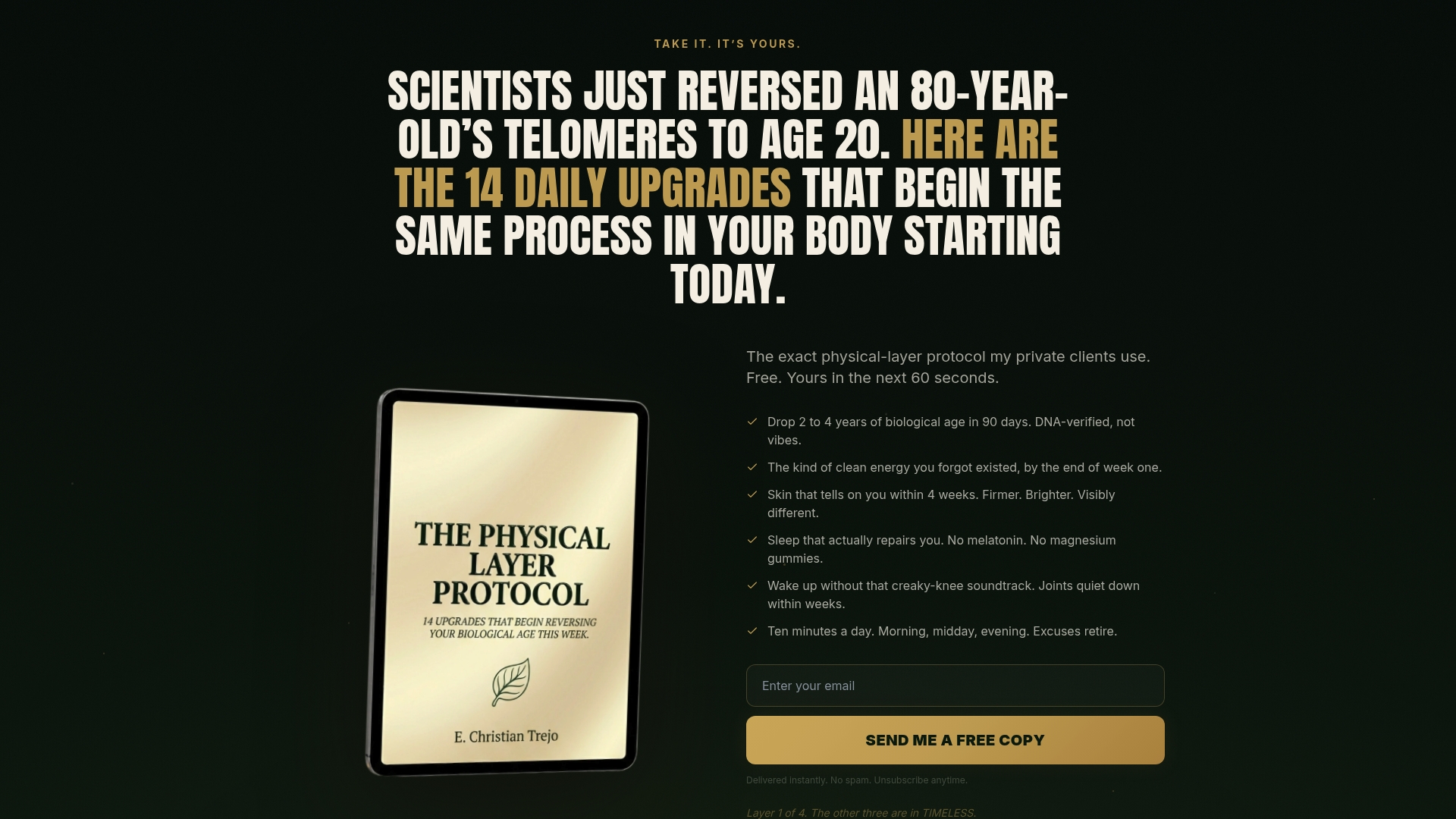
Start with the TIMELESS biological age reversal program or book a free Vitality Diagnosis call to find out exactly where your biological age stands today and what it will take to move it.
Key Takeaways
Purpose-driven longevity research consistently shows that a strong sense of meaning reduces mortality risk, protects cognitive function, and produces measurable biological age reversal across diverse populations and methodologies.
| Point | Details |
|---|---|
| Purpose reduces dementia risk | Research links high purpose to a 36% lower risk of developing dementia in older adults. |
| Functional independence preserved | Purpose is associated with a 31% lower risk of functional disability, extending independent living. |
| Biological age impact | Purpose-driven programs like Emprende 50+ produced biological aging markers 2.5 years younger than chronological age. |
| Ikigai predicts longevity | High ikigai independently predicts both expected and preferred longevity, separate from income or health status. |
| Four-layer integration | The TIMELESS protocol addresses Physical, Emotional, Spiritual, and Energetic aging layers simultaneously, where purpose operates most directly in the Emotional and Spiritual layers. |
FAQ
What is the number one predictor of longevity?
No single factor predicts longevity universally, but a strong sense of purpose consistently ranks among the most powerful independent predictors across longitudinal studies, including Eric S. Kim’s research on older American adults and the Semmelweis Study’s findings on stress regulation and disease risk.
What are the four pillars of longevity?
Definitions vary across frameworks, but the TIMELESS protocol identifies four layers of biological aging: Physical (cellular, epigenetic, mitochondrial), Emotional (stored trauma, nervous system dysregulation), Spiritual (identity and subconscious beliefs about aging), and Energetic (bioelectric field, meridians). Purpose operates most directly across the Emotional and Spiritual layers.
What are the top biomarkers researchers use to measure healthy aging?
Researchers currently track biomarkers including DNA methylation age (measured by tools like TruAge), inflammatory markers such as C-reactive protein, telomere length, grip strength, walking speed, and cortisol reactivity. The ARPA-H PROSPR program is actively working to identify which early biomarkers best predict long-term healthspan outcomes.
Does having a sense of purpose actually change your biology?
Yes. The Semmelweis Study documented that purpose lowers systemic inflammation and regulates stress hormone responses at the physiological level. Latin American aging research found that high purpose is associated with physical vitality equivalent to being 2.5 years younger biologically, measured by walking speed and grip strength.
What are the 5 P’s to avoid for longevity?
This specific framework does not appear in the major longitudinal studies on purpose and aging. The research-backed approach focuses instead on cultivating purpose, social integration, values alignment, generativity, and stress regulation as the primary drivers of healthy longevity, rather than a list of things to avoid.