Hungary: Build an 8–15 Person Private Longevity Community in 12 Weeks
Build or join a private longevity community in Hungary. Run an 8–15 person, 12 week pilot using the TIMELESS four layer model, municipal grants, and a...
Hungary: Build an 8–15 Person Private Longevity Community in 12 Weeks
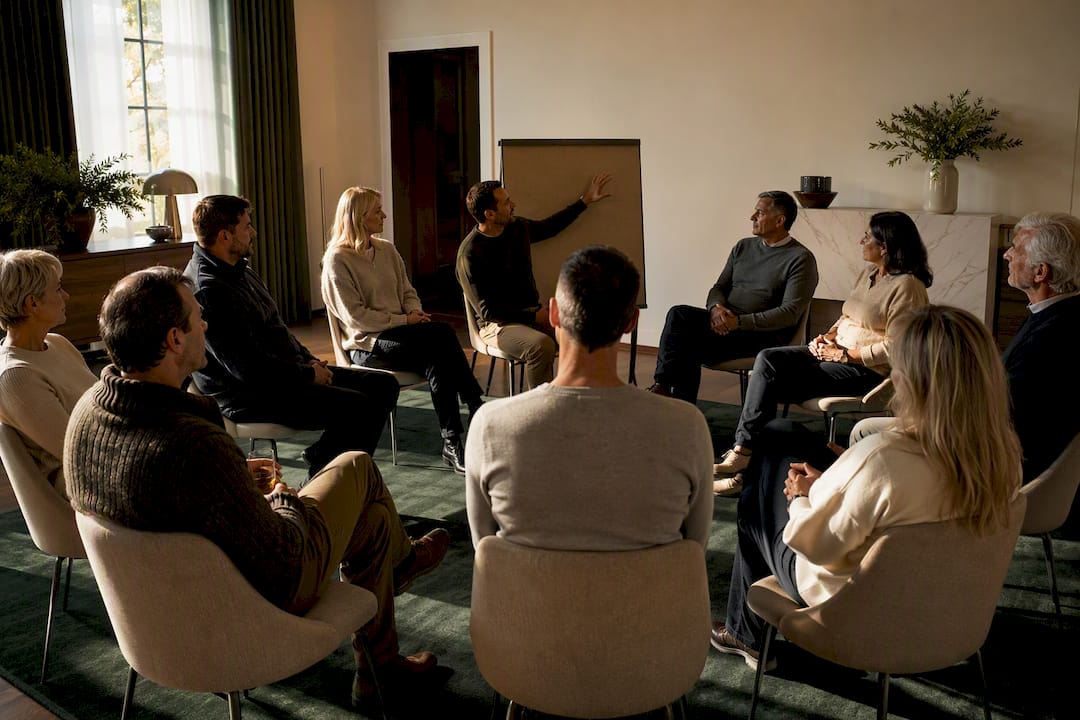
A private longevity community is a membership-based group, usually 8 to 30 people, built around sustained lifestyle change rather than one-off wellness events. The people who benefit most are those who already know what to do (eat better, move more, sleep deeper) but keep failing to do it alone. What follows explains the evidence behind that claim, real examples you can study or join, and the steps to build one yourself.
TL;DR:
- Community-based groups of 8 to 15 members, with clear criteria and regular meetings, show stronger accountability and adherence than larger or unstructured groups.
- Social integration and purpose within a community predict longevity as strongly as diet, with smaller groups better maintaining social bonds and individual accountability.
- Combining digital tools with in-person contact enhances engagement, but technology should support human connection rather than replace facilitators.
- Building a pilot group around one measurable goal and running a 12-week trial can effectively test the format before scaling up.
- Hungarian programs illustrate how local government involvement and intergenerational trust foster effective, culturally native longevity communities.
Table of Contents
- What a Private Longevity Community Actually Looks Like
- The Evidence: Why Community Predicts a Longer, Healthier Life
- Hungarian Programs Worth Studying or Joining
- How to Join or Start One: A Step-by-Step Checklist
- Why the Publisher’s Four-Layer Model Changes What a Community Can Do
- Case Studies: What Long-Term Community Involvement Actually Produces
- Keeping Members Engaged Once the Novelty Wears Off
- How Technology Is Reshaping Private Longevity Groups
- Cultural Context: Why Hungarian Communities Look Different
- Community Is the Missing Layer Most Protocols Ignore
- Your Next Step: Turning What You Learned Into Action
- Sources
- FAQ
What a Private Longevity Community Actually Looks Like
Not every group calling itself a “longevity community” works the same way, and the differences matter more than the marketing. Three formats dominate right now.
Digital-only groups run entirely through an app or private forum, often organized around a shared tracker or protocol. Hybrid models mix occasional in-person meetups with daily digital check-ins, which tends to produce stronger accountability than either format alone. Small private cohorts, capped at 15 or fewer members, meet in person on a fixed schedule and usually have a facilitator with some health or coaching background.
Membership rules vary, but the functional ones share traits:
- A clear entry criterion (health goal, age range, or shared condition) rather than open-door signup
- A set meeting cadence, typically weekly or biweekly, stated up front
- A named moderator or facilitator responsible for keeping discussion on track and privacy intact
- Explicit data practices: what health information gets shared with the group versus kept private
- A defined point where professional involvement (a coach, nurse, or physician) enters the picture, rather than members improvising medical advice on each other
That last point separates a durable community from a liability. Groups that let members dispense clinical advice to each other tend to drift into misinformation. The ones that last treat peer support and professional guidance as separate lanes that intersect on purpose, not by accident.
The Evidence: Why Community Predicts a Longer, Healthier Life
The Blue Zones research on Okinawa, Sardinia, and Nicoya found something researchers didn’t fully expect: social integration and a sense of purpose tracked with longevity as strongly as diet did. People in those regions built their days around tight social units, not around supplement stacks or fasting windows.
Newer research backs the pattern with harder data. A large-scale analysis published in Scientific Reports found that strong, stable social networks correlate with better long-term health outcomes across broad populations, not just isolated cultural pockets.
Multidisciplinary care beats isolated intervention. The AGE Platform Europe’s pan-European longevity initiative found that community-based care performs best when health systems, social services, and cultural institutions are connected, not siloed. A community that only tracks biomarkers, without weaving in social and cultural support, misses most of the benefit.
The practical payoffs show up in four places:
- Adherence: people stick to diet and exercise plans longer when someone else notices if they stop.
- Loneliness reduction: regular contact with a defined group cuts the isolation that accelerates cognitive and physical decline.
- Mental health: shared struggle normalizes setbacks instead of treating them as personal failure.
- Resource pooling: members split the cost of lab tests, coaches, or specialized foods that would be unaffordable alone.
None of this requires a large organization. Small, consistent groups outperform large, loose ones on every one of these measures, mainly because accountability weakens as group size grows past the point where everyone actually knows everyone.
Hungarian Programs Worth Studying or Joining
You don’t have to build a longevity community from scratch. Hungary already has working models, and several accept new participants or offer a template worth copying.
- ÉletPlusz operates through municipal partnerships, giving local governments a direct role in funding and hosting healthy-aging activities for older residents.
- P-AGE, run through the Pécsi Közösségi Alapítvány, pairs younger volunteers with older adults, trading digital skills for social capital in a deliberate intergenerational exchange.
- The Longevity Hub, connected to the Longevity Projekt, promotes interregional exchange between cultural actors and local services, following the same person-centered model that underlies the EU’s broader LONGEVITY initiative.
- Municipal participatory budgets, like Szentendre’s program letting residents 65 and older vote directly on how community funds get spent, show what happens when older adults get real decision power over local health infrastructure.
Field reporting on Hungarian elder care describes similar grassroots caring-community models forming in places like Pécs and Jánoshida, often starting as informal neighbor networks before formalizing.
Funding doesn’t have to come from your own pocket. The GYIA-KOZ-26 grant program offers nonrepayable government grants specifically for community-building projects, and municipal governments frequently co-fund venue space for health-focused resident groups. Check your local municipality’s civic engagement office before assuming a private group has to be self-funded.
How to Join or Start One: A Step-by-Step Checklist
If you’re evaluating an existing group, run it through this filter before you commit money or time:
- Cost transparency. Does the group state its fees, and does the fee map to something concrete (facilitator time, lab tests, venue)?
- Evidence behind the protocol. Is the group’s method based on published research, or on one person’s personal theory?
- Moderation quality. Is there a named person responsible for keeping the group functional and safe?
- Privacy practices. What health data gets shared, and who can see it?
- Measured outcomes. Does the group track anything (weight, sleep, a biomarker) or is progress purely anecdotal?
If nothing local fits, building your own pilot is realistic, and cheaper than most people assume:
- Define one specific goal: better sleep, lower resting heart rate, more consistent exercise. Vague goals kill groups fast.
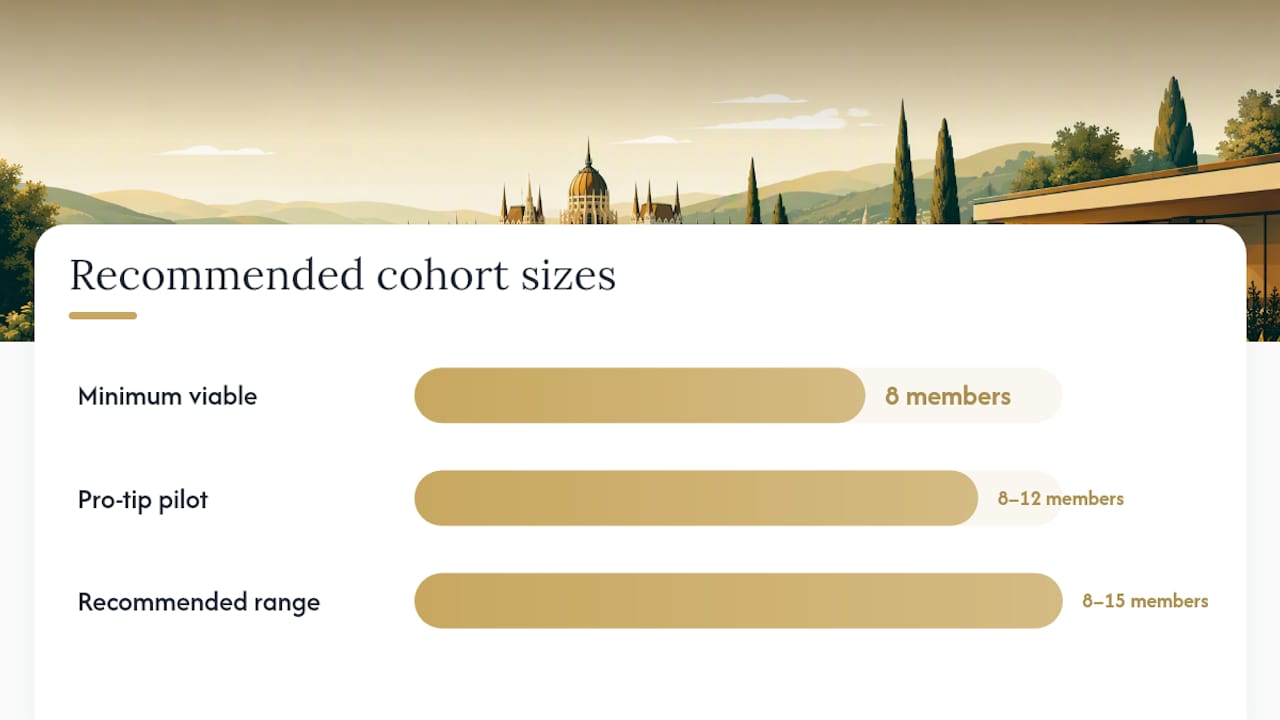
- Recruit 8 to 15 people. This range is the sweet spot: small enough for real accountability, large enough to survive a few dropouts.
- Set basic governance before the first meeting: cadence, communication channel, and who facilitates.
- Pick one measurable outcome everyone tracks the same way.
- Run a 12-week pilot before deciding whether to continue or restructure.
Pro Tip: Start smaller than feels necessary. A pilot cohort of 8 to 12 members with one weekly facilitated meeting and a single tracked outcome, like sleep quality or step count, is the cheapest way to test whether the format actually works before you invest in anything bigger.
For sustainability, look at municipal grant windows first, then volunteer-staffed roles (a rotating facilitator, a member who handles scheduling) before you consider paid staff. Groups that lean entirely on one founder’s energy tend to collapse when that founder burns out.
Why the Publisher’s Four-Layer Model Changes What a Community Can Do
I confirmed my own biological age at 23, at a chronological age of 41, through TruAge DNA methylation testing, after 15 years spent researching why most anti-aging protocols underperform their promises. The answer is not the protocol’s ingredients. It’s what they leave out.
Aging is a four-layer problem. Most programs address one layer and call it complete. The TIMELESS framework treats all four as connected:
- Physical: cellular, epigenetic, and mitochondrial repair, the layer most protocols stop at
- Emotional: stored trauma and nervous system dysregulation, which keep the body in a stress state that accelerates aging regardless of diet
- Spiritual: identity and subconscious beliefs about what aging is supposed to look like
- Energetic: the bioelectric field and meridian systems that conventional medicine rarely measures
A private community amplifies each layer differently: physical accountability through shared tracking, emotional processing through group discussion, spiritual work through shared purpose, and energetic practice through group meditation sessions. The TIMELESS private community app and guided meditations give members a structured way to operationalize all four layers together, rather than guessing at emotional or spiritual work on their own.
Case Studies: What Long-Term Community Involvement Actually Produces
The clearest signal from long-running community models isn’t dramatic transformation stories. It’s retention. Groups that survive past their first year almost always share one trait: a measurable checkpoint that members can point to and say “this changed.”
Municipal programs like Szentendre’s 65+ participatory budget show a pattern worth noting: engagement rose not because of health messaging, but because members got real decision-making power over how funds were spent. People stayed involved because their input mattered, not because someone told them community was good for their health.
Intergenerational models like P-AGE show a different long-term effect. Older members report better digital fluency and reduced isolation after sustained pairing with younger volunteers, while younger participants gain informal mentorship they wouldn’t otherwise access. The exchange is what keeps both sides showing up past the initial novelty period.
The publisher’s own community research points to the same underlying mechanism across every successful long-term case: pairing a measurable biomarker, even something as basic as a follow-up methylation panel, with social accountability creates the clearest feedback loop for actual behavior change. Members who see a number move are dramatically more likely to stay engaged than members relying on how they feel.
Caution matters here too. Research on informal caring communities warns that volunteer-led groups can mask real professional-care gaps if they never connect to actual health services. The strongest long-term case studies are the ones that treated the group as a supplement to care, not a replacement for it.
Keeping Members Engaged Once the Novelty Wears Off
Every private longevity community faces the same wall around month three: the excitement of joining fades, and attendance starts slipping. This is predictable, not a sign the group failed.
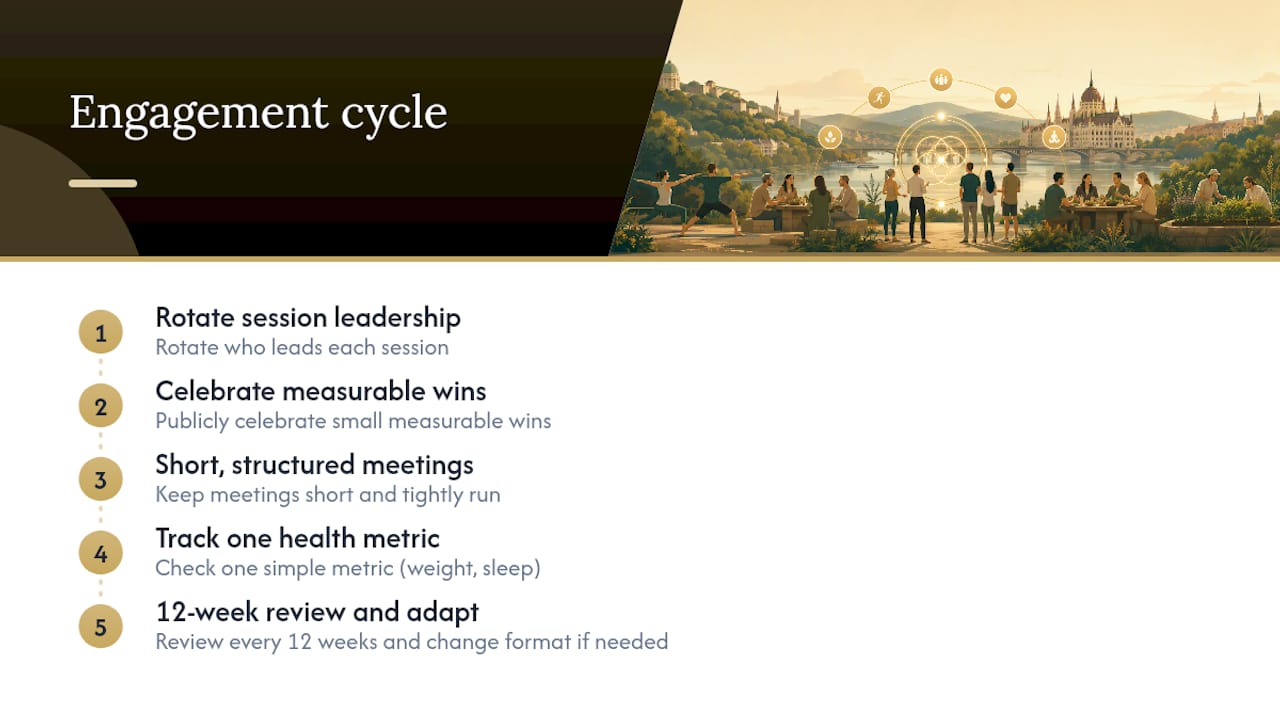
The groups that survive this wall share a few habits. They rotate who leads each session instead of relying on one person, which prevents facilitator burnout and keeps the format from going stale. They celebrate small measurable wins publicly, whether that’s a member’s improved sleep score or a milestone in a shared step challenge. They keep meetings short and structured rather than open-ended, since vague, unstructured gatherings lose people faster than tightly run ones.
Motivation also depends heavily on visible progress. A group with no tracked metric drifts into pure social hour, which has value but rarely sustains health-focused commitment past a few months. Groups that check in on one simple number, weight, resting heart rate, hours of sleep, give members something concrete to anchor their participation to.
The biggest engagement killer isn’t boredom. It’s ambiguity about whether the group is actually working. Set a review point, maybe every 12 weeks, where the group looks honestly at whether the format still serves its original goal, and change what isn’t working instead of letting it quietly die.
How Technology Is Reshaping Private Longevity Groups
Wearable devices and private apps have turned what used to be a purely social exercise into something closer to a shared data experiment. Members can now compare sleep scores, heart rate variability, or step counts in real time, which gives accountability a concrete edge that anecdotal check-ins never had.
Private community apps solve a specific problem hybrid and digital-only groups face: keeping conversation and data organized without exposing sensitive health information to the wrong audience. A dedicated platform lets a facilitator moderate discussion, share a curriculum, and track group-level (not individual) outcomes without turning a health group into another noisy social feed.
Guided meditation tools and structured digital curricula also let smaller communities punch above their weight. A 10-person group with a shared app-based program can deliver the same consistency a large wellness organization offers, without the overhead. That’s part of why hybrid models, digital tools paired with real in-person accountability, tend to outperform either format running alone.
The tradeoff is real: technology can’t replace the facilitator’s judgment or the trust built in a room together. The groups getting the most out of digital tools use them to support human connection, not substitute for it.
Cultural Context: Why Hungarian Communities Look Different
Private longevity communities don’t form the same way everywhere, and Hungary’s specific mix of municipal infrastructure and intergenerational tradition shapes what works locally.
Hungarian municipal governments have historically played a more direct role in resident welfare programs than their counterparts in many other European countries, which explains why models like ÉletPlusz operate through local government partnership rather than as purely private ventures. That municipal involvement gives Hungarian communities a legitimacy and funding path that private-only groups elsewhere often lack.
Intergenerational respect also runs deeper in Hungarian family and community structures, which makes models like P-AGE, pairing older and younger generations directly, culturally native rather than an imported concept. Communities built around that existing intergenerational trust tend to gain traction faster than groups importing a foreign wellness framework wholesale.
Trust itself works differently here too. Hungarian participants in caring-community initiatives often show stronger initial trust in informal, neighbor-based networks than in unfamiliar institutional programs, based on field interviews from elder care reporting in Hungary. A private group that starts small, local, and personally vouched for will usually gain members faster than one marketed broadly as a formal health program.
Community Is the Missing Layer Most Protocols Ignore
Most longevity advice treats community as a nice-to-have, something you tack onto a supplement stack once the “real” work is done. The evidence doesn’t support that ranking. Social integration predicted longevity as strongly as diet in the original Blue Zones research, and newer network studies back the same conclusion at scale.
Here’s what conventional wellness content gets wrong: it treats accountability as a motivation problem, solvable with better willpower or a stricter tracker. It isn’t. Isolation and unprocessed stress operate on the emotional and energetic layers of aging, not just behavior, and no amount of discipline fixes a nervous system stuck in chronic dysregulation. That’s precisely why single-layer protocols plateau. They fix the body while the other three layers keep quietly working against it.
If you’re going to prioritize one thing from everything above, prioritize the pilot, not the perfect protocol. Eight people, one measurable outcome, twelve weeks. Test it before you scale it. Community without structure is just a support group. Community with a shared four-layer framework and a tracked outcome is what actually moves the needle on biological age.
— E. Christian Trejo
Your Next Step: Turning What You Learned Into Action
Reading about community-based longevity and actually building or joining one are two different things, and the gap between them usually comes down to a starting point. The TIMELESS book gives you that starting point in a single document: 370 pages covering the physical, emotional, spiritual, and energetic layers your current community, or the one you’re about to start, can organize itself around.
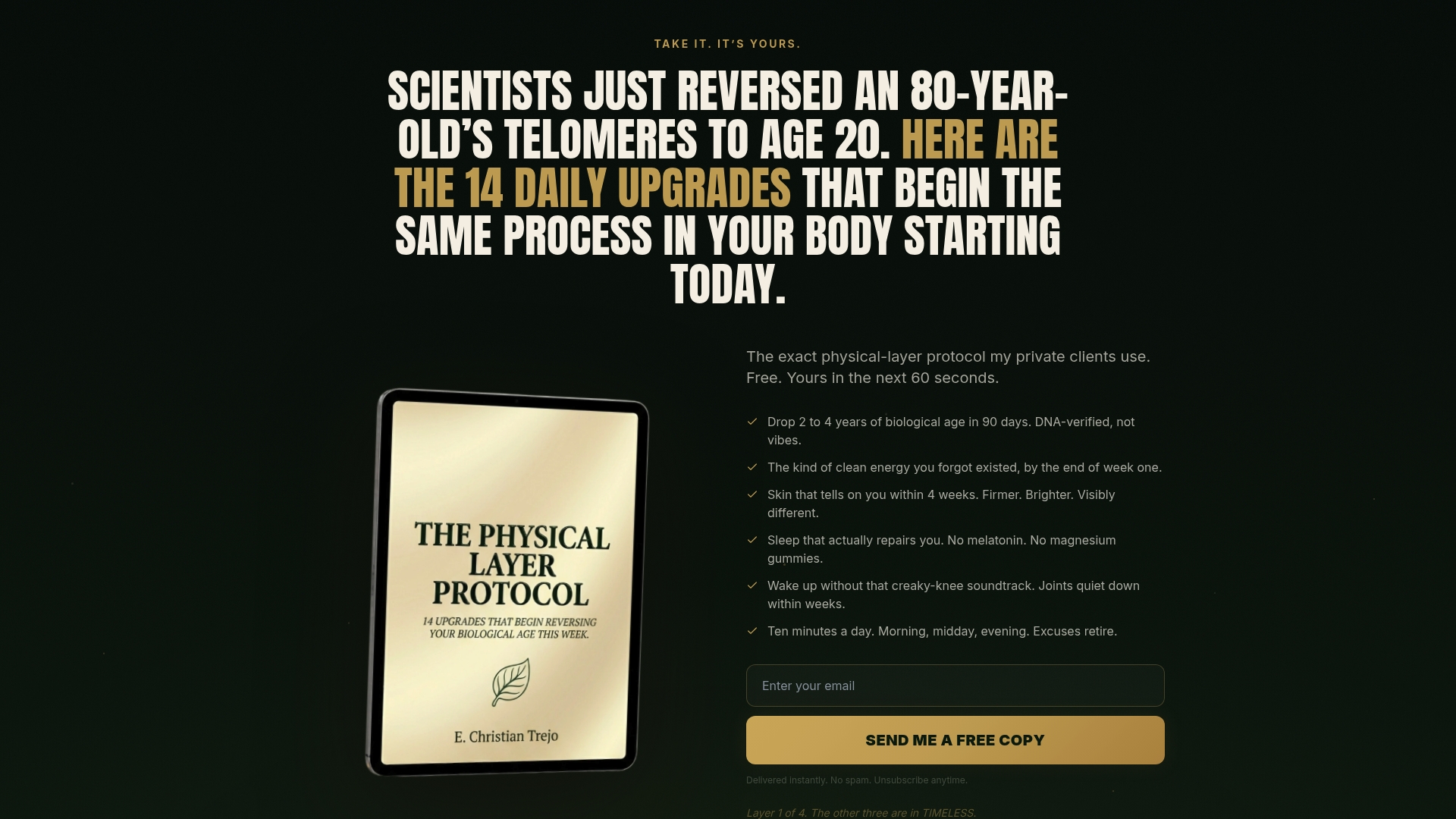
If you want the framework before committing to anything else, the free guide at Reverseyourage walks through 14 practical upgrades you can apply solo or bring straight into a group discussion. From there, a simple three-step checklist works for most readers: download the guide, invite five people who’d actually show up weekly to a pilot conversation, and book a free vitality diagnosis call to see where your own biological age currently stands.
For readers ready to go further, the TIMELESS book is $29.99 and works as a shared curriculum for a pilot cohort. Those who want individualized guidance can apply for the 8-week coaching program at $7,000, backed by a guarantee unmatched anywhere else in the longevity space: reverse your biological age by at least 10 years in 6 months, verified by TruAge DNA methylation testing, or receive a full refund.
Sources
- AGE Platform Europe — AGE joins ambitious pan-European project for better long-term health & active ageing
- GYIA-KOZ-26 pályázati felhívás (2026) — EMET
- Éva magazin — interview on elder care, caring communities and conscious ageing (Hungary)
FAQ
What is a private longevity community?
It’s a membership-based group, usually small and structured around a shared health goal, that provides social accountability, curated resources, and sometimes professional guidance to support sustained lifestyle change.
How is a private longevity community different from a public wellness program?
Public programs are typically open-enrollment and broad in scope, while private communities use defined membership criteria, consistent meeting cadences, and often a named facilitator to maintain accountability.
Does social connection actually affect how long you live?
Research summarized by the Blue Zones project and a large-scale analysis in Scientific Reports both link strong social networks to measurably better long-term health outcomes.
How many people should a starter longevity community have?
A pilot cohort of 8 to 15 members tends to work best: large enough to survive dropouts, small enough that real accountability stays intact.
Can a private community replace professional medical care?
No. The strongest models treat community support as a supplement to professional care, not a substitute, since informal groups can mask real care gaps if they never connect to actual health services.
How does the TIMELESS approach fit into a community setting?
The TIMELESS four-layer protocol gives a private community a shared framework covering physical, emotional, spiritual, and energetic aging, with a private app and guided meditations members can use together.