
How to Test Biological Age After a Protocol
Learn how to test biological age after a protocol and discover if your health interventions are truly working. Get actionable insights now!
Biological age testing is the process of measuring how fast your cells are aging relative to your chronological years, and when you test biological age after a protocol, you get objective proof of whether your intervention actually worked. The industry term for this practice is epigenetic age assessment, and it relies on DNA methylation clocks like DunedinPACE, GrimAge, and the Horvath clock to read your biology at the molecular level. A single number on a test report means little. What matters is the change between your pre-protocol baseline and your post-protocol result, verified under consistent conditions and cross-checked against functional health markers like VO2 max, heart rate variability (HRV), and grip strength.
What you need before testing biological age after a protocol
Before you order a single test kit, you need a structured setup. Skipping this step is the most common reason people spend $400 and walk away with data they cannot interpret.
Choose the right test for your timeline. Not all biological age test methods are equal for short-term tracking. DunedinPACE measures aging velocity, not a static age estimate, which makes it the most sensitive tool for detecting protocol effects within 90 days. GrimAge and PhenoAge are static clocks that require 18 to 24 months of consistent intervention before their shifts become statistically reliable. If you completed a 90-day or 6-month protocol, DunedinPACE is your primary outcome metric.

Establish a true baseline before you start anything. Two tests taken two weeks apart are required to average out biological and technical variability. If those two results differ substantially, take a third test and use the median. This is not optional. A single pre-protocol test gives you a reference point that could be an outlier, and your entire post-protocol comparison rests on that number.
Here is what you need to have in place before testing:
-
Test selection: DunedinPACE for protocols under 12 months; add GrimAge or PhenoAge for longer tracking
-
Budget: Consumer DNA methylation kits cost $200 to $500, with saliva kits on the lower end and blood-based kits at the higher end
-
Sample type: Saliva kits from providers like TruAge or Elysium are accessible and accurate; blood kits offer marginally higher precision
-
Documentation: A written log of your protocol, including supplements, sleep data, diet changes, and exercise metrics, so you can correlate results with specific interventions
-
Controlled conditions: Commit to testing at the same time of day, in the same fasting state, every single time
Pro Tip: Set a calendar reminder to order your post-protocol test kit two weeks before your intended testing date. Shipping delays are the most preventable reason people test under rushed, inconsistent conditions.
How to execute biological age testing after completing your protocol
Execution is where most people lose the scientific value of their investment. Follow these steps to produce data you can actually trust.
-
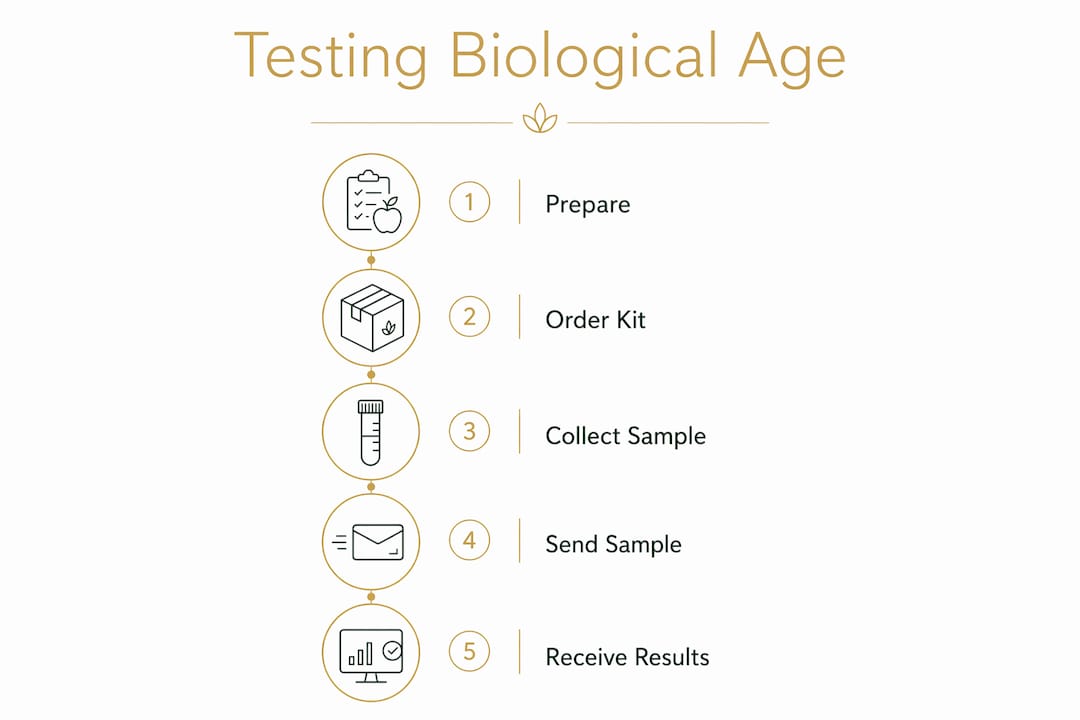
Order your Day 0 baseline kit before starting the protocol. Take two tests two weeks apart, calculate the average, and record it as your official pre-intervention biological age. This is the number everything else gets measured against.
-
Run Day 30 and Day 60 internal check-ins. These should not be full epigenetic tests. Use non-methylation biomarkers: fasting glucose, HRV, resting heart rate, sleep quality scores from a device like Oura Ring or WHOOP, and subjective energy ratings. Skipping these mid-protocol checkpoints turns your final test into an undirected guess. If your HRV is dropping and your sleep is worsening at Day 45, you need to know that before you spend $300 on a test at Day 90.
-
Wait 3 to 6 months after starting the protocol before your first epigenetic retest. Testing at Day 30 with a methylation clock produces noisy, uninterpretable data. The epigenome responds to sustained signals, not short bursts.
-
Replicate your exact baseline conditions. Test conditions must be consistent: same time of day, same fasting window, no acute illness, no intense exercise in the 7 days prior. Variations introduce transient inflammatory and metabolic noise that can make a successful protocol look like it failed.
-
Interpret DunedinPACE movement with calibrated expectations. A shift of 0.05 over 90 days is meaningful. A shift of 0.15 or more indicates a top-tier protocol response. These are not large numbers, but they represent real changes in how fast your biology is aging.
-
Cross-reference with static clocks at the 6-month mark. At 6 months, pull in GrimAge or PhenoAge as secondary confirmation. If DunedinPACE improved but static clocks show no movement, that is expected at this stage. If static clocks also shift, you have strong evidence of durable biological change.
-
Plan your next retest at 6 to 12 months out. Retesting too frequently creates noise. Testing every 3 to 6 months for DunedinPACE is the recommended cadence for meaningful trend data.
Pro Tip: Log your exact protocol compliance percentage alongside each test. A 0.10 DunedinPACE improvement at 80% compliance tells a very different story than the same result at 50% compliance. Compliance data turns a result into a lesson.
Common pitfalls when testing biological age after a protocol
Even well-intentioned testers make errors that corrupt their data. These are the mistakes worth knowing before you start.
-
Testing too frequently. Monthly epigenetic tests do not give you monthly insights. They give you monthly noise. The methylation signal needs time to reflect sustained biological change.
-
Inconsistent test conditions. A single night of poor sleep, a recent illness, or an intense workout three days before sampling can shift your DunedinPACE reading in ways that have nothing to do with your protocol.
-
Reading a single number as a verdict. Biological age tests are snapshots, not diagnostic tools. One reading without a baseline and without trend context is meaningless. Two readings with a documented protocol between them are data.
-
Ignoring functional biomarkers. Changes in epigenetic age without functional improvements may not reflect real health gains. If your DunedinPACE improved but your VO2 max, grip strength, and HRV stayed flat, the result deserves scrutiny, not celebration.
-
Skipping the pre-protocol baseline. This is the single most costly mistake. Without a verified starting point, you have no comparison. You are measuring nothing.
-
Neglecting standard clinical markers. Ignoring blood pressure and cholesterol while fixating on epigenetic scores creates a dangerously incomplete picture. Biological age assessment complements traditional health metrics. It does not replace them.
The most common reason people feel disappointed after testing is not that their protocol failed. It is that they tested without a baseline, under inconsistent conditions, and expected a dramatic number shift after 30 days. The protocol often worked. The testing setup did not.
How to interpret your biological age results after a protocol
Your results are in. Now comes the part most guides skip entirely: making sense of what the numbers actually mean for your health and your next steps.
Start with DunedinPACE as your primary signal. This clock measures the pace of aging, expressed as a number where 1.0 means aging at the average rate. A reading of 0.80 means your biology is aging 20% slower than average. Consumer-grade DunedinPACE testing shows approximately 95% concordance with research-grade tests, making it the most reliable consumer option for post-protocol tracking.
Use static clocks as durability checks, not primary outcomes. GrimAge and PhenoAge reflect cumulative epigenetic damage over years. Durable shifts in these clocks require 18 to 24 months of sustained intervention. If your static clock did not move after a 90-day protocol, that is not failure. That is biology working on its own timeline.
Cross-check every epigenetic result with functional data. The table below shows how to pair your test results with the functional markers that confirm or challenge them.
| Epigenetic result | Functional marker to check | What agreement looks like |
|---|---|---|
| DunedinPACE improved | HRV increased, resting heart rate decreased | Strong confirmation of protocol effect |
| DunedinPACE improved | VO2 max increased, grip strength stable or up | Cardiovascular aging signal confirmed |
| DunedinPACE flat | Sleep quality improved, fasting glucose down | Protocol working; test timing may be early |
| DunedinPACE worsened | HRV dropped, energy scores low | Protocol compliance or stress load issue |
Set realistic expectations for magnitude. Most practitioners see 1 to 2 year reductions in biological age over 12 months. Shorter protocols produce smaller but still meaningful shifts. A 0.08 DunedinPACE improvement in 90 days is a real result. Do not dismiss it because it is not a dramatic headline number.
Pro Tip: Print your results alongside your functional biomarker log and review them together. A DunedinPACE improvement paired with better sleep, lower fasting glucose, and improved HRV is not just a good test result. It is a biological system shifting in your favor.
Key takeaways
Accurate biological age testing after a protocol requires a verified baseline, consistent test conditions, and functional biomarker confirmation to produce data worth acting on.
| Point | Details |
|---|---|
| Use DunedinPACE for short-term tracking | It detects protocol effects within 90 days with 95% concordance to research-grade tests. |
| Establish a two-test baseline | Average two tests taken two weeks apart before starting any intervention. |
| Control all test conditions | Same time, same fasting state, no illness or intense exercise in the 7 days prior. |
| Cross-check with functional markers | HRV, VO2 max, and fasting glucose confirm whether epigenetic shifts reflect real health gains. |
| Retest every 3 to 6 months | More frequent testing adds noise and reduces the interpretability of your trend data. |
What 15 years of testing taught me about reading your own results
The first time I saw my TruAge DNA methylation result come back at 23 when I was 41, I understood something most people never get the chance to learn firsthand. The number was not the point. The process that produced it was the point.
What I have observed across thousands of practitioners in 40 countries is that the people who get the most from biological age assessment are not the ones who obsess over every decimal. They are the ones who treat testing as a feedback loop, not a verdict. They document their protocol with discipline, they control their test conditions without exception, and they resist the urge to retest every six weeks because they are anxious for confirmation.
The emotional weight of a test result is real. I have seen people abandon protocols that were working because a single test, taken under poor conditions, showed no movement. I have also seen people double down on protocols that were not working because one favorable reading gave them false confidence. Neither outcome serves you.
My honest recommendation: pair every epigenetic test with a functional biomarker review. If your DunedinPACE improved and your HRV, sleep quality, and energy all improved alongside it, you have something real. If only the number moved, keep investigating. Your biology is not lying to you. You may just need more time, better compliance, or a protocol that addresses all four layers of aging simultaneously, not just the physical.
— Erick
Ready to test your biological age with a protocol that guarantees results?
At Reverse Your Age, we built the TIMELESS program specifically for people who are serious about measuring and reversing their biological age with scientific accountability. Every participant in the TIMELESS Vitality Intensive gets TruAge DNA methylation testing built into the protocol, so you know exactly where you started and exactly how far you have come.

The program is guaranteed to reverse your biological age by at least 10 years in 6 months, verified by testing, or every dollar is refunded. No other longevity program in the world makes that offer. If you want to start with a personalized assessment of your current biological age and the right protocol for your body, book your free vitality diagnosis call and we will map out your testing and intervention plan together.
FAQ
What is the best test to measure biological age after a protocol?
DunedinPACE is the most reliable biological age test method for tracking short-term protocol effects, showing approximately 95% concordance with research-grade tests. Static clocks like GrimAge and PhenoAge are better suited for measuring durable shifts after 18 to 24 months of intervention.
How long should I wait before retesting biological age after a protocol?
Wait 3 to 6 months after starting your protocol before running your first epigenetic retest. Testing earlier produces noisy data that does not reflect sustained biological change.
How much does a biological age test cost?
Consumer-grade DNA methylation test kits cost between $200 and $500, with saliva-based tests on the lower end and blood-based tests at the higher end of that range.
Can biological age testing replace standard health checkups?
No. Biological age assessment complements traditional health metrics like blood pressure and cholesterol but does not replace them. Relying solely on epigenetic scores without standard clinical markers creates an incomplete and potentially misleading picture of your health.
What counts as a meaningful result after a protocol?
A DunedinPACE movement of 0.05 over 90 days is considered meaningful, and a shift of 0.15 or more indicates a top-tier protocol response. Always confirm epigenetic improvements with functional biomarker gains in HRV, VO2 max, and fasting glucose.