
How Performance Optimization Reverses Aging Biologically
Discover how performance optimization reverses aging biologically. Transform your age through science-backed methods for health and vitality.
How Performance Optimization Reverses Aging Biologically
Performance optimization reverses aging by improving cellular function, epigenetic signaling, and metabolic health at a measurable, biological level. This is not a wellness metaphor. It is a documented process now confirmed by multiomic research, epigenetic clock studies, and FDA-approved clinical trials. The science shows that how you train, eat, recover, and think directly rewrites your biological age. At Timeless - Reverse Your Age, we have built a four-layer protocol addressing the Physical, Emotional, Spiritual, and Energetic dimensions of aging simultaneously. Most programs target only one layer. That is why most programs fail.
How performance optimization reverses aging at the cellular level
Your body runs on a biological program. That program can be rewritten. When you apply structured performance optimization, you change the molecular environment inside your cells, and your biological age follows.
A landmark multiomic study published in Nature Aging found that trained older adults lacked 50% of the age-related molecular differences normally seen in muscle tissue. Their transcriptomic, lipidomic, and metabolomic profiles resembled those of adults decades younger. That is not a marginal improvement. That is a fundamental reset of how your cells behave.
Mitochondria are the engine behind this reset. When you exercise consistently, mitochondrial density increases and cellular respiration becomes more efficient. Less oxidative stress accumulates. DNA damage slows. The downstream effect is a measurable shift in your epigenetic age, the biological clock that matters far more than the year you were born.

Epigenetic aging clocks measure DNA methylation patterns to calculate biological age. A systematic review of 41 human studies confirmed that epigenetic clocks are slowed by plant-rich diets, endurance exercise, omega-3 supplementation, and multivitamins. Each of these inputs changes the chemical tags on your DNA. Those tags control which genes are expressed and which are silenced.
Blood composition is another lever. Plasma dilution reverses systemic aging markers by removing pro-aging circulating factors without requiring young donor plasma. This resets signaling pathways and reduces DNA damage at the systemic level. The implication is significant: aging is not just local. It is a whole-body signal that can be interrupted.
Pro Tip: Track your biological age with TruAge DNA methylation testing before and after any major protocol change. Without a baseline, you are guessing. With one, you have data.
| Mechanism | What changes | Measurable outcome |
|---|---|---|
| Mitochondrial density | Cellular energy output increases | Reduced oxidative stress and DNA damage |
| Epigenetic methylation | Gene expression patterns shift | Lower biological age on epigenetic clocks |
| Plasma signaling factors | Pro-aging circulating proteins decrease | Systemic rejuvenation of aging markers |
| Muscle molecular profile | Transcriptomics and lipidomics normalize | Tissue resembles younger adult profiles |
Which aging reversal techniques work best according to current evidence?
The evidence is clear on what moves the needle. The question is whether you are doing it consistently and in the right combination.
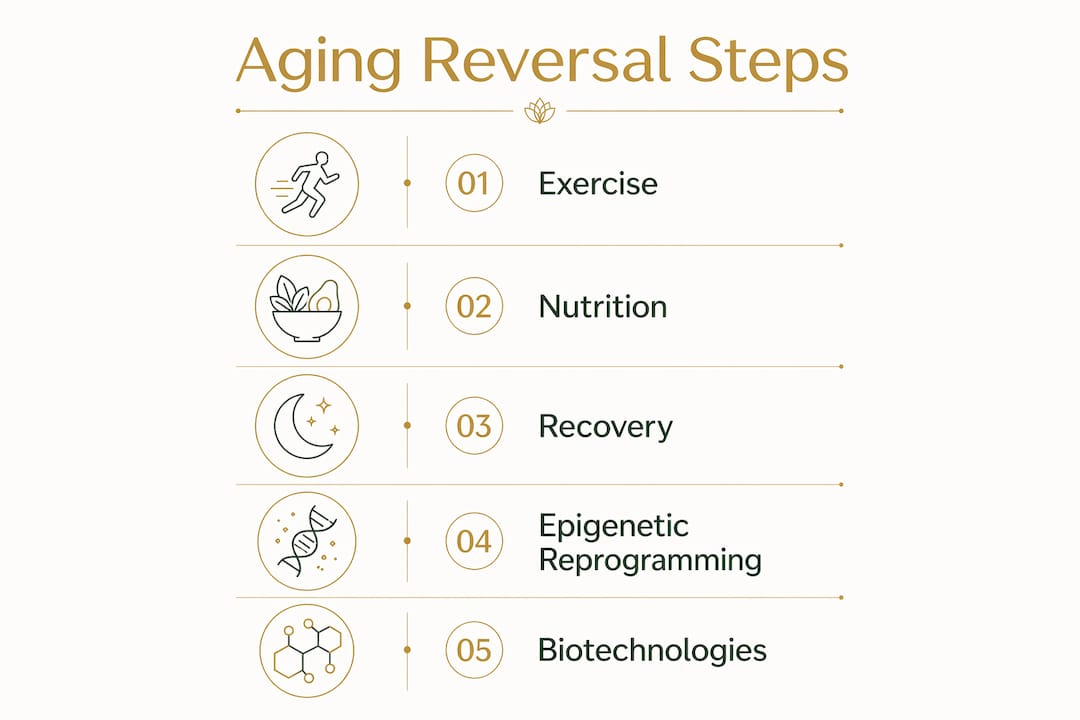
Structured weekly exercise totaling 3–3.5 hours significantly reduces frailty and improves cognitive function over two years. The specific breakdown matters: aerobic training four times per week for 30–35 minutes, resistance training twice per week for 15–20 minutes, and flexibility work twice per week for 10–15 minutes. This is not a suggestion. It is a clinically validated protocol.
Resistance training deserves special attention. Lifelong resistance training prevents sarcopenia and maintains muscle quality superior to sedentary people 20–30 years younger. Muscle is not just cosmetic. It is your primary metabolic organ, your insulin sink, and your longevity insurance policy.
Here are the top performance interventions validated by systematic reviews and human studies:
- Aerobic exercise: Four sessions per week at moderate intensity. Improves mitochondrial function, cardiovascular output, and epigenetic age.
- Resistance training: Twice per week minimum. Prevents muscle loss, maintains bone density, and preserves metabolic rate.
- Plant-rich diet: Reduces systemic inflammation and slows epigenetic clock progression.
- Omega-3 supplementation: Directly modifies DNA methylation patterns associated with biological aging.
- Multivitamin use: Confirmed in the 41-study systematic review as an epigenetic clock modifier.
- Coffee, timed correctly: Coffee’s anti-aging benefits require consuming it 10+ hours before sleep and avoiding added sugar or saturated fats. Timing and context determine whether it helps or inflames.
Pro Tip: Do not treat these interventions as separate habits. Stack them into a daily protocol. The compounding effect across all six inputs is what shifts your biological age, not any single change in isolation.
The Physical layer of the TIMELESS four-layer protocol covers cellular, epigenetic, and mitochondrial optimization. But aging is not only physical. Stored emotional trauma dysregulates the nervous system and accelerates epigenetic aging. Subconscious beliefs about aging shape behavior and biology. The bioelectric field influences cellular communication. Addressing only the physical layer leaves three layers untouched.
How do training principles and recovery practices extend longevity?
Elite athletic training and longevity training are not the same program. Confusing them is one of the most common mistakes adults over 35 make, and it accelerates aging instead of reversing it.
RPE-guided training at intensity 7–8 means leaving reps in reserve rather than training to failure. This approach reduces injury risk significantly compared to maximal effort training. Injuries force rest. Rest breaks the consistency that drives biological age reversal. The goal is not to see how hard you can push. The goal is to train for decades.
Here is a practical framework for longevity-focused training:
- Warm up for 10 minutes minimum. Cold connective tissue tears. Adults over 40 have less collagen turnover. A proper warm-up is not optional.
- Use RPE 7–8 as your ceiling. You should finish a set feeling like you had 2–3 reps left. This protects joints and sustains training frequency.
- Prioritize movement quality over load. A clean squat at 60% of your max builds more longevity than a sloppy one at 90%.
- Deload every 3–4 weeks. Structured deloading at 40–50% weight reduction with a 30% volume cut allows joint recovery and reduces chronic inflammation. Chronic inflammation is one of the primary drivers of accelerated biological aging.
- Sleep 7–9 hours. Growth hormone peaks during deep sleep. Without it, tissue repair stalls and cortisol rises, which directly ages your epigenome.
The contrast with elite sport is instructive. A competitive powerlifter trains to peak for a single event. A longevity practitioner trains to perform well every decade. The programming looks different because the goal is different. Sarcopenia, the progressive loss of muscle mass, is mainly caused by disuse, not aging. That reframes everything. You are not fighting biology. You are correcting a behavior pattern.
What emerging biotechnologies show promise in reversing aging?
The frontier of aging reversal is moving fast. What was theoretical five years ago is now in FDA-approved human trials.
Partial epigenetic reprogramming using Yamanaka factors represents the most significant advance in cellular rejuvenation science. Gene therapy delivering OCT-4, SOX-2, and KLF-4 is now in FDA-approved human trials targeting age-related eye diseases, including glaucoma. The mechanism works by resetting the epigenetic program of aged cells without erasing their cellular identity. The cell remembers what it is. It forgets how old it is.
Early clinical data on therapeutic plasma exchange shows that removing pro-aging blood factors resets systemic signaling and reduces DNA damage. The key finding is that young donor plasma is not required. The benefit comes from removing the old signals, not adding new ones.
Current limitations of these advanced approaches are real:
- Gene therapy trials remain in early phases with localized applications.
- Therapeutic plasma exchange is not yet widely accessible outside clinical settings.
- Long-term safety data for partial reprogramming in humans is still accumulating.
- Cost and access remain significant barriers for most adults.
“The field is moving from supplements to cellular reprogramming. Within a decade, targeted gene therapies may be as accessible as current prescription medications. The adults who build strong performance foundations now will be best positioned to benefit from these advances when they arrive.”
These technologies complement, not replace, the foundational work of exercise, nutrition, and recovery. The adults who arrive at these therapies with strong mitochondrial function, low inflammation, and healthy epigenetic profiles will respond better and recover faster.
Key Takeaways
Biological age reversal through performance optimization requires consistent, multi-layered intervention across exercise, nutrition, recovery, and emerging biotechnology, verified by epigenetic testing.
| Point | Details |
|---|---|
| Exercise is the primary lever | Structured weekly training of 3–3.5 hours directly resets molecular aging profiles in muscle tissue. |
| Epigenetic clocks respond to diet | Plant-rich diets, omega-3s, and multivitamins measurably slow biological aging across 41 human studies. |
| Recovery prevents aging acceleration | Deloading every 3–4 weeks and RPE-guided intensity protect joints and sustain long-term training consistency. |
| Blood factors are modifiable | Plasma exchange removes pro-aging signals and resets systemic aging markers without young donor plasma. |
| Four layers must be addressed | Physical optimization alone leaves emotional, spiritual, and energetic aging drivers completely untreated. |
What 15 years of longevity research taught me about aging and performance
Most people come to performance optimization looking for a fitness result. What they find, if they go deep enough, is a biology result. Those are not the same thing.
My TruAge DNA methylation test confirmed a biological age of 23 at 41 years old. That number did not come from one good habit. It came from addressing all four layers of aging simultaneously. The Physical layer, meaning cellular, epigenetic, and mitochondrial function, is where most protocols begin and end. That is a serious mistake.
The Emotional layer is where stored trauma lives in the nervous system. Chronic dysregulation from unresolved stress raises cortisol, shortens telomeres, and accelerates epigenetic aging. No amount of resistance training offsets a nervous system locked in survival mode. I have seen practitioners with perfect diets and structured training programs who could not move their biological age because this layer was untreated.
The Spiritual layer is about identity. If you believe aging is inevitable and irreversible, your subconscious will protect that belief. It will find ways to undermine your protocol. Rewriting that belief is not motivational work. It is biological work. Subconscious identity shapes behavior, and behavior shapes epigenetics.
The Energetic layer, covering the bioelectric field and meridian system, is the one most researchers dismiss. I dismissed it too, until the data from thousands of practitioners across 40 countries showed consistent results when it was included. The body is not just chemistry. It is also electrical. Both systems age. Both can be restored.
The common misconception I hear most often is that muscle loss is an inevitable consequence of aging. It is not. It is a consequence of disuse. That distinction changes everything about how you approach the next decade of your life. You can find a deeper look at aging reversal methods that go beyond surface-level interventions if you want to see how dietary, supplement, and pharmaceutical strategies layer into this framework.
— E. Christian Trejo
The Timeless - Reverse Your Age protocol for biological age reversal
The science in this article points to one conclusion: aging is a four-layer problem, and single-layer solutions produce single-layer results.
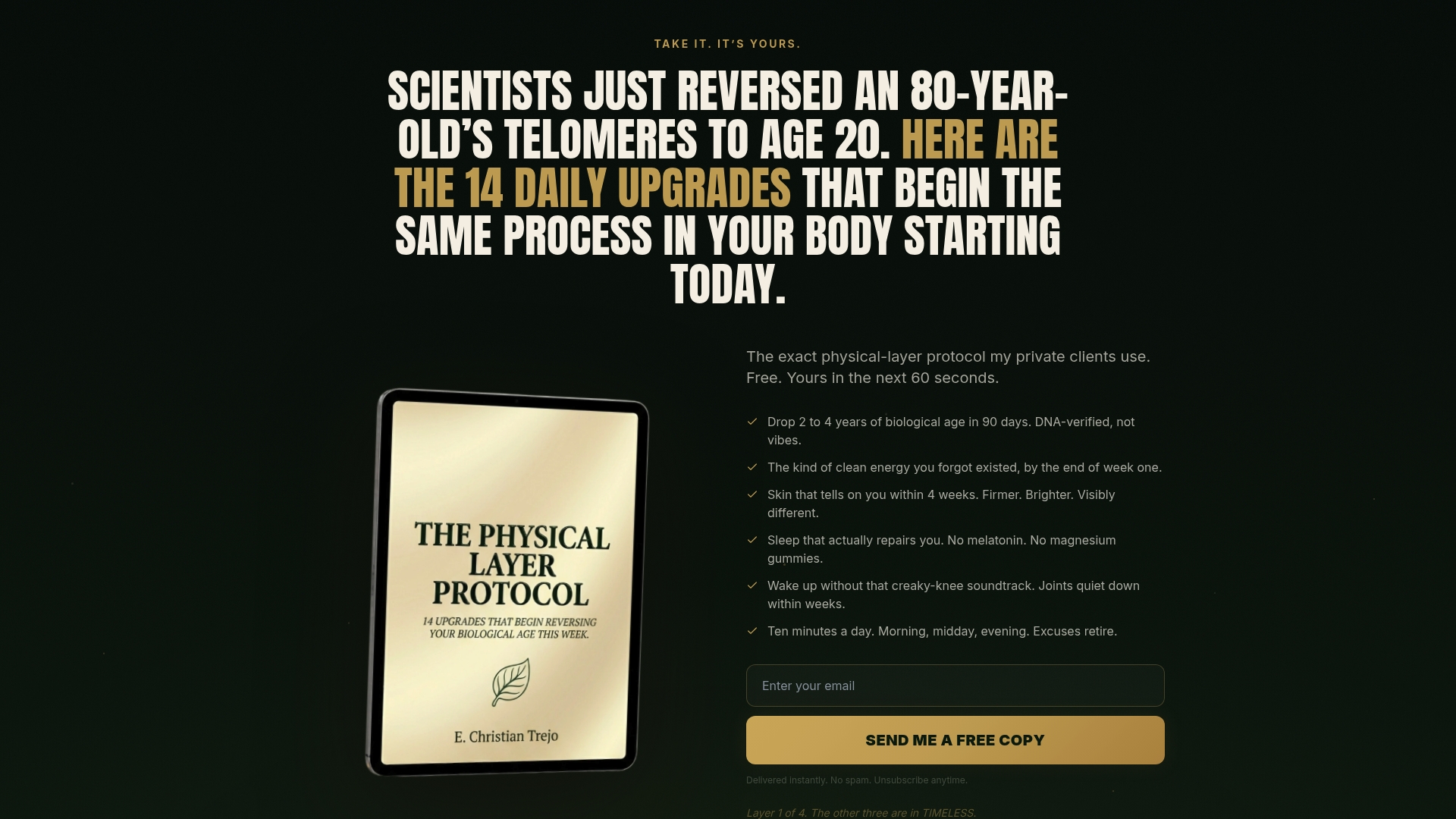
Timeless - Reverse Your Age is the only program that addresses all four layers simultaneously, with results verified by TruAge DNA methylation testing. The TIMELESS Vitality Intensive guarantees a minimum of 10 years of biological age reversal in six months, or every dollar is refunded. No other longevity program in the world makes that offer. You can start with the TIMELESS book at $29.99, a 370-page blueprint built on 15 years of research. For personalized guidance and the DNA-verified guarantee, the full coaching program is the direct path. A free guide covering 14 foundational upgrades is available at reverseyourage.org/14-upgrades.
FAQ
What does performance optimization actually do to biological age?
Performance optimization changes DNA methylation patterns, improves mitochondrial function, and resets molecular aging profiles in muscle tissue. These changes directly lower biological age as measured by epigenetic clocks.
How much exercise is needed to reverse aging?
Structured weekly exercise totaling 3–3.5 hours, combining aerobic, resistance, and flexibility training, significantly reduces frailty and improves cognitive function over two years, according to clinical data.
Can nutrition alone slow epigenetic aging?
A systematic review of 41 human studies confirmed that plant-rich diets, omega-3 supplementation, and multivitamins measurably slow epigenetic clock progression. Nutrition is a primary lever, not a secondary one.
What is partial epigenetic reprogramming?
Partial epigenetic reprogramming uses Yamanaka factors, specifically OCT-4, SOX-2, and KLF-4, to reset the epigenetic age of cells without erasing their identity. FDA-approved human trials are currently underway targeting age-related eye diseases.
Why do most anti-aging protocols fail to produce lasting results?
Most protocols address only the physical layer of aging and ignore the emotional, spiritual, and energetic layers. Unresolved nervous system dysregulation, subconscious aging beliefs, and bioelectric imbalances continue to drive biological aging regardless of physical interventions.