
How Epigenetic Aging Works: A Science Guide for Longevity
Discover how epigenetic aging works and its impact on longevity. Learn how to rewrite your biological age with the TIMELESS protocol.
How Epigenetic Aging Works: A Science Guide for Longevity
Epigenetic aging is defined as the progressive accumulation of chemical modifications on DNA and histone proteins that regulate which genes are active, without altering the DNA sequence itself. These modifications act as a molecular clock, distinguishing your biological age from your chronological age. Research confirms systemic involvement across 17 human tissues with progressive loss of epigenetic fidelity at millions of CpG sites. That finding means aging is not written into your DNA code. It is written on top of it. And what is written on top can be rewritten. The TIMELESS four-layer protocol, built on 15 years of research and verified by TruAge DNA methylation testing, is designed to do exactly that.
How epigenetic aging works at the molecular level
The two primary mechanisms driving epigenetic aging are DNA methylation and histone modifications. Understanding both is the foundation of any serious longevity strategy.

DNA methylation occurs when a methyl group attaches to a cytosine base at a CpG site. Over time, these patterns shift. Genes that should stay active lose their methylation signals, and genes that should stay silent gain them. Epigenetic clocks like the Horvath clock and the Hannum clock measure these shifts across hundreds of CpG sites to estimate biological age. The accuracy of these clocks has made DNA methylation the gold standard for biological age testing, including the TruAge test used to verify my own biological age of 23 at 41 years old.
Histone modifications are equally critical. Histones are the protein spools around which DNA wraps. Chemical tags on these spools, including acetylation, lactylation, and glycation, control how tightly or loosely DNA is packaged. Tight packaging silences genes. Loose packaging activates them. Three metabolic-epigenetic axes drive this process: histone acetylation linked to mitochondrial oxidative phosphorylation, lactylation linked to glycolytic lactate production, and glycation linked to reactive carbonyl stress. Each axis connects your cellular metabolism directly to your epigenetic state.
- Histone acetylation depends on NAD+ availability. When NAD+ levels drop with age, sirtuin enzymes lose their fuel, and histone acetylation patterns deteriorate.
- Histone lactylation rises when cells shift from efficient mitochondrial respiration to glycolysis, a metabolic pattern common in aging and chronic disease.
- Histone glycation is caused by carbonyl stress and disrupts chromatin structure and sirtuin function. Unlike acetylation and lactylation, glycation marks are largely irreversible.
RNA modifications add another layer. Modifications like m6A regulate RNA fate and influence chromatin remodeling, meaning the epigenetic network extends beyond DNA and histones into the transcriptome itself.
Pro Tip: NAD+ depletion is one of the fastest routes to epigenetic deterioration. Protecting mitochondrial function through diet, exercise, and targeted supplementation directly preserves histone acetylation patterns.
The concept of “aging metabolic memory” captures how these mechanisms reinforce each other. Mitochondrial dysfunction and metabolic shifts promote sustained epigenetic dysregulation, which in turn worsens mitochondrial function. The loop is self-sustaining. Breaking it requires targeting multiple axes simultaneously, not just one.
How is biological age measured with epigenetic clocks?
Epigenetic clocks are the most validated tools for measuring biological age. They work by analyzing methylation levels at specific CpG sites and comparing them to reference populations. The result is a biological age estimate that often diverges significantly from chronological age.
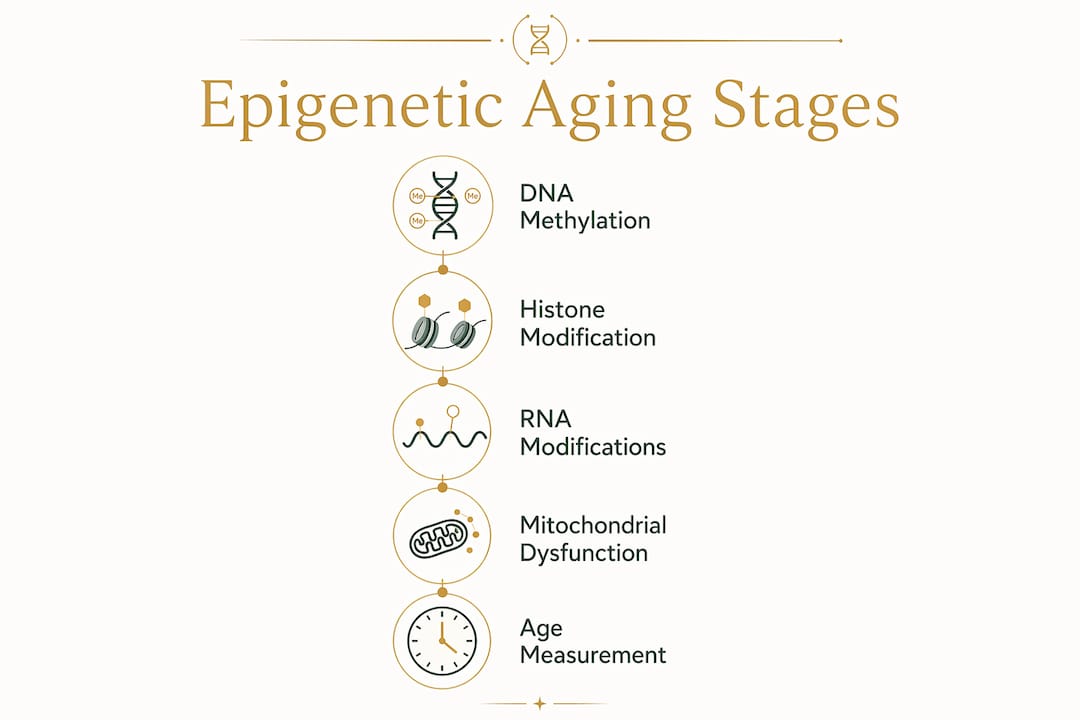
The most established clocks include the Horvath clock, the Hannum clock, and newer second-generation clocks like GrimAge and PhenoAge. Each uses a different set of CpG sites and is calibrated against different health outcomes. GrimAge, for example, correlates strongly with mortality risk and disease burden, making it a more clinically meaningful measure than simple age estimation.
The field is moving beyond methylation alone. New frameworks like EpiAge-R integrate 3D genome data and histone balance to reflect a cell’s repair potential, not just its current methylation state. This shift matters because a cell’s ability to recover from stress is as important as its current epigenetic profile.
Key biomarker categories in modern epigenetic aging science:
- Methylation clocks: Horvath, Hannum, GrimAge, PhenoAge. Measure CpG methylation patterns across hundreds to thousands of sites.
- Histone modification profiles: Capture acetylation, lactylation, and glycation states. React faster to lifestyle changes than methylation.
- Chromatin topology markers: Measure 3D genome organization. Decline with age as chromosomal compartments lose structural integrity.
- Resilience indices: Quantify a cell’s capacity to restore epigenetic order after stress. A high resilience score indicates strong repair machinery.
| Biomarker type | What it measures | Speed of change |
|---|---|---|
| DNA methylation clocks | CpG site methylation patterns | Weeks to months |
| Histone modification profiles | Acetylation, lactylation, glycation | Days to weeks |
| Chromatin topology markers | 3D genome structural organization | Months to years |
| Resilience indices | Stress recovery and repair capacity | Variable |
Epigenetic clocks are best interpreted as indicators of epigenetic stability, not as fixed verdicts. Maintaining mitochondrial and metabolic health is the key to long-term epigenetic fidelity. The number on a clock reflects the current state of your cellular environment, and that environment responds to what you do.
What lifestyle factors drive epigenetic aging?
Lifestyle is not a soft variable in epigenetic aging. It is a direct input into the molecular machinery described above. Every meal, every night of sleep, and every bout of exercise sends signals that modify histone marks and shift methylation patterns.
The metabolic connection is the most direct. When you eat a diet high in refined carbohydrates, glycolytic flux increases, lactylation rises, and carbonyl stress accumulates. Histone glycation caused by carbonyl stress disrupts chromatin and sirtuin function, and unlike most epigenetic marks, glycation damage is largely permanent. Diet choices made today create epigenetic marks that persist for years.
Here is how the major lifestyle factors map to specific epigenetic mechanisms:
- Diet quality. Whole foods rich in polyphenols, B vitamins, and methyl donors (folate, choline) support healthy methylation. Processed foods and excess sugar drive glycation and lactylation.
- Exercise. Aerobic and resistance training both increase NAD+ availability, which fuels sirtuin activity and supports histone acetylation. Exercise also reduces inflammatory signaling that disrupts methylation patterns.
- Sleep. Deep sleep is when cellular repair peaks. Chronic sleep deprivation elevates cortisol, which alters methylation at stress-response genes and accelerates epigenetic drift.
- Chronic stress. Stored emotional stress and nervous system dysregulation elevate glucocorticoids long-term. These hormones directly modify histone marks at hundreds of gene loci.
- Inflammation. Systemic low-grade inflammation, common after age 40, disrupts the histone code and accelerates methylation clock progression.
Histone modifications respond faster to lifestyle changes than DNA methylation. This means you can begin shifting your epigenetic state within days of changing your diet, sleep, or exercise habits. The methylation clock catches up over weeks and months.
Pro Tip: Targeting NAD+ metabolism through precursors like NMN or NR, combined with time-restricted eating, addresses two of the three metabolic-epigenetic axes simultaneously. This is one of the highest-leverage single interventions in epigenetic aging.
The TIMELESS four-layer protocol addresses all of these inputs at once. The Physical layer targets cellular, epigenetic, and mitochondrial function. The Emotional layer addresses stored trauma and nervous system dysregulation, which directly alter histone marks. The Spiritual layer works on identity and subconscious beliefs about aging, which shape behavior and stress physiology. The Energetic layer addresses the bioelectric field and meridian system. Most protocols address one layer. Aging is a four-layer problem.
What interventions can slow or reverse epigenetic aging?
Epigenetic dysregulation is not just a marker of aging. It is a causal driver of aging and a reversible one. That distinction changes everything. If epigenetic marks cause aging phenotypes, then restoring those marks is a legitimate therapeutic target, not just a measurement exercise.
The most evidence-supported interventions include:
- Caloric restriction and time-restricted eating. Both reduce glycolytic flux, lower lactylation, and preserve mitochondrial function. Animal models show consistent slowing of methylation clock progression.
- Aerobic exercise. Raises NAD+ levels, activates sirtuins, and reduces inflammatory epigenetic marks. The effect is measurable on methylation clocks within 8–12 weeks of consistent training.
- NAD+ precursor supplementation. NMN and NR restore sirtuin activity, improve histone acetylation patterns, and support DNA repair. Targeted NAD+ metabolism interventions outperform general health efforts for epigenetic rejuvenation.
- Dietary carbonyl stress reduction. Reducing sugar and processed food intake lowers reactive carbonyl species, which mitigates histone glycation. Pharmacological induction of glyoxalase I reduces glycation burden and extends healthspan in research models.
- Multi-modal combinatorial strategies. Combined approaches addressing NAD+ metabolism, glycolytic flux, and carbonyl stress00186-8) show the strongest results in rejuvenation research. Single-target interventions produce modest effects.
Epigenetic reprogramming through partial Yamanaka factor expression is the frontier of this field. Early research shows it can reset methylation clocks in specific tissues. The challenge is doing so without triggering uncontrolled cell proliferation. Clinical application is years away, but the proof of concept is established.
For practical purposes today, the most powerful approach is a multi-modal lifestyle protocol that addresses metabolic, emotional, and psychosocial drivers simultaneously. That is precisely what the TIMELESS Vitality Intensive delivers, with biological age reversal verified by TruAge DNA methylation testing and a full refund guarantee if you do not reverse your biological age by at least 10 years in 6 months.
Key Takeaways
Epigenetic aging is a reversible, multi-axis biological process driven by DNA methylation shifts, histone modifications, and metabolic dysfunction, all of which respond to targeted lifestyle and therapeutic interventions.
| Point | Details |
|---|---|
| Epigenetic aging is causal, not just correlational | Epigenetic dysregulation drives aging phenotypes and is a direct therapeutic target, not merely a marker. |
| Three metabolic axes govern histone aging | Acetylation, lactylation, and glycation each link cellular metabolism to gene expression and aging rate. |
| Histone marks change faster than methylation | Lifestyle changes shift histone modification profiles within days, making early intervention high-value. |
| Biological age clocks measure epigenetic stability | TruAge and similar methylation clocks reflect cellular environment quality, not a fixed biological fate. |
| Multi-layer protocols outperform single interventions | Addressing physical, emotional, spiritual, and energetic aging simultaneously produces the strongest results. |
Why I stopped treating epigenetic aging as just a number
Most people who discover epigenetic clocks make the same mistake. They treat the number as a verdict. They get a TruAge test, see a biological age higher than they expected, and feel either relieved or defeated. Then they go looking for a single supplement or a single habit to fix it. That approach misses the entire point of what epigenetic aging science is telling us.
My TruAge test confirmed a biological age of 23 at 41 years old. That result did not come from one intervention. It came from 15 years of working every layer of the aging problem simultaneously. The physical layer: mitochondrial support, NAD+ optimization, and methylation-targeted nutrition. The emotional layer: clearing stored trauma that was keeping my nervous system in a chronic stress state and silently accelerating epigenetic drift. The spiritual layer: rewriting the subconscious identity programs that told my biology it was supposed to age. The energetic layer: restoring bioelectric coherence that most longevity researchers do not even measure.
The science backs this up. Epigenetic marks respond to metabolic inputs, emotional states, and environmental signals all at once. A protocol that only addresses one of these inputs leaves the other three running the aging program unchecked. That is why most people who take longevity seriously still age at the standard rate. They are solving one quarter of the problem and wondering why the other three quarters keep advancing.
The most important shift you can make is to stop asking “what is my biological age?” and start asking “what is driving my epigenetic drift, and which of the four layers am I not addressing?” That question leads to a real protocol. The number on the clock is just feedback. What you do with that feedback is what determines your biological trajectory.
— E. Christian Trejo
What the TIMELESS protocol offers for epigenetic age reversal
The science of epigenetic aging is clear: the marks on your DNA respond to what you do, what you feel, what you believe, and how your energy flows. Timeless - Reverse Your Age was built to address all four of those inputs with a single, integrated protocol.
The TIMELESS book is a 370-page blueprint documenting the complete four-layer system, available for $29.99 worldwide. For those ready for personalized guidance, the TIMELESS Vitality Intensive is an 8-week private coaching program at $7,000, guaranteed to reverse your biological age by at least 10 years in 6 months as verified by TruAge DNA methylation testing, or every dollar is refunded. No other program in the longevity space offers that level of scientific accountability. You can also access the free 14-upgrade guide at reverseyourage.org/14-upgrades to begin applying the protocol today.
FAQ
What is epigenetic aging in simple terms?
Epigenetic aging is the gradual shift in chemical marks on your DNA and histone proteins that control which genes are active. These shifts accumulate over time and cause cells to function less efficiently, driving biological aging independently of your chronological age.
Can epigenetic aging be reversed?
Yes. Epigenetic dysregulation is reversible, unlike permanent genetic mutations. Research confirms that restoring regulatory coherence in epigenetic systems improves aging phenotypes, and lifestyle interventions targeting NAD+ metabolism, diet, and exercise produce measurable clock reversal.
How does DNA methylation measure biological age?
DNA methylation clocks like TruAge, Horvath, and GrimAge analyze methylation levels at specific CpG sites across the genome. The pattern of methylation at these sites correlates with biological age and health outcomes more accurately than chronological age alone.
How do lifestyle choices affect epigenetic aging?
Diet, exercise, sleep, and stress directly modify histone marks and methylation patterns. Histone modifications respond within days of lifestyle changes, while DNA methylation shifts over weeks to months, making consistent habits the most powerful long-term epigenetic intervention.
What is the difference between biological age and chronological age?
Chronological age is the number of years you have lived. Biological age reflects the functional state of your cells, measured by epigenetic markers like DNA methylation. A person with a biological age significantly lower than their chronological age has cells that function like those of a younger person.