
How DNA Methylation Testing Proves Age Reversal
Discover how DNA methylation testing proves reversal of biological age, giving you measurable insights into your health and longevity.
How DNA Methylation Testing Proves Age Reversal
DNA methylation testing is defined as the measurement of epigenetic chemical marks on your DNA that directly reflect your biological age and how fast you are aging. These marks change in response to what you eat, how you sleep, how you manage stress, and what protocols you follow. That is precisely how DNA methylation testing proves reversal: it captures the before and after in your own genome. My TruAge DNA methylation test confirmed a biological age of 23 at chronological age 41, verified through the same clinical-grade epigenetic clock technology used in published research. This is not theory. It is measurable, repeatable proof.
How does DNA methylation testing measure biological age and show reversal?

The scientific term for what these tests measure is epigenetic age, calculated using algorithms like the Horvath clock, which analyzes methylation levels at specific CpG sites across your genome. Think of your DNA as software code. Methylation marks are the annotations that tell genes whether to switch on or off. As you age, those annotations drift in predictable patterns. Epigenetic clocks read those patterns and calculate your biological age with remarkable precision.
Here is what makes this relevant for reversal:
- CpG site methylation is dynamic. Unlike your genetic sequence, which never changes, methylation marks respond to lifestyle inputs. Folate, betaine, and B12 supply the methyl groups your body uses to maintain these marks. Stress, poor sleep, and processed food degrade them.
- The Horvath clock and related algorithms detect directional change. When your methylation patterns shift toward a younger profile, the clock registers a lower biological age. That shift is the proof.
- Blood-based testing is the current standard. Most clinical-grade tests, including TruAge, analyze DNA extracted from blood to calculate epigenetic age across hundreds of thousands of CpG sites.
- Methylation patterns change with diet and stress regulation, which supports the epigenetic repair systems your body already has built in.
- Serial testing reveals trajectory. A single test gives you a snapshot. Multiple tests over months show whether your biological age is moving in the right direction.
The key distinction here is that epigenetic age is not fixed. Your genome contains the capacity for younger expression. The test simply reads whether you have activated it.
What evidence supports DNA methylation testing as proof of reversal?
The clinical evidence is specific and compelling. A published 8-week intervention produced a 3.23-year reduction in DNA methylation age, with statistical significance at p=0.018. That means the result was not random. The same participants showed a 25% decrease in triglycerides and a 15% increase in folate levels, confirming that metabolic improvements and epigenetic age reversal move together.
“Your DNA already knows how to be young. The question is whether you are giving it the conditions to express that.”
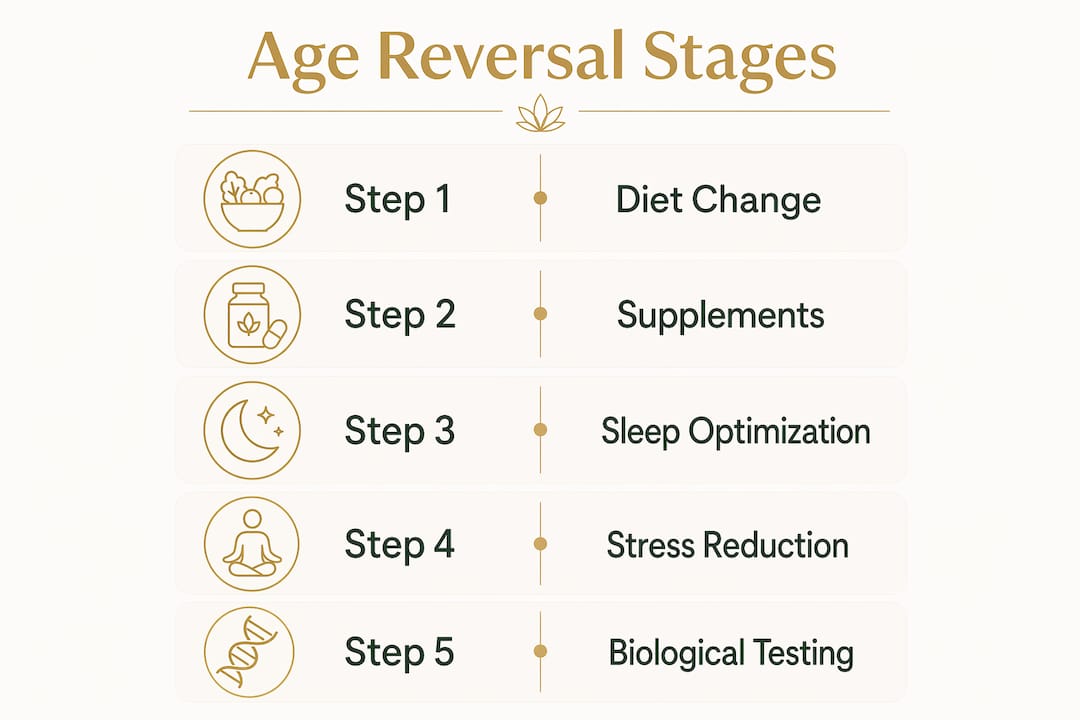
The intervention combined dietary changes, targeted supplementation, sleep optimization, and stress reduction. No pharmaceutical intervention was required. That result matters because it confirms that the reversible effects of DNA methylation are accessible through lifestyle, not just clinical procedures.
Research in animal models identified 4,339 differentially methylated CpG sites linked to disease and reversal. That scale of change shows how broadly methylation shifts when metabolic health improves. It is not one or two markers moving. It is thousands of sites recalibrating simultaneously.
Experts are appropriately cautious about one thing: biological age tests are supportive biomarkers, not diagnostic tools. They measure the impact of lifestyle on gene regulation, not disease status. Pair them with blood markers like homocysteine, fasting insulin, and CRP for a complete metabolic picture. That combination gives you both the epigenetic signal and the biochemical context to interpret it accurately.
Genetic tests vs. epigenetic age tests: what is the difference?
This is where most people get confused, and the confusion is costly. There are two fundamentally different categories of methylation testing, and only one of them can show reversal.
| Feature | Genetic Methylation Test (e.g., MTHFR) | Epigenetic Age Test (e.g., TruAge) |
|---|---|---|
| What it measures | Inherited DNA variants | Current methylation patterns across CpG sites |
| Does it change over time? | No. Your SNPs are fixed at birth. | Yes. Patterns shift with lifestyle and interventions. |
| Can it prove reversal? | No | Yes |
| Primary use | Identify enzyme efficiency variants | Calculate and track biological age |
| Paired with | Nutritional supplementation planning | Serial monitoring and protocol optimization |
Genetic methylation testing like MTHFR reveals permanent variants but does not measure reversible biological age changes. An MTHFR variant tells you that your methylation enzyme runs at reduced efficiency. It does not tell you what your biological age is today or whether it has changed. Treating a genetic test result as proof of reversal is a fundamental misreading of what the test measures.
Epigenetic age tests read your current methylation status. They are the equivalent of checking your actual performance, not your inherited potential. Genetic predisposition tests do not reveal current metabolic states. Epigenetic tests do. That distinction is the entire basis for using methylation testing for health optimization and age reversal tracking.
The ideal approach combines both. Use a genetic test once to understand your methylation enzyme efficiency and supplement accordingly. Use epigenetic age tests repeatedly to track whether your protocol is actually working.
How to use DNA methylation testing to track biological age reversal
Knowing the science is one thing. Using it correctly is another. Here is how to apply methylation testing for health in a way that produces reliable, actionable data.
- Establish a baseline first. Take your initial epigenetic age test before making any protocol changes. This is your starting point. Without it, you have no reference for measuring reversal.
- Choose a consistent lab and kit. Methylation test results vary with technical noise, and lab-to-lab variation can obscure real biological changes. Use the same testing platform every time. TruAge is the standard I use and recommend.
- Retest at 3-month intervals minimum. Serial biological age testing over months or years best supports observing reversal. A single test tells you where you are. A series tells you where you are going.
- Pair results with blood biomarkers. Combining methylation testing with blood biomarkers like homocysteine provides a comprehensive view of metabolic health. Homocysteine elevation signals methylation pathway stress even before epigenetic age shifts appear.
- Apply the TIMELESS four-layer protocol between tests. Physical inputs (cellular nutrition, mitochondrial support, epigenetic supplementation), Emotional inputs (trauma resolution, nervous system regulation), Spiritual inputs (identity and subconscious beliefs about aging), and Energetic inputs (bioelectric field work, meridian practices) all influence methylation patterns. Most programs address only one layer. That is why most programs produce modest results.
Pro Tip: Do not test during a period of acute stress, illness, or major dietary disruption. Temporary stressors create temporary methylation shifts that do not reflect your true biological trajectory. Test during a stable period to get a reading that accurately represents your protocol’s impact.
Consumer methylation tests vary in clinical validity, and panels differ in the number of CpG sites analyzed and the robustness of their underlying algorithms. Choosing a test designed with established clinical evidence is not optional if you want results you can trust. Wellness-grade tests may give you a number. Clinical-grade tests give you a number you can act on.
Key takeaways
DNA methylation testing proves biological age reversal by tracking directional shifts in epigenetic markers that respond directly to lifestyle, supplementation, and protocol-based interventions.
| Point | Details |
|---|---|
| Epigenetic age is measurable and reversible | TruAge and Horvath clock algorithms calculate biological age from CpG site methylation patterns that change with lifestyle. |
| Clinical trials confirm reversal is real | An 8-week intervention produced a 3.23-year reduction in DNA methylation age with statistical significance at p=0.018. |
| Genetic tests cannot prove reversal | MTHFR and similar SNP tests measure fixed variants. Only epigenetic age tests track dynamic changes over time. |
| Serial testing is required for proof | One test gives a snapshot. Three or more tests over months reveal whether your biological age is actually declining. |
| Four-layer protocols outperform single-layer approaches | Addressing physical, emotional, spiritual, and energetic aging simultaneously produces the methylation shifts that single-layer programs miss. |
Why most people are testing wrong and what i did differently
I ran my first TruAge test at 38. The result was not what I expected, and it forced me to confront something most longevity researchers avoid saying out loud: physical interventions alone are not enough to move the needle on epigenetic age in a sustained way.
I had the nutrition dialed in. I was exercising correctly. My sleep was optimized. My biological age was improving, but not at the rate the clinical data suggested was possible. The missing variables were emotional, spiritual, and energetic. Stored trauma dysregulates the nervous system. Chronic low-grade stress floods the body with cortisol, which degrades methylation machinery. Subconscious beliefs about aging literally program the body to age faster. These are not metaphors. They are measurable inputs that show up in your epigenetic test results.
When I integrated all four layers simultaneously, the results accelerated. My most recent TruAge test confirmed a biological age of 23 at 41. That is an 18-year gap, verified by the same clinical-grade technology used in published research. The aging reversal methods that actually work are the ones that treat aging as a four-layer problem, not a single-variable equation.
My honest caution to you: do not use a single test result as your verdict. Use it as your starting data point. The proof of reversal lives in the trajectory across multiple tests, not in one number. And do not confuse a genetic methylation test with an epigenetic age test. I have seen people spend months optimizing their MTHFR supplementation while their biological age continued to climb. Know which test you are running and what it actually measures.
The science is clear. The protocol is proven. The only question is whether you are ready to apply it with the consistency and depth it requires.
— E. Christian Trejo
Verify your reversal with the TIMELESS protocol
The TIMELESS Vitality Intensive is the only program in the longevity space that guarantees a 10-year reduction in biological age within 6 months, verified by TruAge DNA methylation testing, or every dollar is refunded. The program applies the four-layer aging protocol across physical, emotional, spiritual, and energetic dimensions simultaneously. That is the architecture that produces the results the clinical data promises.

Start with the TIMELESS paperback for $29.99 and get the complete 370-page blueprint. If you want personalized guidance and the DNA-verified guarantee, book a free Vitality Diagnosis call and we will map your four-layer protocol together. The proof is in the test results. Let yours be next.
FAQ
What does a DNA methylation test actually measure?
A DNA methylation test measures chemical marks at specific CpG sites across your genome to calculate your biological age using algorithms like the Horvath clock. The result reflects how your lifestyle and environment have programmed your gene expression.
How many tests do i need to confirm biological age reversal?
Serial testing over months is required to confirm reversal. A minimum of two tests separated by at least three months is needed, with three or more tests providing the strongest evidence of a directional trend.
Can DNA testing indicate reversal after just 8 weeks?
Yes. A published clinical trial showed a 3.23-year reduction in DNA methylation age after an 8-week intervention combining diet, supplementation, sleep, and stress management. Results depend on protocol intensity and consistency.
Is an MTHFR test the same as an epigenetic age test?
No. An MTHFR test identifies a fixed genetic variant that affects enzyme efficiency. It does not measure your current biological age or show whether reversal has occurred. Only epigenetic age tests like TruAge track dynamic methylation changes over time.
What lifestyle factors most directly affect methylation patterns?
Methyl donor nutrients including folate, betaine, and B12 directly supply the methylation machinery. Chronic stress, poor sleep, and processed food degrade it. Addressing all four layers of aging, physical, emotional, spiritual, and energetic, produces the most significant and sustained methylation improvements.