
13 to 15: When Lowering Homocysteine May Shift DNA Age
See what VITACOG and DNA clock research reveal about homocysteine and aging, when B vitamins may help, and how testing and retesting track your response.
13 to 15: When Lowering Homocysteine May Shift DNA Age
Elevated homocysteine is linked to faster biological and epigenetic aging, but the evidence is specific: lowering it helps most when your baseline level sits around 13 to 15 micromoles per liter or higher. If you have risk factors, testing is worth doing, and targeted B-vitamin correction followed by a DNA methylation retest can show whether your biological age actually responds.
TL;DR:
- Order homocysteine testing if you have kidney disease, cognitive decline, suspected B12 or folate deficiency, or a vascular event; check B12 and folate simultaneously.
- B vitamin correction showed epigenetic aging benefits chiefly in people starting at 13 to 15 micromoles per liter or higher; normal baseline levels changed little.
- Although B vitamins lower homocysteine by 25% to 30% on average, randomized trials found no consistent reduction in major vascular events, stroke, or overall mortality.
- After targeted folate, B12, and B6 supplementation, retest in 8 to 12 weeks; persistent elevation warrants evaluation for kidney problems or deficiencies.
Table of Contents
- What homocysteine is and how it links to aging
- Elevated homocysteine and the pace of biological aging
- What the B-vitamin trials really show about outcomes
- When to test and how to read your results
- How to actually lower homocysteine and what to expect
- Why I treat homocysteine as one input, not the whole picture
- What the research actually tells you to do differently
- How the TIMELESS protocol fits homocysteine into a verified approach
- FAQ
- Sources
What homocysteine is and how it links to aging
Homocysteine is an amino acid your body produces as a byproduct of methionine metabolism. It does not come from food directly. It is generated constantly inside your cells, and your body has two ways to clear it: remethylation, which recycles it back into methionine, and transsulfuration, which routes it toward glutathione production. Both pathways depend on specific nutrient cofactors, and when those cofactors run short, homocysteine builds up in blood.
We think of this as a methylation problem before we think of it as a cardiovascular one, because the same pathway that clears homocysteine also generates S-adenosylmethionine, the molecule your cells use to methylate DNA. When remethylation slows down, two things happen at once: homocysteine rises, and the raw material for epigenetic maintenance becomes scarcer. That overlap is why homocysteine shows up so often in aging research, not just heart disease research.
Three nutrients drive the remethylation cycle. Folate, in its active form 5-methyltetrahydrofolate (5-MTHF), donates a methyl group that converts homocysteine back to methionine. Vitamin B12 acts as the enzyme cofactor that makes that transfer possible. Vitamin B6 supports the transsulfuration branch, helping clear homocysteine through a separate route when remethylation is saturated. A shortage in any one of these three nutrients can raise your homocysteine level even when the other two are adequate, which is why isolated supplementation sometimes underperforms combined approaches.

Normal laboratory reference ranges typically fall between about 5 and 15 micromoles per liter, though the upper end of “normal” overlaps with levels researchers consider clinically significant for aging outcomes. Levels also shift with age and sex, with a reference interval and aging model study recommending age and sex specific cutoffs rather than one fixed number for everyone, since homocysteine tends to climb after age 40.
Several factors push homocysteine upward independent of diet:
- Chronic kidney disease, which reduces clearance and is one of the most common causes of markedly elevated levels.
- MTHFR gene variants, which reduce the efficiency of the enzyme that activates folate.
- Age itself, since remethylation efficiency tends to decline over the decades.
- Smoking, which depletes B6 and interferes with one-carbon metabolism.
Each of these raises the baseline you are starting from, which matters for everything that follows.
Elevated homocysteine and the pace of biological aging
This is where homocysteine stops being an abstract lab value and becomes a marker worth paying attention to. A VITACOG-derived DNA methylation analysis in people with mild cognitive impairment found that higher baseline homocysteine correlated with faster epigenetic aging across multiple DNAm clocks. In other words, people with higher homocysteine were aging faster at the cellular, methylation level, not just showing more risk factors on paper.
What makes that study notable is what happened next: when B-vitamin supplementation lowered homocysteine in participants who started with elevated levels (in the range of 13 to 15 micromoles per liter or above), their rate of epigenetic aging normalized. The effect was concentrated almost entirely in that higher-baseline subgroup. People who started with normal homocysteine saw little to no epigenetic shift from supplementation, because there was little room for the pathway to improve.
A related metabolomics analysis of the VITACOG cohort found that B-vitamin supplementation was associated with a 29.6% reduction in the rate of brain atrophy over 24 months in older adults with mild cognitive impairment, a meaningful signal that lowering homocysteine in the right population can slow a physical marker of brain aging, not just a lab value.
Cognitive and structural brain evidence outside the VITACOG dataset points the same direction. A large population cohort reported in the HEAL study found that higher homocysteine was associated with weaker performance on language tasks and reduced white matter volume in middle-aged and older adults. The pattern across these datasets is consistent:
- Higher homocysteine tracks with faster epigenetic aging on DNAm clocks.
- Elevated homocysteine associates with reduced white matter volume and language task performance.
- B-vitamin correction reversed accelerated aging specifically in people who started with elevated tHcy.
- The benefit was not uniform. It depended heavily on where someone started.
That last point is the one most summaries skip, and it is the one that actually determines whether testing and treatment are worth your time.
What the B-vitamin trials really show about outcomes
Here is where the evidence gets more complicated, and where a lot of health content oversimplifies. A meta-analysis of randomized controlled trials published in JAMA Internal Medicine found that B-vitamin supplementation reliably lowers homocysteine by about 25 to 30% on average. However, the meta-analysis did not find consistent evidence for reduced major vascular events, stroke, or all-cause mortality over the typical follow-up periods studied, despite the biochemical effect.
That is an uncomfortable finding if you expect a straight line from “lower your homocysteine” to “reduce your heart attack risk.” The straight line does not hold at the population level. But the reason it does not hold is worth unpacking, because it is not that homocysteine lowering is useless. It is that the trials pooled people who should not have been pooled together.
A few factors explain the heterogeneity:
- Baseline homocysteine varied widely across trial participants, and people who started with near-normal levels had almost nothing to gain from further lowering.
- Folic acid fortification status differed by country, meaning some trial populations were already folate-replete before the study began, blunting any measurable effect.
- Chronic kidney disease populations behave differently; a review of folic acid and homocysteine in CKD found that hyperhomocysteinemia is common in these patients and linked to vascular risk observationally, yet trials of folic acid and B vitamins in CKD produced mixed or null results for cardiovascular and mortality outcomes.
- Form of B12 used mattered too; trials using cyanocobalamin versus methylcobalamin, along with differing co-medications, add further noise to pooled results.
Put those pieces together and a clearer picture emerges. The therapeutic window for homocysteine lowering is real, but it is narrow. The clearest cognitive and epigenetic benefits cluster in people who started at 13 to 15 micromoles per liter or higher. Below that, you are correcting a number without much left to gain. This is why we consider the headline from large cardiovascular trials (“B vitamins don’t prevent heart attacks”) and the headline from the epigenetic aging research (“B vitamins reverse accelerated aging in the right subgroup”) both accurate at once. They are describing different populations.
When to test and how to read your results
Testing homocysteine is not something every adult needs on a routine basis, but it is worth ordering if any of the following apply to you:
- You have had an unexplained vascular event, such as a clot or early-onset cardiovascular disease.
- You are experiencing cognitive decline or have been evaluated for mild cognitive impairment.
- You have chronic kidney disease, which commonly elevates homocysteine independent of diet.
- You suspect a B12 or folate deficiency, whether from diet, absorption issues, or age related decline.
- You have a family history of elevated homocysteine or related metabolic conditions.
- You take medications that interfere with folate metabolism, such as methotrexate.
Reference ranges typically run from about 5 to 15 micromoles per liter, but the literature treats values at the higher end of that range, roughly 13 to 15 and above, as the threshold where intervention is most likely to matter. A single borderline result is not an emergency. A persistently elevated result, especially paired with symptoms or risk factors above, warrants a closer look.
A simple monitoring sequence looks like this: get a baseline test, start a targeted B-vitamin intervention if your level is elevated, retest in 8 to 12 weeks to confirm the biochemical response, and if homocysteine stays high despite adequate supplementation, investigate further for kidney function issues, undiagnosed B12 or folate deficiency, or rare genetic metabolic errors.
Pro Tip: Test homocysteine alongside B12 and folate in the same draw. A high homocysteine result means very little in isolation, but paired with low B12, it tells you exactly where the pathway is breaking down.
How to actually lower homocysteine and what to expect
If your result comes back elevated, the interventions that move the needle are well established, even if their downstream effects on disease risk vary by person. Here is what the evidence supports:
- Dietary folate from leafy greens, legumes, and fortified grains where available, supports the remethylation pathway directly.
- Supplemental 5-MTHF rather than synthetic folic acid is often preferred for people with MTHFR variants, since it bypasses the enzymatic step that variant impairs.
- Vitamin B12, ideally in a form your body absorbs well, corrects one of the two most common deficiencies behind elevated homocysteine.
- Vitamin B6 supports the transsulfuration route and rounds out a combined approach rather than relying on folate and B12 alone.
- Addressing kidney function and reviewing medications matters for anyone with CKD or drugs that interfere with folate metabolism.
- Smoking cessation and reduced alcohol intake remove two known drivers of elevated homocysteine that supplementation alone cannot fully offset.
In populations without mandatory folic acid fortification, combined B-vitamin supplementation lowers homocysteine by roughly 25 to 30% on average, consistent with the meta-analysis findings above. What that reduction means for you depends heavily on where you started. If your baseline was already in the normal range, expect a modest number change and little else. If your baseline was elevated, in the 13 to 15 micromoles per liter range or higher, the same percentage reduction is doing real work, and it is the group where the epigenetic and cognitive data show measurable benefit.
Pro Tip: Pair dietary and lifestyle changes with a practical checklist rather than guesswork. This primer on healthy aging habits covers the lifestyle side that complements biochemical correction.
Refer to a clinician if you see no response after 8 to 12 weeks of adequate supplementation, if your level is extremely high in a way that suggests an inborn error of metabolism, or if you have CKD, since dosing and monitoring need to be adjusted for reduced renal clearance.
Why I treat homocysteine as one input, not the whole picture
My last TruAge DNA methylation test put my biological age at 23 against a chronological age of 41. I did not get there by fixing one blood marker. Homocysteine is a real, measurable lever inside the physical layer of aging, the layer that covers cellular, epigenetic, and mitochondrial function, but treating it as the whole story is exactly where most longevity advice goes wrong.
Aging is a four layer problem. Physical aging includes homocysteine, methylation status, and mitochondrial health. Emotional aging includes stored trauma and nervous system dysregulation that keep your body in a stress state no supplement can override. Spiritual aging includes the subconscious beliefs you hold about what getting older means for you. Energetic aging involves your bioelectric field and meridian function, systems that conventional labs do not measure but that show up in how your body actually performs. Most protocols address one layer, usually the physical, and call it complete. That is why a person can correct their homocysteine perfectly and still age faster than someone with worse lab values but better regulated stress and a healthier internal narrative about time.
The TIMELESS framework treats a homocysteine result the way it treats any physical marker: a data point worth correcting, then worth re-verifying with a DNAm clock to confirm the correction actually changed your biological age rather than just your blood chemistry.
Aging is not one problem with one fix. It is four systems running in parallel, and the ones you ignore will undo the progress you make in the one you are watching.
— E. Christian Trejo
What the research actually tells you to do differently
The honest takeaway from this evidence is narrower than most health content wants to admit. Homocysteine testing is not a universal longevity hack, and B-vitamin supplementation is not a guaranteed cardiovascular fix. The conventional wisdom, that lowering a lab number automatically lowers your disease risk, does not survive contact with the large trial data.
What does survive is this: if your baseline homocysteine sits at 13 to 15 micromoles per liter or higher, correcting it is one of the more defensible, evidence-backed moves you can make for brain aging specifically, with epigenetic clocks and brain atrophy data both pointing the same direction. If your baseline is already normal, chasing a lower number is not where your effort belongs.
What most people overlook is the retest step. A homocysteine correction without a DNAm follow-up is a guess dressed up as a protocol. You corrected a number. You did not confirm that your biological age moved. That confirmation step, not the supplement itself, is what separates a real intervention from a plausible-sounding one.
How the TIMELESS protocol fits homocysteine into a verified approach
Correcting homocysteine is a physical layer intervention, and physical layer work only shows its full value when you can verify it changed something measurable. That verification step is where our approach differs from a supplement-and-hope strategy.
The TIMELESS: Reverse Your Age book lays out the full four-layer blueprint across 370 pages: physical corrections like methylation support, emotional work to address stored stress patterns, spiritual work on your internal beliefs about aging, and energetic practices tied to your bioelectric field. It gives you the structure to work through all four layers in sequence rather than fixating on one lab value.
For readers who want direct guidance rather than a self-directed read, the TIMELESS Vitality Intensive is an 8-week private coaching program built around the same four layers, with TruAge DNA methylation testing used to verify your result. The guarantee behind it: a reversal of biological age by at least 10 years in 6 months, confirmed by TruAge testing, or every dollar is refunded. No other program in this space backs a result with this level of accountability.
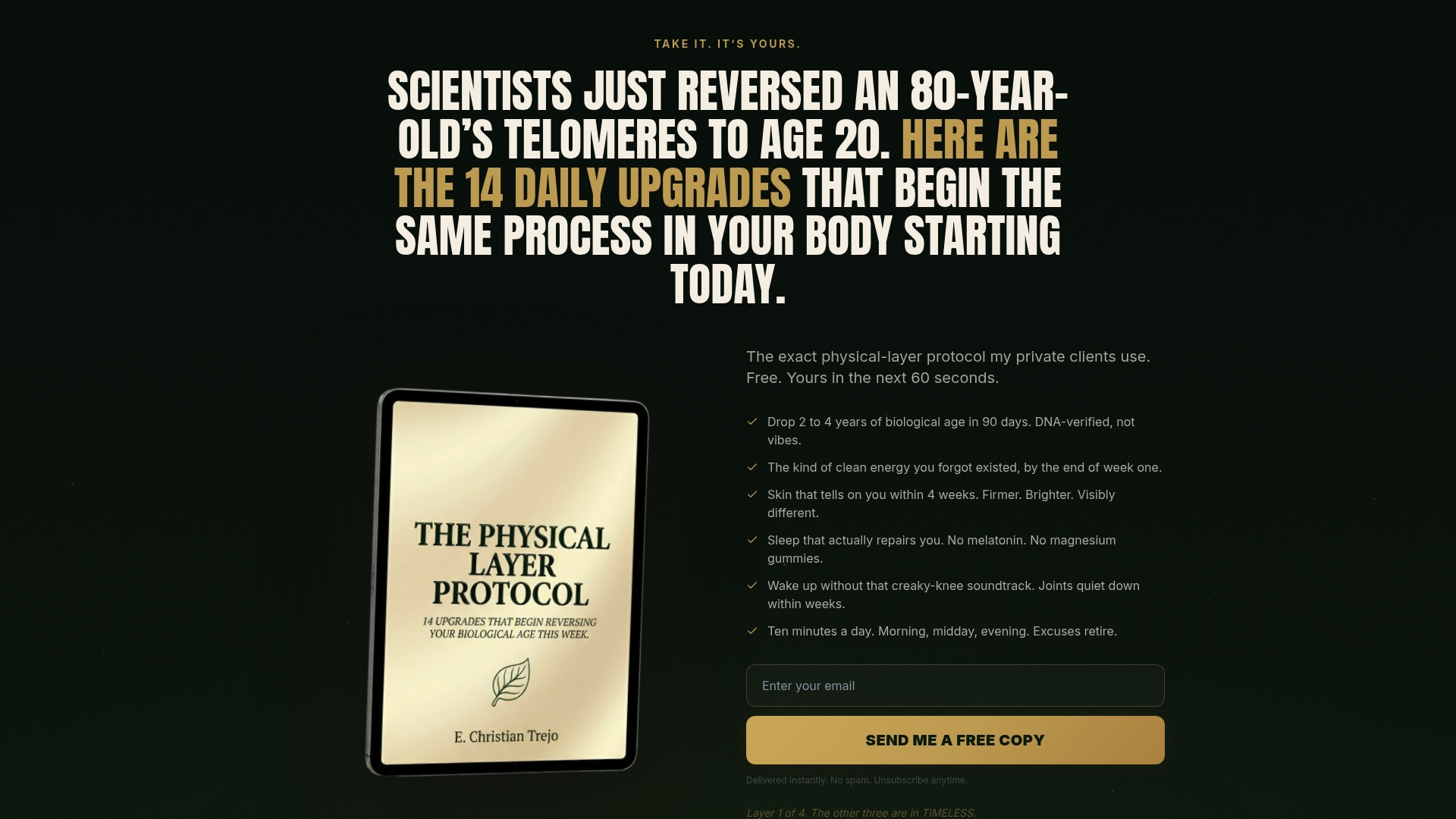
- Start free with the 14 Upgrades guide, a practical first step before committing further.
- Get the full blueprint in TIMELESS: Reverse Your Age ($29.99).
- Apply for the Vitality Intensive if you want personalized, verified coaching backed by the refund guarantee.
If homocysteine correction is the physical thread you are pulling on, the free guide is the place to see how it connects to the other three layers.
This article is general information, not a substitute for advice from a qualified doctor. Consult a qualified healthcare professional about your own circumstances before acting on anything here.
FAQ
What homocysteine level is considered dangerous for aging?
Reference ranges generally run from about 5 to 15 micromoles per liter, but research on epigenetic aging and cognitive outcomes points to 13 to 15 micromoles per liter and above as the threshold where correction shows the clearest benefit. Below that range, lowering homocysteine further shows little measurable effect on aging markers.
Does lowering homocysteine actually slow aging?
In people who start with elevated levels, B-vitamin correction has been linked to normalized rates of epigenetic aging and a 29.6% reduction in brain atrophy over 24 months in one cohort. In people whose homocysteine was already normal, the same intervention showed little additional benefit.
Why did B-vitamin trials fail to prevent heart attacks or strokes?
A large meta-analysis found B vitamins lowered homocysteine by 25 to 30% on average but did not significantly reduce major vascular events over five years. Differences in baseline homocysteine, folic acid fortification, and kidney disease status across trial populations likely diluted the results.
How often should I retest homocysteine after starting supplementation?
A common approach is to retest 8 to 12 weeks after starting folate, B12, and B6 supplementation to confirm your level has responded. If it remains elevated despite adequate dosing, further workup for kidney function or absorption issues is reasonable.
Can TIMELESS verify whether lowering homocysteine changed my biological age?
The TIMELESS Vitality Intensive uses TruAge DNA methylation testing to confirm biological age changes, including from physical layer interventions like homocysteine correction, as part of its four-layer protocol. The program carries a guarantee of at least 10 years of biological age reversal in 6 months, verified by TruAge testing, or a full refund.
Sources
- Homocysteine lowering and cardiovascular outcomes: meta-analysis (JAMA Internal Medicine)
- Elevated homocysteine is associated with increased rates of epigenetic aging in a population with mild cognitive impairment
- Metabolomic profiling of B‑vitamin effects in VITACOG: links between tHcy lowering and brain atrophy (Alzheimer’s research)
- Hyperhomocysteinemia and its effect on ageing and language functions – HEAL study (Scientific Reports)