
Grounding and Inflammation: 31 Days, TIMELESS’s Energetic Layer
Grounding trials report changes in inflammation markers, sleep, and cortisol. Learn how grounding fits TIMELESS’s energetic layer and what the evidence...
Grounding and Inflammation: 31 Days, TIMELESS’s Energetic Layer
Grounding, also called earthing, shows measurable effects on inflammation-related markers in small pilot trials and randomized studies, including reduced muscle enzyme spikes, better sleep scores, and lower nighttime cortisol. The evidence is promising but still preliminary, which makes grounding a reasonable low-risk addition to a broader anti-aging plan, not a replacement for medical care. In our four-layer protocol, grounding is the practical entry point into the energetic layer, the piece most programs skip entirely.
TL;DR:
- Grounding studies report changes in 30 of 48 postexercise markers, but studies enrolled 10 to 84 participants and faced sham control and setup limits.
- To mirror the sleep study, use a grounding mat about six hours nightly for 31 days, and verify its earth connection first.
- Outdoor sessions typically last 10 to 30 minutes daily on grass, sand, or soil; damp ground improves conductivity, and logs can track sleep or pain.
- Most trials measure responses over days or weeks, leaving lasting effects on chronic inflammation unproven; grounding should complement, never replace, medical care.
Table of Contents
- What the research actually shows about grounding and inflammation
- Practical grounding protocols proven or used in studies
- How grounding fits into the TIMELESS four-layer anti-aging protocol
- Acute versus chronic inflammation: why the distinction matters for grounding
- Grounding compared to diet, exercise, and mindfulness for inflammation
- Author perspective: why grounding matters for longevity
- How to learn more and where to get guided integration
- FAQ
- Sources
What the research actually shows about grounding and inflammation
Aging is a four-layer problem: physical, emotional, spiritual, and energetic. Most interventions address one layer, usually the physical, and call it comprehensive. Grounding is one of the few practices with actual trial data behind the energetic layer, so it deserves a serious look at what the studies measured and what they found.
A 2009 pilot study on delayed-onset muscle soreness found that grounding changed 30 of 48 measured markers after eccentric exercise. Grounded subjects showed a smaller rise in creatine kinase and different white blood cell patterns than sham-grounded controls, a signal that the body’s inflammatory and repair response behaved differently when connected to the earth during recovery, according to the DOMS pilot study.
Sleep research adds another layer. A randomized, double-blind, placebo-controlled trial had 60 participants sleep on grounding mats for roughly six hours a night over 31 days. Compared to a sham control, the grounded group showed significant improvement on standard sleep and insomnia scales along with longer actigraph-measured total sleep time, according to the earthing mat sleep study. Nighttime cortisol also normalized toward a healthier circadian pattern in related sleep-grounding research, which matters because chronically elevated night cortisol feeds the same stress pathways that keep inflammation switched on.
The most-cited mechanistic review, from 2015, pulled together multiple small studies and lab findings and proposed that direct skin contact with the earth allows an influx of electrons that may act as antioxidants, neutralizing some of the reactive oxygen species that drive chronic inflammation. The authors reported measurable differences in white blood cells, cytokines, and other inflammation-related molecules in grounded subjects, while explicitly calling for larger, higher-quality trials, according to the 2015 grounding and inflammation review.

A 2025 scoping-style summary from the University of Michigan put the state of the field in plain terms: the evidence base remains divided. The commentary cites 19 studies, including 7 double-blind RCTs, with sample sizes ranging from 10 to 84 participants, according to the University of Michigan grounding commentary. That’s a real body of work, but it’s also a body of small studies.
Three limitations show up again and again:
- Sample sizes are small, often under 40 people, which limits how confidently findings generalize.
- Creating a true sham for a conductive intervention is difficult, since participants may sense whether a mat or patch is actually grounded.
- Real-world grounding setups vary widely in soil moisture, device resistance, and skin contact quality, which makes outcomes harder to compare across studies.
Across the published pilot and RCT data on grounding, researchers have tracked outcomes in roughly 10 to 84 participants per study, a range that explains why reviewers call the findings promising but not yet definitive, according to the University of Michigan grounding commentary. Clinical summaries, including guidance from the Cleveland Clinic on earthing, echo this: likely safe, possibly beneficial for sleep, stress, pain, and inflammation, and best used alongside standard medical care rather than instead of it.
Practical grounding protocols proven or used in studies
You don’t need special equipment to start testing grounding, but matching your routine to what the actual trials used gives you a better shot at seeing the same kind of results.
- Go barefoot outdoors daily. Studies and practitioner protocols generally use short daily sessions of 10 to 30 minutes on grass, sand, or soil, ideally when the ground is slightly damp, since moisture improves conductivity.
- Set up an indoor conductive system for overnight use. The sleep RCT had participants use a grounding mat for about six hours per night over 31 days, which lines up with simply sleeping on a conductive sheet or mat connected to a verified earth ground, according to the earthing mat sleep study.
- Verify the connection before you trust it. A continuity check with a basic multimeter, or at minimum confirming the grounding rod or outlet ground is intact, matters because inconsistent device grounding is one of the biggest real-world sources of variable results, as practitioner protocols note in the grounding setup guidance.
- Place pads or patches at high-conductivity points. The sole of the foot and points like Kidney 1 show up in practitioner protocols and some study designs as preferred placements, along with positioning a patch directly over an area of localized inflammation when relevant.
- Track what changes. Keep a simple sleep log, rate pain on a 0 to 10 scale, and if you want objective markers, ask your clinician about baseline inflammation panels before you start and again after four to six weeks.
Pro Tip: Soil moisture and the integrity of your home’s electrical grounding both change how effective a session is, so test your indoor setup with a continuity check and favor outdoor sessions after rain or morning dew, when the ground conducts best.
How grounding fits into the TIMELESS four-layer anti-aging protocol
Grounding addresses the energetic layer, the piece of the aging equation that bioelectric and meridian-based practices target directly. It doesn’t operate alone. A dysregulated nervous system blunts the benefit of any energetic practice, and unresolved stress keeps cortisol and inflammatory signaling elevated regardless of how many hours you spend barefoot. That’s why we built TIMELESS around all four layers at once instead of isolating one.
A workable 30 to 90 day integration plan looks like this:
- Morning: 15 to 20 minutes barefoot outdoors, paired with slow nasal breathing to support vagal tone and nervous system regulation.
- Night: a conductive sleep setup for the full sleep window, mirroring the duration used in the sleep RCT.
- Weekly: a journaling practice tied to subconscious beliefs about aging, addressing the spiritual layer directly rather than treating energetic work as a standalone fix.
- Monthly: a check-in on sleep quality, pain scores, and energy levels to see whether the physical and energetic layers are moving together.
Our approach rests on over a decade of research and testing in multiple countries, and E. Christian Trejo’s own biological age of 23 at a chronological age of 41 was independently confirmed through TruAge DNA methylation testing. For readers who want objective verification, TruAge testing is a benchmark used in longevity assessments and in our coaching program.
Acute versus chronic inflammation: why the distinction matters for grounding
Acute inflammation is the short, useful response to an injury or hard workout, the kind the DOMS pilot study measured through creatine kinase and white blood cell shifts over hours to days. Chronic inflammation is different: a low-grade, persistent state driven by stress, poor sleep, metabolic dysfunction, and aging itself, and it’s the kind linked to accelerated biological aging.
Most grounding research to date has measured acute markers after a defined stressor, like eccentric exercise, or short-term sleep and cortisol changes over days to weeks. That tells us grounding can influence inflammatory physiology in a measurable window, but it says less about whether sustained grounding meaningfully shifts chronic, low-grade inflammation over months or years. Clinical guidance reflects this gap directly: earthing is framed as possibly beneficial for inflammation generally, while stressing that it should complement, not replace, evidence-based care for chronic inflammatory conditions, according to the Cleveland Clinic. Until longer trials target chronic markers specifically, treat grounding as a tool with proven short-term signals and a plausible, unproven long-term benefit.

Grounding compared to diet, exercise, and mindfulness for inflammation
Diet, exercise, and mindfulness all carry decades of large-scale trial data linking them to lower chronic inflammation markers. Grounding’s evidence base is newer and smaller, built on pilot studies and a handful of RCTs rather than the large cohorts behind nutrition or exercise research.
That doesn’t make grounding less worth doing. It makes it a different kind of tool: low cost, low effort, and low risk, with a mechanism, electron transfer and antioxidant effects, that’s distinct from how diet or exercise lower inflammation, according to the 2015 grounding review. We treat grounding as an adjunct that stacks on top of the fundamentals rather than a substitute for them. Integrative medicine researchers describe earthing in similar terms, a potentially useful low-cost addition that should sit alongside, not instead of, evidence-based treatment for inflammatory conditions.
Author perspective: why grounding matters for longevity
I don’t treat grounding as a fringe practice. I treat it as the energetic layer most anti-aging programs ignore entirely while they obsess over supplements and biomarkers. Aging is a four-layer problem: physical, emotional, spiritual, energetic. Address one and you’re guessing at the other three.
Grounding is cheap, low-risk, and backed by real pilot data on inflammation and sleep. Track it. Pair it with the other three layers. If you want objective proof it’s working at the cellular level, TruAge testing gives you that number.
— E. Christian Trejo
How to learn more and where to get guided integration
If you want the full blueprint for weaving grounding into a four-layer protocol, our book, TIMELESS: Reverse Your Age, lays out the physical, emotional, spiritual, and energetic practices in detail.
For readers who want objective verification and personal guidance instead of a self-guided plan:
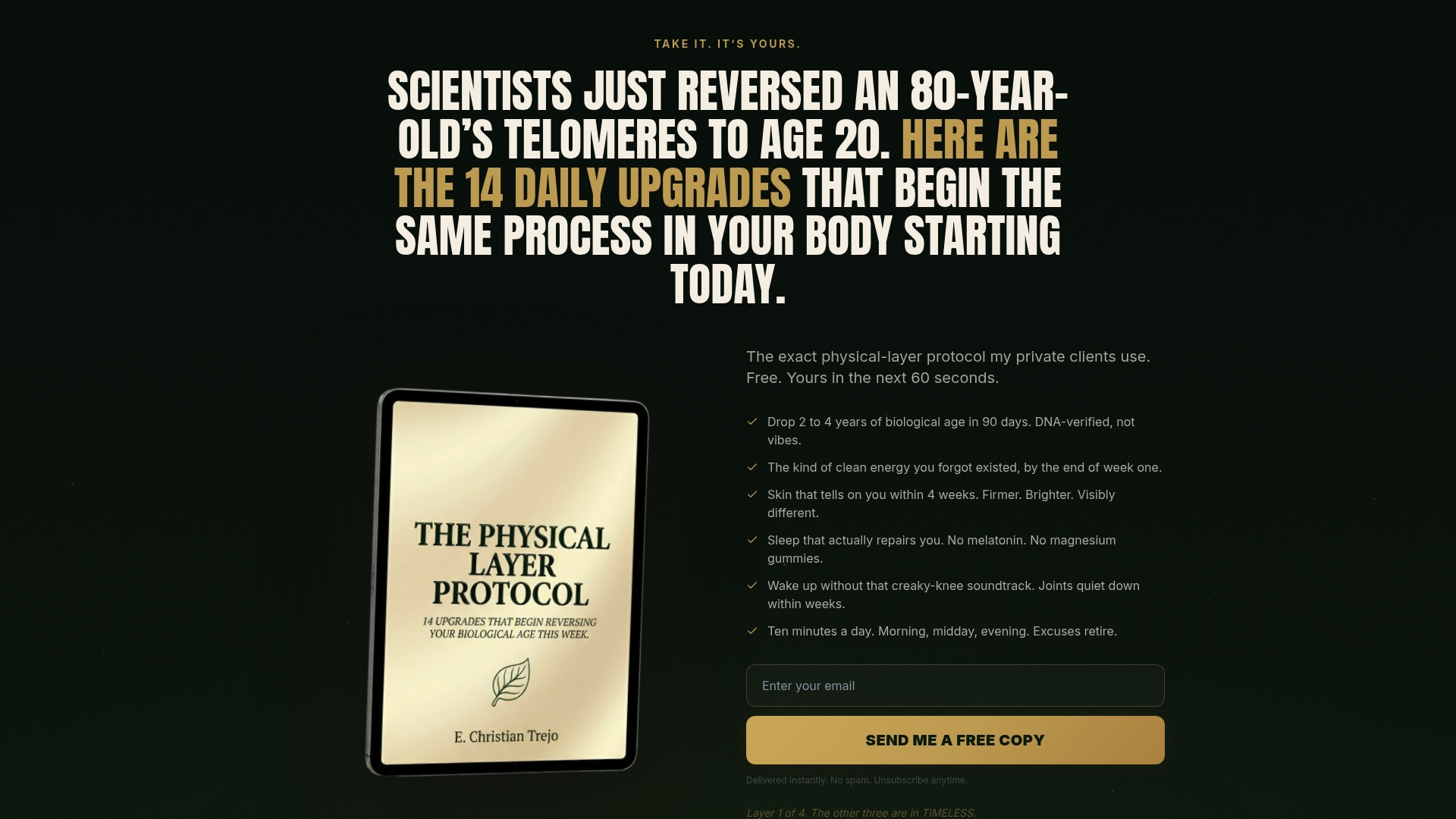
- Start with the free guide at reverseyourage.org/14-upgrades for 14 practical upgrades across all four layers.
- Consider our TIMELESS Vitality Intensive, an 8-week private coaching program guaranteed to reverse your biological age by at least 10 years in 6 months, verified by TruAge DNA methylation testing, or you get every dollar refunded, for $7,000. No other longevity program offers this level of accountability.
- If you want complementary energetic modalities alongside grounding, PEMF therapy is worth understanding for its own benefits and limits.
This article is general information, not a substitute for advice from a qualified doctor. Consult a qualified healthcare professional about your own circumstances before acting on anything here.
FAQ
Does grounding actually reduce inflammation?
Small pilot studies and randomized trials report measurable changes in inflammation-related markers, including smaller creatine kinase increases after exercise and lower nighttime cortisol, according to the DOMS pilot study and related sleep research. The evidence is promising but based on small samples, so it’s best treated as a supportive practice rather than a proven treatment.
How long should a grounding session last to see benefits?
Outdoor barefoot sessions in practitioner protocols generally run 10 to 30 minutes daily, while the sleep RCT had participants use a grounding mat for about six hours nightly over 31 days with measurable sleep improvements, according to the earthing mat sleep study.
Is grounding safe for people with chronic health conditions?
Clinical guidance describes grounding as likely safe for most people, but recommends it as a complement to, not a replacement for, evidence-based medical treatment for chronic inflammatory conditions, according to the Cleveland Clinic. Anyone managing a chronic condition should discuss grounding with their physician before relying on it for symptom management.
What is the TIMELESS approach to grounding?
We treat grounding as the practical entry point into the energetic layer of our four-layer protocol, pairing it with physical, emotional, and spiritual work rather than using it alone. Our book and the Vitality Intensive coaching program both include structured ways to integrate grounding alongside the other three layers.
Why do grounding studies show mixed or limited results?
Reviewers point to small sample sizes, difficulty creating a true sham control for a conductive intervention, and inconsistent real-world grounding setups as the main reasons results vary across studies, according to the University of Michigan grounding commentary. These limitations don’t disprove the effect, but they mean larger, more standardized trials are still needed.
Sources
- The effects of grounding (earthing) on inflammation, the immune response, wound healing, and prevention and treatment of chronic inflammatory and autoimmune diseases
- Pilot study: grounding and delayed-onset muscle soreness / DOMS markers (2009)
- A randomized, double-blind, placebo-controlled study on the improvement of sleep quality with Earthing mat
- Can grounding sheets actually help me sleep? — University of Michigan department news (2025)
- What Is Earthing and Is It Beneficial? — Cleveland Clinic