
Biological Age Markers over 40: What They Really Tell You
Discover biological age markers over 40 and learn what they reveal about your health. Understand aging beyond just your birth year.
Biological Age Markers over 40: What They Really Tell You
Biological age markers are measurable molecular, physiological, and functional indicators that reveal how fast your body’s cells and systems are actually aging, independent of your birth year. For adults over 40, these markers matter more than your chronological age because they reflect your real health trajectory. DNA methylation clocks like Horvath, GrimAge, and DunedinPACE, clinical blood panels used in models like PhenoAge and CardioMetAge, and functional tests like the timed one-leg stand each measure a different dimension of aging. At Timeless - Reverse Your Age, we built our entire four-layer protocol around these markers because aging is not one problem. It is four simultaneous problems: physical, emotional, spiritual, and energetic.
1. What are the most reliable biological age markers over 40?
Biological age is a better indicator of intrinsic capacity and overall health than chronological age. That single fact should change how you think about your annual physical.
The most validated aging biomarkers for adults fall into three categories:
- DNA methylation clocks. Horvath, GrimAge, and DunedinPACE analyze chemical tags on your DNA to estimate biological age. They differ in what they predict: GrimAge correlates strongly with mortality risk, while DunedinPACE measures the speed of aging in real time.
- Clinical blood biomarkers. Models like PhenoAge use albumin, creatinine, glucose, HbA1c, and white blood cell counts. PhenoAge uses nine blood tests to reflect multi-organ health and systemic aging simultaneously.
- Functional tests. The timed unipedal stance and hearing frequency thresholds correlate with balance and sensory aging and require no lab equipment.
No single marker gives you the full picture. A DNA methylation clock measures epigenetic aging. A blood panel measures metabolic and inflammatory aging. A balance test measures neuromuscular aging. You need all three categories to understand where your body actually stands.
Advanced neural network models combining blood biochemistry and gut microbiota data achieve a mean absolute error of roughly 6 years and an R² above 0.8 compared to chronological age. That level of accuracy means these models predict mortality and chronic disease risk with real clinical weight.
2. How to measure biological age using accessible tools

Measuring your biological age does not require a research lab. Commercial biological age tests range from $299 saliva-based DNA methylation kits to free online calculators that use blood panel data you already have. That range means most adults over 40 can get a credible baseline today.
Here is a practical sequence for measuring your biological age markers:
- Pull your last blood panel. Albumin, creatinine, glucose, HbA1c, and white blood cell count are available from standard annual physicals and feed directly into PhenoAge calculators available free online.
- Run a PhenoAge calculation. Enter your blood values into a validated PhenoAge calculator. The result gives you a biological age estimate grounded in nine clinical markers.
- Add a functional test. Stand on one leg with your eyes closed and time how long you can hold it. Research links this balance test to neuromuscular aging and overall physical decline.
- Consider a DNA methylation kit. If you want epigenetic data, saliva-based kits like TruAge provide a GrimAge or DunedinPACE score. My own TruAge test confirmed a biological age of 23 at chronological age 41.
- Track consistently. Always use the same method across measurements. Different clocks measure different aging systems, so switching methods mid-protocol makes comparison meaningless.
Pro Tip: Request a full metabolic panel and CBC at your next physical. You will walk out with enough data to calculate your PhenoAge for free, without ordering a single additional test.
3. Key limitations of biological age tests adults over 40 should know
Most people who get a biological age test treat the number as a diagnosis. It is not. Biological age tests are snapshots affected by transient factors like a recent cold, poor sleep, or acute stress. A single test result can mislead you if you do not account for those variables.
The core limitations every adult over 40 should understand:
- No gold standard exists. Epigenetic clocks like Horvath, GrimAge, and DunedinPACE differ in methods and sample types, producing different results for the same person on the same day.
- Consumer tests lack causal proof. Many commercial products fall into what researchers call “consumer longevitainment.” They measure correlates of aging, not the drivers of aging.
- Epigenetic predictions shift with short-term factors. Epigenetic age predictions are sensitive to technology evolution and transient conditions, causing inconsistent results across labs.
- Blood markers and epigenetic clocks diverge. A person can show a young PhenoAge but an older GrimAge score. Each reflects a different aging system, not a contradiction.
- No test replaces clinical judgment. Results need interpretation by a healthcare professional who understands your full medical history.
Pro Tip: Test when you are healthy, rested, and not under acute stress. Retest under the same conditions three to six months later. The trend matters far more than any single number.
4. How biological age markers integrate into a real anti-aging strategy
Measuring your biological age markers is only useful if the data drives action. The markers themselves point to which aging layer needs the most attention. That is where most protocols fail. They address one layer and ignore three others.
The TIMELESS four-layer protocol uses biomarker data to target all four aging dimensions simultaneously:
- Physical layer. Elevated HbA1c signals metabolic aging. High white blood cell counts signal chronic inflammation. Low albumin signals cellular breakdown. Each marker maps to a specific physical intervention targeting cellular health, epigenetic reprogramming, and mitochondrial function.
- Emotional layer. Nervous system dysregulation and stored trauma elevate cortisol chronically. Chronic cortisol accelerates telomere shortening and epigenetic aging. Addressing this layer changes the biological environment at the molecular level.
- Spiritual layer. Subconscious beliefs about aging act like code running in the background. Research on the placebo effect and psychoneuroimmunology confirms that identity-level beliefs alter gene expression. Rewriting those beliefs is not metaphor. It is epigenetic intervention.
- Energetic layer. The bioelectric field and meridian system regulate cellular communication. Disruptions in this layer appear in functional markers before they show up in blood panels.
Tracking your biomarkers over time gives you feedback on whether your protocol is working across all four layers. That feedback loop is what separates a real age reversal program from a wellness routine. You can read more about aging reversal methods that go beyond surface-level interventions.
5. Clinical blood biomarkers used in PhenoAge and CardioMetAge
The most widely used biological age models rely on blood markers you can get from a standard lab draw. PhenoAge and CardioMetAge each require 7–12 routine clinical parameters for accurate biological age estimation. These are not exotic tests. They are the same panels your doctor orders at your annual physical.
| Marker category | Specific markers | Aging aspect assessed |
|---|---|---|
| Metabolic | Glucose, HbA1c | Blood sugar regulation, diabetes risk |
| Renal and protein | Albumin, creatinine, cystatin-C | Kidney function, cellular integrity |
| Inflammatory | White blood cell count, hs-CRP | Chronic inflammation, immune aging |
| Cardiovascular | NT-proBNP, homocysteine | Heart stress, vascular aging |
| Endocrine | Free testosterone | Hormonal aging, gender-specific decline |
Models using clinical blood tests and gut microbiota data reveal gender-specific marker contributions. Homocysteine, cystatin-C, and NT-proBNP carry strong predictive roles for cardiovascular and renal aging. That means your biological age score is not one-size-fits-all. It reflects your sex, your organ function, and your metabolic history.
The practical implication is direct. If your HbA1c is elevated, your biological age is running ahead of your chronological age in the metabolic dimension. If your albumin is low, your cellular repair capacity is declining. Each marker is a lever. Pull the right ones and the aging program rewrites itself.
Key Takeaways
Biological age markers give you a measurable, actionable picture of how your body is aging at the cellular and systemic level, and that picture can be changed.
| Point | Details |
|---|---|
| DNA methylation clocks lead in precision | GrimAge and DunedinPACE predict mortality risk and aging pace better than chronological age alone. |
| Blood panels are your fastest baseline | PhenoAge uses nine standard blood markers available from any annual physical at no extra cost. |
| No single marker is sufficient | Combining epigenetic, metabolic, and functional markers gives a complete aging picture. |
| Tests are snapshots, not diagnoses | Transient stress, illness, and lab variation affect results; track trends across consistent methods. |
| All four aging layers must be addressed | Physical markers alone miss emotional, spiritual, and energetic drivers of biological age acceleration. |
Why I stopped trusting single-number biological age scores
My TruAge DNA methylation test put my biological age at 23 when I was 41 years old. That number gets attention. But the result that matters more is the trend across five years of consistent testing, not the single data point.
What I have learned from tracking my own markers and working with practitioners across 40 countries is this: the adults who get the most dramatic biological age reversal are never the ones who obsess over one clock. They are the ones who treat their markers as a diagnostic map across all four aging layers.
The biggest mistake I see adults over 40 make is chasing a younger epigenetic clock score while ignoring elevated hs-CRP, disrupted sleep architecture, and unresolved nervous system dysregulation. Those three factors will age you faster than any supplement can reverse. The emotional and energetic layers are not soft add-ons to a longevity protocol. They are primary drivers of the biological aging rate.
The current consumer test market is full of products that measure aging correlates and sell them as aging solutions. A test that tells you your biological age is not a protocol. It is a starting point. The protocol is what you do with that information across all four layers simultaneously. That is the only approach I have seen produce DNA-verified results at scale.
Biological age markers are not your fate. They are your feedback system. Use them that way.
— E. Christian Trejo
The TIMELESS protocol for reversing your biological age
The TIMELESS four-layer protocol is the only longevity program with a DNA-verified guarantee: reverse your biological age by at least 10 years in 6 months, confirmed by TruAge DNA methylation testing, or every dollar is refunded. That guarantee exists because the protocol addresses all four aging layers simultaneously, not just the physical one.
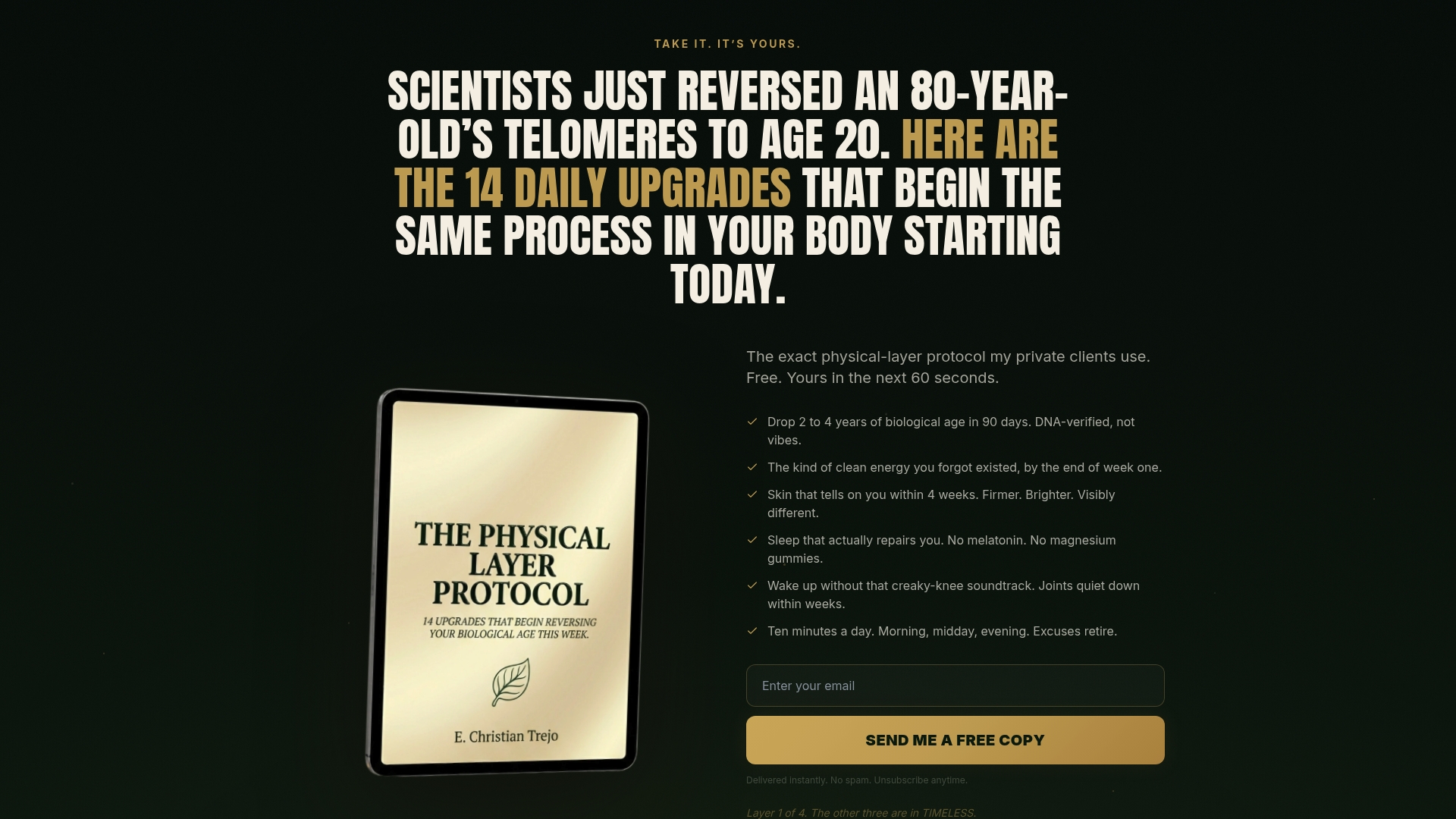
The complete system is documented in the TIMELESS book, a 370-page blueprint built on 15 years of research and validated across thousands of practitioners in 40 countries. For personalized guidance, the TIMELESS Vitality Intensive is an 8-week private coaching program priced at $7,000 with the full refund guarantee attached. You can also access the free 14 Upgrades guide at reverseyourage.org/14-upgrades to start measuring and shifting your biological age markers today. No other program in the longevity space offers this level of scientific accountability.
FAQ
What are biological age markers?
Biological age markers are molecular, physiological, and functional indicators that measure how fast your body’s cells and organs are aging. They include DNA methylation clocks, clinical blood biomarkers, and functional tests like balance assessments.
How accurate are biological age tests?
Advanced models combining blood biochemistry and gut microbiota data achieve a mean absolute error of roughly 6 years and an R² above 0.8. Accuracy varies significantly between consumer kits and clinically validated models.
Can you reverse your biological age after 40?
Yes. Consistent lifestyle interventions targeting the physical, emotional, spiritual, and energetic layers of aging have produced DNA-verified biological age reductions. The TIMELESS Vitality Intensive guarantees at least 10 years of reversal in 6 months, verified by TruAge testing.
What blood tests measure biological age?
PhenoAge uses nine standard blood markers including albumin, creatinine, glucose, HbA1c, and white blood cell count. These are available from a routine annual physical and can be entered into free online calculators.
How often should you test your biological age?
Test every 3–6 months using the same method each time. Consistency in testing method matters more than frequency because different clocks measure different aging systems and produce incomparable results.